













TL;DR:
- Guitar binding is a protective strip that seals and reinforces the wood edges of a guitar, improving durability and appearance. It is made from materials such as ABS plastic, celluloid, or hardwoods like rosewood and ebony, each offering different qualities. Proper binding installation signals craftsmanship, and its condition indicates how well a guitar has been maintained or built.
Guitar binding is defined as thin strips of material inlaid along the edges of a guitar’s body, neck, or headstock to protect exposed wood grain and frame the instrument’s visual appearance. Every guitar that features binding carries this detail for two reasons: structural defense and aesthetic identity. Whether you play a handcrafted classical or a restored vintage acoustic, the binding you see along those contoured edges is doing serious work. Vintage-guitar-world evaluates binding quality on every instrument it curates, because binding condition directly signals how well a guitar has been built and maintained.
What is guitar binding, and why does every guitar need it?
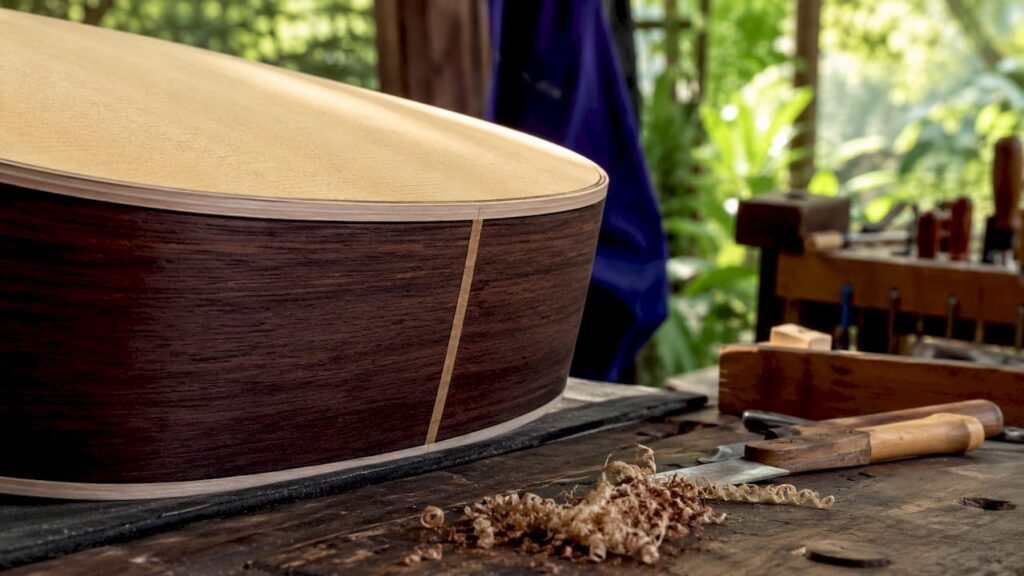
Guitar binding is a protective edging strip applied along the seams where a guitar’s top, back, and sides meet. Those seams expose end grain, which is the most vulnerable part of any piece of wood. End grain absorbs moisture faster than face grain, swells unevenly, and chips under even minor impacts. Binding seals those edges completely, acting as a mechanical barrier between the wood and the outside world.
The locations matter. Body binding runs along the perimeter of the top and back plates. Neck binding covers the edges of the fretboard. Headstock binding, found on higher-end instruments, frames the peghead. Each location targets a different high-risk zone where bare wood would otherwise take the brunt of daily handling.
Binding also reinforces the joints between structural plates. The top and back of an acoustic guitar are glued to the sides, and those glue lines sit right at the edge. Binding locks that seam in place, reducing the chance of separation from humidity changes or accidental knocks. This is why binding protects seams and is considered a structural safeguard, not just a decorative trim.
What materials are used for guitar binding?
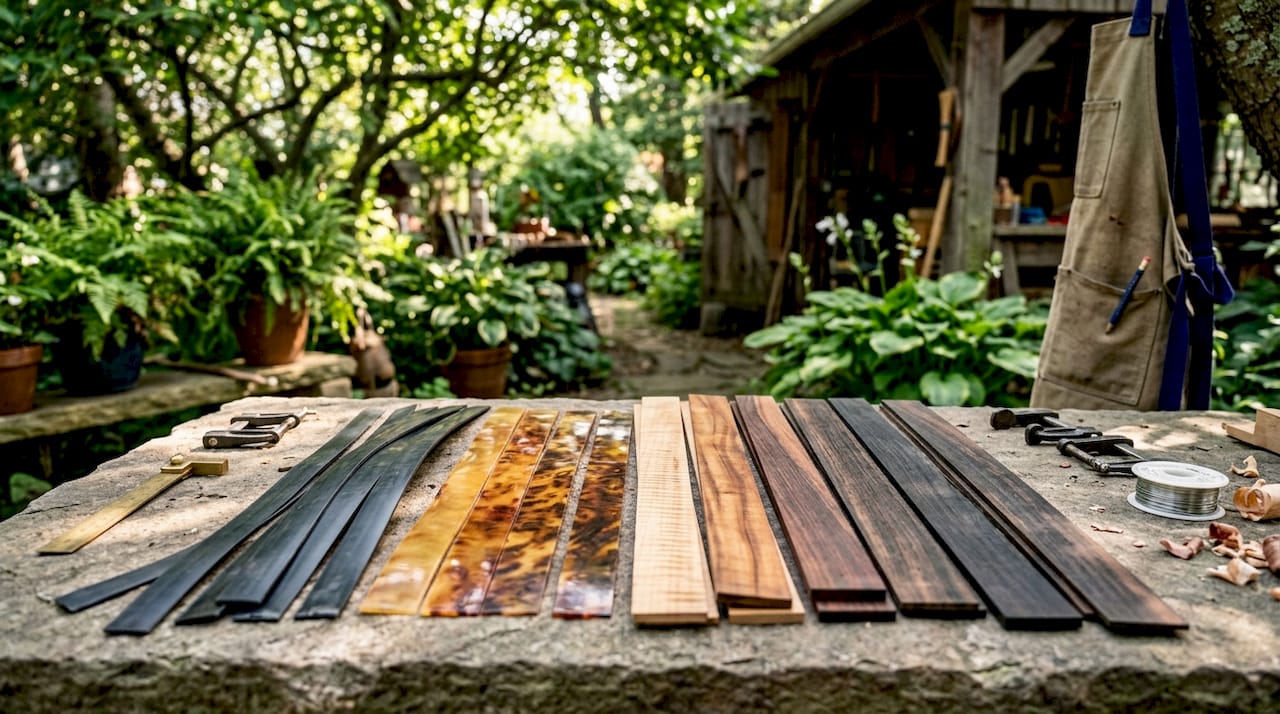
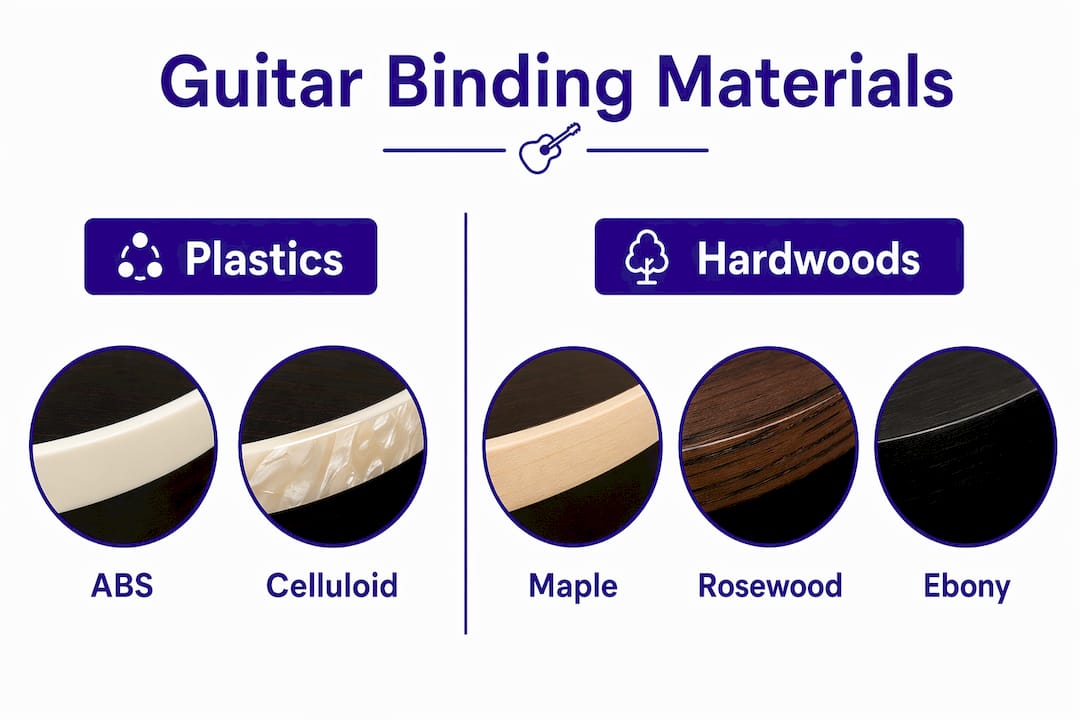
The three dominant binding materials are ABS plastic, celluloid, and hardwoods such as maple, rosewood, and ebony. Each brings a different balance of cost, workability, and visual character.
ABS plastic
ABS plastic is the most common binding material in production guitars. It bends easily with moderate heat, bonds reliably with solvent cement, and resists cracking under normal use. Builders working at scale favor it because it is consistent, affordable, and forgiving for less experienced hands. The finish can mimic ivory, tortoiseshell, or solid colors, giving designers flexibility without the cost of natural materials.
Celluloid
Celluloid delivers the warm, slightly amber look associated with pre-war and vintage instruments. Many collectors specifically seek guitars with original celluloid binding because it ages in ways that ABS cannot replicate. The trade-off is significant: celluloid is highly flammable and requires careful heat management during bending. Heat guns on low settings or bending irons are the accepted tools. Open flames are never used on celluloid under any circumstances.
Hardwood binding
Hardwood binding represents the highest tier of craftsmanship. Maple produces a bright, high-contrast edge that pops against dark tonewoods. Rosewood creates a warm, harmonious look when paired with rosewood backs and sides. Ebony offers a near-black edge with exceptional density and durability. Rosewood binding is prized for its tonal neutrality, durability, and visual richness, making it a top choice among high-end builders.
| Material | Durability | Installation difficulty | Typical use |
|---|---|---|---|
| ABS plastic | High | Low | Production and student guitars |
| Celluloid | Moderate | Moderate | Vintage-style and reissue builds |
| Maple | High | High | High-end acoustic and classical guitars |
| Rosewood | Very high | High | Premium acoustic and flamenco guitars |
| Ebony | Very high | High | Collector-grade and custom instruments |
Pro Tip: When inspecting a used guitar, press gently on the binding at the waist. Soft spots or slight give indicate the adhesive has failed. Catching this early prevents a full binding replacement later.
How does binding protect a guitar’s structure and longevity?
Soft tonewoods like spruce are especially vulnerable without binding. Spruce tops are light and resonant, but their edges chip and dent easily. Binding absorbs those low-energy impacts before they reach the plate itself, extending the guitar’s playable life by years or decades.
The protection binding provides covers several specific failure points:
- End grain moisture absorption: Sealed edges resist humidity swings that cause swelling, cracking, and finish lifting.
- Impact absorption: Binding takes the hit when a guitar bumps a chair, a stand, or a case edge.
- Seam reinforcement: The binding locks the glue joint between top and sides, reducing the risk of separation.
- Finish protection: Binding creates a defined border that contains the finish and prevents edge chipping from spreading inward.
“Binding is often misinterpreted as purely ornamental. In reality, it acts as a mechanical shield that absorbs impacts and protects top and back plates from cracking or separation at their most vulnerable seams.”
— Pacific Rim Tonewoods
Collectors evaluating vintage instruments should pay close attention to binding condition as part of guitar care and longevity. Shrinking, lifting, or missing binding is not just a cosmetic issue. It signals that the underlying wood edges are exposed and actively at risk. A guitar with intact, well-adhered binding has been protected throughout its life, and that protection shows up in the condition of the wood beneath.
How is guitar binding installed and repaired?
Installing binding is one of the most technically demanding tasks in lutherie. The process follows a clear sequence, but each step requires precision.
- Route the channel. A router with a binding channel bit cuts a precise ledge around the guitar’s perimeter. The channel must match the binding’s exact thickness and width. A precise channel fit creates a friction-fit joint that is the hallmark of expert craftsmanship. Any gap requires filler and degrades the final appearance.
- Bend the binding material. Plastic binding bends with a heat gun on a low setting or a bending iron. Wood binding requires a hot pipe and slow, controlled pressure to follow the guitar’s curves without cracking. Celluloid needs the lowest heat of all plastics due to its flammability.
- Apply adhesive. Plastic binding uses solvent cement, which creates a chemical weld rather than a surface bond. This sets quickly, so builders work in short segments. Hardwood binding uses wood glue or cyanoacrylate (CA) glue, depending on the builder’s preference and the wood species.
- Clamp and cure. Surgical tubing or rubber bands provide more even clamping pressure than masking tape, especially around the waist and cutaway curves. Consistent pressure prevents adhesion failures and uneven fits.
- Scrape and sand flush. Once cured, the binding is carefully scraped and sanded level with the guitar’s surface. This step requires patience to avoid sanding through the binding or into the surrounding wood.
Repairing damaged binding follows a similar logic. Replacing damaged binding starts with warming the old strip to soften the adhesive, then carefully lifting the strip without damaging the channel walls. The channel is cleaned thoroughly before new binding is fitted and glued.
Pro Tip: When working with solvent cement, apply it to both the binding strip and the channel wall simultaneously. The cement flashes off fast, so pre-fitting the strip dry before gluing saves you from a misaligned bond you cannot undo.
How does binding shape a guitar’s visual identity?
Binding is the frame around a painting. It defines where the instrument ends and draws the eye along the guitar’s contours. A well-chosen binding material creates a visual conversation with the tonewoods it borders, either contrasting sharply or blending harmoniously.
The aesthetic role of binding reflects builder intent at every price point:
- Single-ply white ABS on a student guitar signals clean, functional design without pretension.
- Multi-ply black and white herringbone on a pre-war dreadnought signals that the builder invested in visual complexity as a mark of quality.
- Rosewood binding on a classical guitar creates a warm, unified palette that honors the instrument’s tonal character.
- Maple binding on a dark-topped archtop creates a bright, graphic edge that emphasizes the guitar’s silhouette.
High-end builders select binding to create aesthetic harmony and craftsmanship signature that elevates the instrument’s identity. This is why binding choice is one of the first things an experienced collector examines. It tells you whether the builder thought carefully about the instrument as a whole object, or simply reached for the cheapest available strip. The role of guitar aesthetics in collector value is well documented, and binding sits at the center of that conversation.
Mass-produced guitars typically use single-ply ABS in standard widths. Handmade instruments often feature multi-ply combinations, purfling inlays alongside the binding, and hand-scraped edges that show individual attention. That difference is visible to any trained eye and measurable in resale value.
Key Takeaways
Guitar binding is a structural and aesthetic element that protects exposed wood edges, reinforces seams, and signals craftsmanship quality across every price tier.
| Point | Details |
|---|---|
| Binding is structural, not decorative | It seals end grain, absorbs impacts, and reinforces glue joints between plates. |
| Material choice signals quality | ABS suits production guitars; hardwoods like rosewood and ebony mark high-end builds. |
| Installation precision matters | A perfectly routed channel and proper adhesive are non-negotiable for a lasting bond. |
| Celluloid requires safety discipline | Its flammability demands low-heat tools and no open flames during bending or removal. |
| Binding condition reveals history | Intact binding on a vintage guitar indicates consistent care and protected wood beneath. |
Why binding deserves more respect than it gets
Most players walk past binding without a second thought. I have spent years handling vintage and handcrafted instruments at Vintage-guitar-world, and binding is consistently the detail that separates a guitar built to last from one built to a price.
The misconception I encounter most often is that binding is cosmetic trim added to make a guitar look finished. That view misses the point entirely. On a pre-war acoustic with a spruce top, the binding is the reason that top is still intact. Without it, those edges would have chipped, swelled, and separated decades ago. Education on binding’s structural role leads directly to better maintenance decisions and a sharper eye when buying.
What I find most interesting is how binding communicates a builder’s philosophy. A luthier who routes a perfect channel, selects rosewood to complement the back and sides, and hand-scrapes the edge flush is telling you something about how they approach every other detail on that instrument. Binding is the easiest place to cut corners, and the easiest place to spot whether corners were cut.
My advice to any collector: before you play a note, run your fingernail along the binding edge. A flush, solid strip with no lifting or gaps tells you the guitar was built with care and has been stored properly. That single check has saved me from more than a few expensive mistakes.
— Vintage
Guitars where binding craftsmanship speaks for itself
Binding quality is one of the clearest indicators of an instrument’s overall construction standard. At Vintage-guitar-world, every guitar in the collection is evaluated for binding condition as part of a thorough expert assessment, because a well-preserved binding edge tells the story of how a guitar was made and how it was kept.

Collectors and players who want to see what exceptional binding craftsmanship looks like in practice will find it across the vintage guitar collection at Vintage-guitar-world. From classical instruments with hand-fitted rosewood binding to restored acoustics with original celluloid trim, each guitar reflects the standards that make binding worth understanding. Browse the full selection to find instruments where every detail, including the binding, was done right.
FAQ
What is guitar binding made of?
Guitar binding is made from ABS plastic, celluloid, or hardwoods like maple, rosewood, and ebony. ABS is the most common material in production guitars due to its durability and ease of installation.
Does guitar binding affect sound?
Guitar binding has a minimal direct effect on tone. Its primary functions are structural protection and visual framing, though some builders argue that wood binding contributes marginally to resonance consistency at the plate edges.
Why does binding shrink or crack on old guitars?
Celluloid binding shrinks as it ages because the material off-gasses over decades. This causes it to pull away from the channel, crack, or crumble. ABS and wood bindings are significantly more stable over long periods.
Can binding be replaced on a vintage guitar?
Binding can be replaced on a vintage guitar by warming the old strip to release the adhesive, cleaning the channel, and fitting new material. A skilled luthier matches the original material type to preserve the instrument’s authenticity and value.
How do I know if a guitar’s binding is high quality?
Run your finger along the binding edge and look for a flush, gap-free fit with no lifting or filler visible at the seams. A precise binding fit with clean mitered corners at the heel and end block is the hallmark of fine craftsmanship.