













TL;DR:
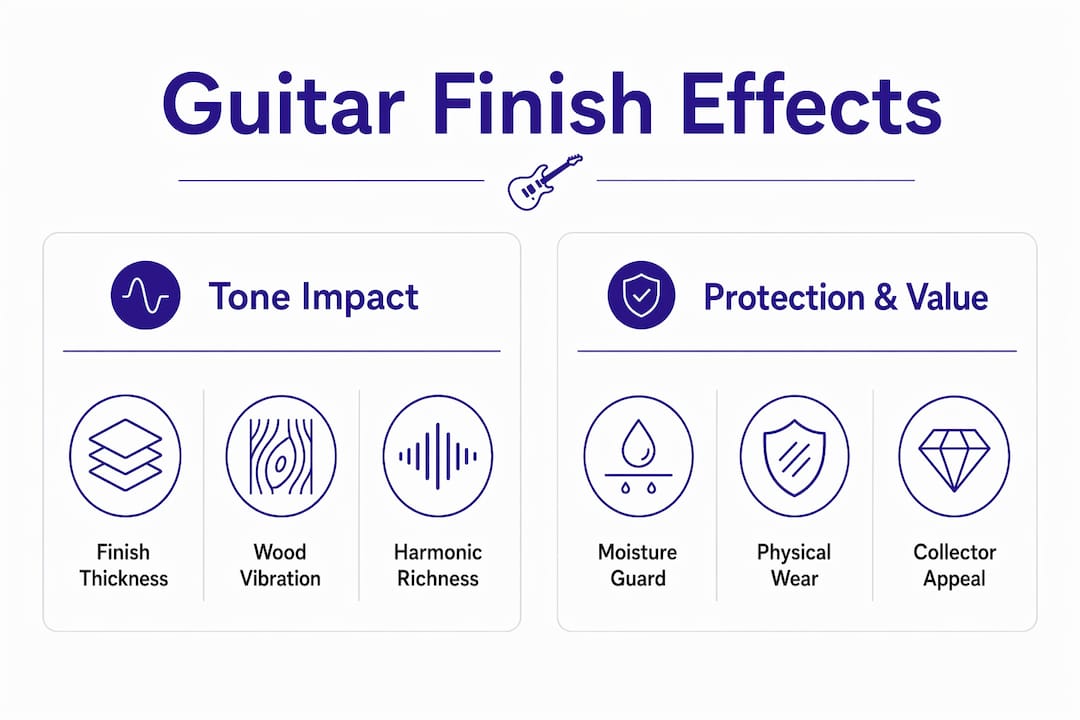
- Guitar finishes protect the wood from moisture, oils, and wear while influencing aesthetics and tone. Finish thickness, not type, primarily affects resonance and value, with thinner coatings allowing better vibration. Collection value depends on original, well-preserved finishes that show age and authenticity.
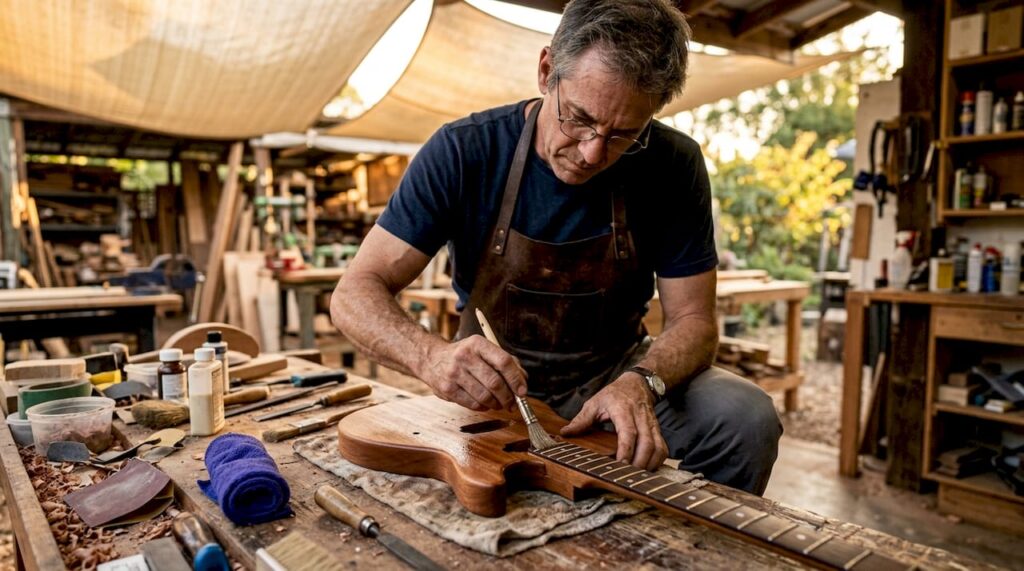
A guitar finish is the protective and aesthetic coating applied to the instrument’s wood that also subtly shapes its tonal characteristics and playing feel. Understanding why guitar finishes matter separates informed collectors from casual buyers. The coating you choose affects moisture resistance, resonance, aging patterns, and long-term resale value. The two industry standards most players debate are nitrocellulose lacquer and polyurethane, but the real story is more nuanced than any marketing campaign suggests.

Why guitar finishes matter more than most players realize
Guitar finishes serve three distinct functions: protection, aesthetics, and tonal influence. Most players focus on the visual appeal and ignore the other two. That is a mistake, especially for collectors and serious players who want their instruments to hold value and perform at their best.
The protective role is the most straightforward. A finish seals the wood against moisture, skin oils, dust, and UV light. Without it, the wood absorbs humidity and expands or contracts unevenly, which warps necks and distorts body geometry over time. The tonal role is subtler but real. Finish thickness as small as 0.3–0.5mm can measurably affect acoustic resonance. That is a smaller margin than most players expect, which is why finish debates get so heated.
The aesthetic role connects directly to collector value. A guitar’s visual identity is tied to its finish color, sheen, and aging pattern. Collectors at Vintage-guitar-world know that a guitar’s finish tells a story about its era, its maker, and how it was cared for.
How finishes protect and preserve your guitar
Protection is the primary reason guitar makers apply any finish at all. Wood is porous and reactive. Left bare, a spruce top or mahogany back absorbs atmospheric moisture within days, which leads to swelling, cracking, and tonal instability.
A well-applied finish creates a barrier against the four main threats:
- Moisture and humidity: Seals the wood grain to prevent swelling and cracking.
- Skin oils and sweat: Stops acids from degrading the wood surface over years of playing.
- UV light: Slows the fading and darkening of natural wood color.
- Physical abrasion: Protects against pick scratches, strap rub, and case wear.
The trade-off is that thicker finishes offer more protection but restrict the wood’s natural movement. Nitrocellulose lacquer is thinner and more flexible, which means it breathes with the wood but chips and checks more easily. Polyurethane and polyester finishes resist scratches and fading far better, but they form a harder shell that some luthiers argue limits the wood’s acoustic freedom.
Nitrocellulose checking, the fine crazing pattern that appears on aged lacquer, is not a defect. It is a natural result of the finish contracting at a different rate than the wood beneath it. For vintage guitar collectors, that checking pattern is a sign of authenticity and age. Knowing how to read it is part of the expertise Vintage-guitar-world brings to every instrument evaluation.
Pro Tip: Store your guitar at 45–55% relative humidity. No finish, regardless of type or thickness, fully compensates for extreme humidity swings.
Does finish type actually affect guitar tone?
The honest answer is yes, but not in the way most players think. Finish thickness, not chemical type, is the primary factor influencing tone. A thin, well-applied modern polyurethane finish can allow more resonance than a thick nitrocellulose coat. That finding challenges decades of marketing lore.
The physics are straightforward. A heavier finish adds mass to the vibrating surface. More mass means more damping, which reduces sustain and high-frequency response. On acoustic guitars, the soundboard is the primary resonator, so any coating that restricts its movement has an audible effect. On solid-body electrics, finish impact on tone ranks well below pickups, strings, and setup. The pickup converts string vibration electromagnetically, so the body’s acoustic properties matter far less.
| Guitar type | Finish tone impact | Primary tonal factors |
|---|---|---|
| Acoustic | Significant (soundboard damping) | Finish thickness, wood species, bracing |
| Classical | High (thin tops, wide frequency range) | Finish thickness, top flexibility |
| Solid-body electric | Minimal | Pickups, strings, setup, electronics |
| Semi-hollow electric | Moderate | Body resonance, finish thickness |
“Luthiers prioritize build quality and setup over finish type for tone. A well-finished, properly set-up guitar will always sound better than one with a ‘superior’ finish but poor setup.” — Timberline Guitars
Finish tone debates are also shaped by player psychology. Marketing and player perception amplify the perceived difference between finish types far beyond what blind tests confirm. Players who believe nitro sounds better often report hearing a difference even when the instruments are otherwise identical.
Pro Tip: Before attributing tonal differences to finish type, check your setup first. Action, nut slots, and saddle height affect tone more than any coating.
Guitar finish types explained: nitro, poly, satin, and gloss
Each finish type has a distinct chemistry, application process, and set of trade-offs. Knowing what each one does helps you make a better buying or collecting decision.
Nitrocellulose lacquer is the traditional choice for vintage instruments. It is applied in thin, sprayed coats that harden through solvent evaporation. Nitro is easy to repair because fresh lacquer bonds chemically with old coats. It ages visually with checking and ambering, which collectors prize. The downside is that it scratches and chips more easily than modern alternatives.
Polyurethane is the workhorse of production guitar manufacturing. It cures through a chemical reaction rather than evaporation, producing a harder, more durable film. Poly finishes maintain shine longer and resist wear, but repairs are more difficult because new coats do not bond chemically with old ones. You sand and refinish rather than touch up.
Polyester is the thickest and hardest of the common finish types. It is often applied in a single thick coat and cured under UV light. Polyester is extremely durable and produces a deep, glassy gloss. It is also the most restrictive for acoustic resonance and the hardest to repair.
Satin finishes are not a separate chemistry. They are any of the above formulations with a flatting agent added to reduce sheen. Satin finishes feel cooler and less sticky for players with warm or damp hands. They also show wood grain more naturally and are usually applied slightly thinner than gloss versions, which gives a minor tonal responsiveness benefit.
Gloss finishes offer visual depth and a slicker surface. They amplify the visual figure of the wood beneath and are the standard for formal or stage instruments. The trade-off is that gloss can feel sticky in humid conditions and shows fingerprints and scratches more readily.
Here is a quick reference for the key attributes:
- Repairability: Nitro is easiest; polyester is hardest.
- Durability: Polyester leads; nitro trails.
- Aging character: Nitro checks and ambers; poly stays pristine.
- Tonal restriction: Thick polyester restricts most; thin satin restricts least.
- Player feel: Satin is cooler and drier; gloss is slicker and shinier.
How finish condition shapes collector interest and guitar value
For collectors, a guitar’s finish is a primary document of its history. The finish checking and patina on a vintage instrument tell an appraiser how old it is, how it was stored, and whether it has been refinished. A refinished guitar almost always appraises lower than one with its original coating intact, even if the new finish looks better.
Collectors seek specific finish traits depending on the era and maker:
- Original nitro with natural checking: Signals authenticity and careful storage.
- Ambered binding and top: Confirms age without chemical alteration.
- Player wear in expected locations: Adds character and confirms the guitar was used, not stored.
- Matching color to known production records: Verifies the instrument has not been refinished.
Finish condition also affects guitar appraisal directly. An original finish in good condition can add meaningful value to a vintage instrument. A poorly executed refinish, even with expensive materials, reduces value because it breaks the chain of provenance. Collectors at Vintage-guitar-world evaluate finish authenticity as part of every instrument assessment, using UV light and magnification to detect repairs and oversprays.
The psychological dimension matters too. A guitar with a beautiful, aged nitro finish in sunburst or cherry red carries an emotional weight that a pristine poly-coated reissue cannot replicate. That emotional connection drives collector demand and sustains long-term value. For guidance on what to look for when buying, the vintage guitar buying checklist at Vintage-guitar-world covers finish evaluation as a core step.
Key Takeaways
Guitar finish thickness is the single most important variable connecting coating choice to tone, protection, and collector value.
| Point | Details |
|---|---|
| Thickness drives tone | Finish thickness, not chemical type, determines how much a coating restricts acoustic resonance. |
| Protection is the primary role | Finishes seal wood against moisture, oils, UV light, and physical wear to preserve structural integrity. |
| Nitro ages, poly endures | Nitrocellulose checks and ambers over time; polyurethane resists wear but lacks vintage patina. |
| Finish condition affects value | Original, unaltered finishes command higher appraisal values than refinished instruments. |
| Satin vs. gloss is about feel | Satin finishes feel cooler and drier; gloss finishes offer visual depth but can feel sticky in humidity. |
What I have learned from years of evaluating guitar finishes
The finish debate in guitar collecting is one of the most misunderstood topics I encounter. Players spend hours arguing about nitro versus poly while ignoring the setup on their instrument. A guitar with a thick polyester finish and a perfectly cut nut will outplay a nitro-coated instrument with a high action every single time.
That said, finish authenticity genuinely matters for collectors, and I do not dismiss it. When I evaluate a vintage instrument, the finish is one of the first things I examine. Not because I think it changes the tone dramatically, but because it tells me whether the guitar is what the seller claims it is. An original finish is a document. A refinish is a redaction.
My practical advice for players: choose your finish based on how you use the guitar. If you gig regularly, a durable poly finish protects your investment. If you collect and care about long-term value, seek instruments with original, unaltered coatings. If you play acoustics and care deeply about resonance, look for instruments finished with thinner coats, whether nitro or poly, rather than chasing a specific chemistry.
The most underrated factor in all of this is feel. A satin-finished neck changes how your hand moves during a long set. That is not a myth or marketing. It is a real, physical difference that affects your playing comfort. Try both before you decide.
— Vintage
Guitars with authentic finishes, curated for collectors
Finish quality is one of the first things Vintage-guitar-world evaluates on every instrument that enters the collection. Whether you are looking for a vintage acoustic with original nitrocellulose lacquer, a handcrafted classical with a period-correct French polish, or a rare electric with its factory finish intact, the selection reflects that standard.

Every listing includes detailed finish documentation, condition notes, and provenance information so you know exactly what you are buying. For collectors who want to understand how finish type connects to investment potential, the vintage guitar types guide at Vintage-guitar-world covers finish characteristics across eras and makers. Explore the full collection and find an instrument whose finish tells the right story.
FAQ
What is a guitar finish and what does it do?
A guitar finish is a protective coating applied to the wood that seals it against moisture, oils, and physical wear. It also shapes the instrument’s visual identity and can subtly influence tonal resonance, particularly on acoustic guitars.
Does guitar finish really affect sound quality?
Finish thickness affects tone more than finish type. Thin finishes allow more soundboard vibration and richer harmonics on acoustics, while on solid-body electrics the tonal impact is minimal compared to pickups and setup.
What is the difference between nitro and poly guitar finishes?
Nitrocellulose lacquer is thinner, ages with checking and ambering, and is easier to repair. Polyurethane is harder, more scratch-resistant, and maintains its appearance longer but lacks the vintage patina collectors prize.
Does a refinished guitar lose value?
A refinished vintage guitar almost always appraises lower than one with its original finish intact, because the original coating is part of the instrument’s provenance and authenticity record.
Is satin or gloss finish better for players?
Satin finishes feel cooler and less sticky, which benefits players with warm hands or those who play long sets. Gloss finishes offer greater visual depth and are the standard for formal or stage instruments. Neither is objectively better. The right choice depends on your playing conditions and personal preference.