













TL;DR:
- Certification provides objective proof of a vintage guitar’s authenticity and provenance. It enhances market value, reduces risks, and supports accurate insurance and resale. Modern scientific analysis and full disclosure of replacements make certification the standard for serious collectors.
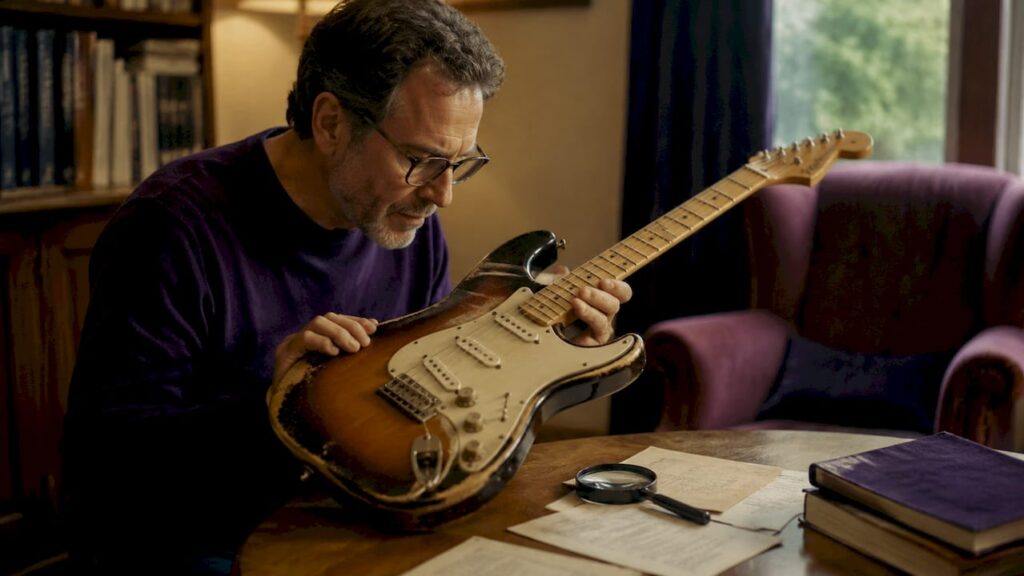
Certification in guitar collecting is the documented, often science-backed process of verifying a vintage instrument’s authenticity, originality, and provenance. The role of certification in guitar collecting has shifted from a nice-to-have to a market standard, driven by programs like Gibson Certified Vintage and independent services like Vintage Verified. A certified guitar carries objective proof of what it is, what parts are original, and what its history looks like. That proof directly affects insurance coverage, appraisal accuracy, and resale price. For collectors who treat vintage guitars as both passion and investment, certification is the difference between a documented asset and an expensive guess.
How do scientific techniques enhance the certification of vintage guitars?
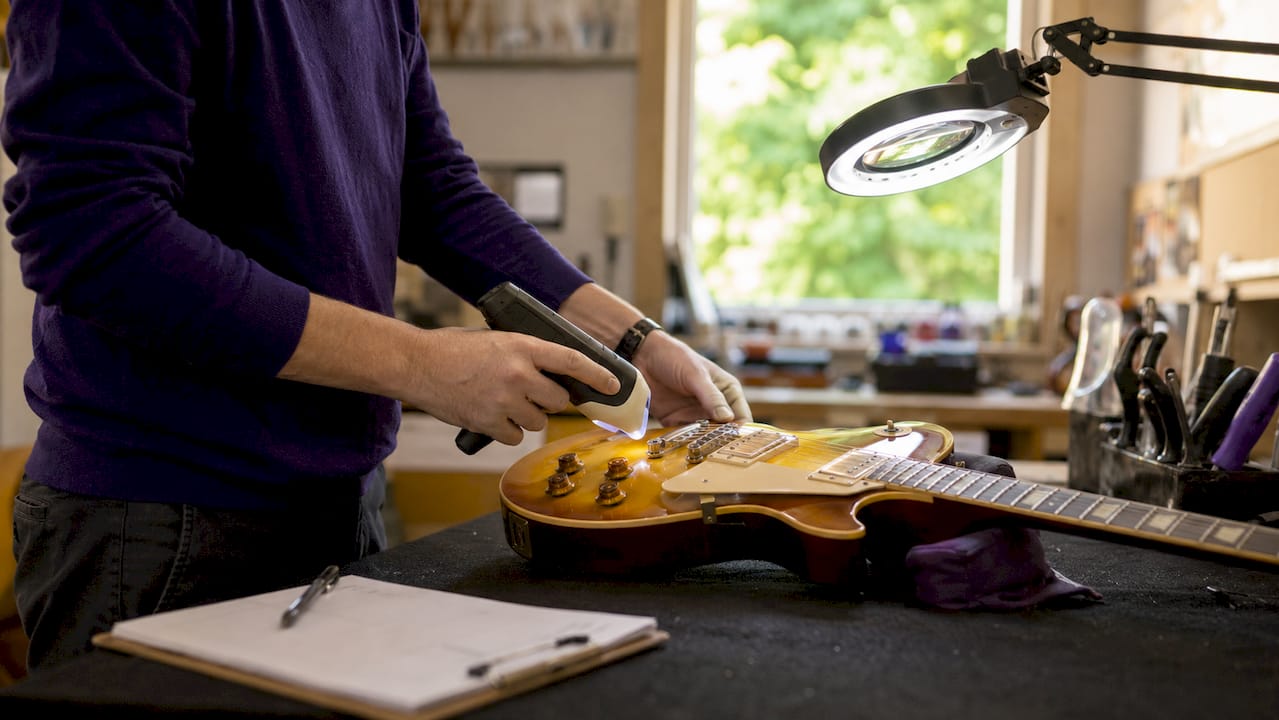
Modern guitar authentication relies on objective, measurable data rather than a dealer’s opinion. Services like Vintage Verified use spectrometers and microscopy to analyze finishes, hardware, fret wire, and inlays against millions of reference data points. That level of analysis removes the subjectivity that has historically made vintage guitar transactions risky.
Traditional authentication depended heavily on dealer reputations. The problem is that subjective dealer authentication creates credibility risks when dealers feel pressured to affirm a guitar’s authenticity without full certainty. Reputation preservation sometimes won out over accuracy. That conflict of interest is exactly what science-based certification eliminates.
The tools used in modern authentication go well beyond a visual inspection:
- Spectrometers analyze the chemical composition of finishes and lacquers to confirm period-correct materials.
- Microscopy examines wood grain, binding, and hardware at a level invisible to the naked eye.
- 3D imaging maps physical dimensions and construction details against known factory specifications.
- Analytical chemistry identifies whether hardware and fret wire match the alloys used in a specific production era.
These methods produce legally defensible reports that can withstand scrutiny in court if a dispute arises. That legal defensibility is not a minor detail. It means a certification report carries real weight in insurance claims, estate valuations, and high-value resale transactions.
Pro Tip: When evaluating a certification service, ask specifically whether their reports are designed to be legally defensible. A service that cannot answer that question clearly is not operating at the standard the market now expects.
What are the benefits of guitar certification for collectors?
Certification delivers concrete, measurable benefits across every stage of guitar ownership. The guitar collecting authentication process protects collectors at the point of purchase, during ownership, and at resale. Here are the five core benefits:
- Higher market value. Certified guitars command stronger prices because buyers pay a premium for verified authenticity. The correlation between certainty and price is becoming a defining feature of the vintage guitar market, mirroring what happened in fine art decades ago.
- Reduced counterfeit risk. Fakes and misrepresented instruments are a real problem in the vintage guitar market. Certification cuts that risk by providing objective component-level analysis that a forger cannot replicate.
- Insurance and appraisal accuracy. Certified guitars come with certificates and appraisal letters that insurers recognize for accurate valuation. Without that documentation, insurers often undervalue instruments or dispute claims.
- Full provenance documentation. A certification report records the instrument’s history, including any replaced parts. That transparency is a feature, not a flaw. Knowing exactly what is original and what is not gives collectors a complete picture.
- Stronger resale and investment position. Collectors now view certification as essential to maintaining investment integrity. A certified guitar is easier to sell, faster to price, and less likely to face buyer challenges at resale.
“Only scientifically supported and provenance-backed guitars are now considered unequivocally authentic.” — Vintage Verified, via Premier Guitar
The guitar value certification process also gives collectors a reference document they can update over time. If a guitar changes hands, the certification travels with it, building a chain of documented ownership that adds further value with each decade.
How does a certified vintage guitar differ from an uncertified one?
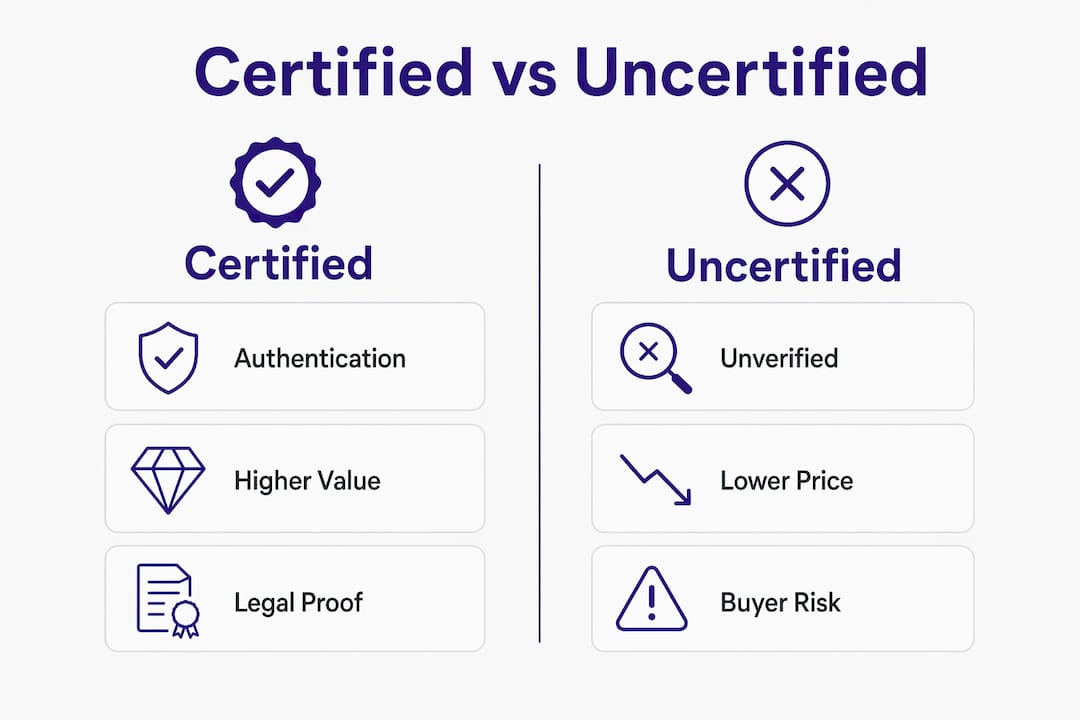
The gap between a certified and an uncertified vintage guitar is not just paperwork. It is a difference in market perception, pricing power, and risk exposure.
| Factor | Certified guitar | Uncertified guitar |
|---|---|---|
| Authenticity proof | Objective, science-backed documentation | Relies on dealer word or visual inspection |
| Pricing power | Commands a premium due to verified originality | Priced with uncertainty discount |
| Insurance eligibility | Recognized by insurers for accurate valuation | Often undervalued or disputed |
| Replaced parts disclosure | Fully documented in the certification report | Unknown or undisclosed |
| Resale confidence | Buyer risk is low; documentation transfers | Buyer assumes full authenticity risk |
The Gibson Certified Vintage program illustrates this gap clearly. Gibson’s appraisal letters document provenance and component authenticity in detail, including explicitly disclosing replaced parts like mounting screws. That transparency is the point. A certification that conceals replacements is not a real certification. It is marketing.
Uncertified guitars are not worthless, but they carry a risk premium that buyers price in. A collector selling an uncertified 1959 Les Paul faces skeptical buyers, longer negotiation cycles, and lower final prices. The same guitar with a Vintage Verified or Gibson Certified Vintage report sells faster and at a stronger number. The shift from dealer-based claims to independent verified certification is now a market expectation, not an exception.
Collectors who understand what makes guitars collectible recognize that certification is one of the few factors that objectively separates a documented asset from an undocumented one.
What practical steps can collectors take to certify their vintage guitars?
The guitar collecting authentication process is more accessible than most collectors realize. The key is choosing the right service and preparing the instrument properly before submission.
- Choose an independent certifier. Services like Vintage Verified operate without a conflict of interest because they focus solely on data accuracy and do not buy or sell instruments. Gibson Certified Vintage is the manufacturer’s own program and works best for Gibson instruments with documented factory history.
- Gather all existing provenance records. Original receipts, previous appraisals, photographs, and ownership history all strengthen the certification report. A detailed guitar provenance guide can help collectors organize this documentation before submission.
- Prepare the instrument honestly. Do not attempt to clean, refinish, or alter the guitar before certification. Certifiers need to see the instrument in its current state. Any alteration can compromise the analysis.
- Understand what the report covers. A thorough certification report documents every component, including replaced parts. Collectors should read the full report carefully and ask the certifier to clarify any findings they do not understand.
- Store and maintain certification documents securely. Keep both digital and physical copies of the report. If the guitar is ever sold, the certification transfers with it and should be included in the sale documentation.
Pro Tip: Before paying for certification, ask the service for a sample report. A credible certifier will share one without hesitation. If the report lacks component-level detail or does not disclose replaced parts, choose a different service.
The guitar appraisal process and certification often work together. An appraisal establishes market value; certification establishes authenticity. Collectors who want both should sequence them correctly: certify first, then appraise, because a certified instrument will receive a more accurate and defensible valuation.
Key Takeaways
Certification is the single most reliable way to establish a vintage guitar’s authenticity, protect its value, and support its resale in a market that now demands objective proof.
| Point | Details |
|---|---|
| Science drives modern certification | Tools like spectrometers and microscopy replace subjective dealer opinion with objective data. |
| Certification raises market value | Verified authenticity commands a price premium and reduces buyer risk at resale. |
| Replaced parts must be disclosed | Full transparency in certification reports, including replaced components, is what makes them credible. |
| Independent certifiers are the gold standard | Services without a buying or selling interest provide the most objective and legally defensible reports. |
| Certification supports insurance and appraisal | Insurers and appraisers rely on certification documents to assign accurate valuations to vintage instruments. |
Why certification is reshaping how I think about the vintage guitar market
The vintage guitar market has always had a trust problem. For decades, the word of a respected dealer was the closest thing to authentication most collectors could get. I have seen firsthand how that system breaks down. A dealer under pressure to close a sale will sometimes affirm what a buyer wants to hear rather than what the data would show.
What Vintage Verified and Gibson Certified Vintage have done is not just add a new service to the market. They have changed the standard of proof. Collectors who once accepted a handshake and a story now expect a report with component-level analysis. That shift mirrors exactly what happened in fine art when scientific authentication became the norm. The art world’s certification model combining provenance and scientific verification is now the template for serious guitar collecting.
The part that surprises most collectors is the transparency around replaced parts. Many assume that disclosed replacements hurt a guitar’s value. The opposite is true. A certification that honestly documents a replaced tuner or a refretted neck is more credible than one that claims everything is 100% original. Buyers trust the report because they know it was not written to flatter the seller.
My view is that certification will become a baseline requirement for any vintage guitar transaction above a certain price threshold within the next few years. Collectors who certify their instruments now are positioning themselves ahead of that shift.
— Vintage
Certified vintage guitars at Vintage-guitar-world

Vintage-guitar-world curates a selection of rare, restored, and well-documented vintage instruments, with detailed provenance information for every guitar listed. Collectors who want to understand the full picture before buying can explore the types of vintage guitars available, from classic American electrics to handcrafted acoustic and flamenco instruments. Each listing reflects the same commitment to transparency that defines credible certification: documented history, honest condition reporting, and expert evaluation. For collectors building a serious collection, Vintage-guitar-world also provides authentication guidance to help you evaluate instruments with confidence before and after purchase.
FAQ
What is the role of certification in guitar collecting?
Certification provides documented, science-backed proof of a vintage guitar’s authenticity, originality, and provenance. It protects collectors from counterfeits, supports accurate insurance and appraisal, and increases resale value.
How do I certify a vintage guitar?
Submit the instrument to an independent service like Vintage Verified or a manufacturer program like Gibson Certified Vintage, along with any existing provenance records. The certifier will analyze components and issue a detailed report.
Does certification increase a guitar’s value?
Certified guitars command stronger market prices because verified authenticity reduces buyer risk. The correlation between documented certainty and sale price is a recognized pattern in the vintage guitar market.
What happens if a guitar has replaced parts?
Replaced parts are documented in the certification report rather than concealed. Full disclosure of replacements is a sign of a credible certification, not a reason to avoid the process.
Is dealer authentication the same as formal certification?
Dealer authentication is subjective and carries a conflict of interest risk. Formal certification from an independent service uses scientific tools and produces legally defensible reports that dealer opinions cannot replicate.