














TL;DR:
- Proper maintenance keeps vintage guitars playable, preserves their tone, and maintains their value over time.
- Neglecting environmental conditions and routine care leads to structural damage and tonal deterioration.
Regular maintenance is the single most important factor in keeping a vintage guitar playable, tonally alive, and financially valuable over decades. Without consistent upkeep, even the most historically significant instrument will deteriorate into an unplayable relic. The difference between a guitar that appreciates in value and one that quietly falls apart often comes down to how well its owner understands the importance of guitar maintenance. Collectors and players who treat their instruments as living tools, rather than display pieces, protect both the sound and the investment they represent.
Why maintenance matters for vintage guitars: the core case
Vintage guitars are not static objects. Wood expands and contracts, finishes age, frets wear down, and hardware corrodes. Every one of these processes accelerates without proper care. A 1960s Gibson or a pre-war Martin does not hold its value simply because it is old. It holds value because it remains functional, structurally sound, and as close to original condition as responsible upkeep allows.
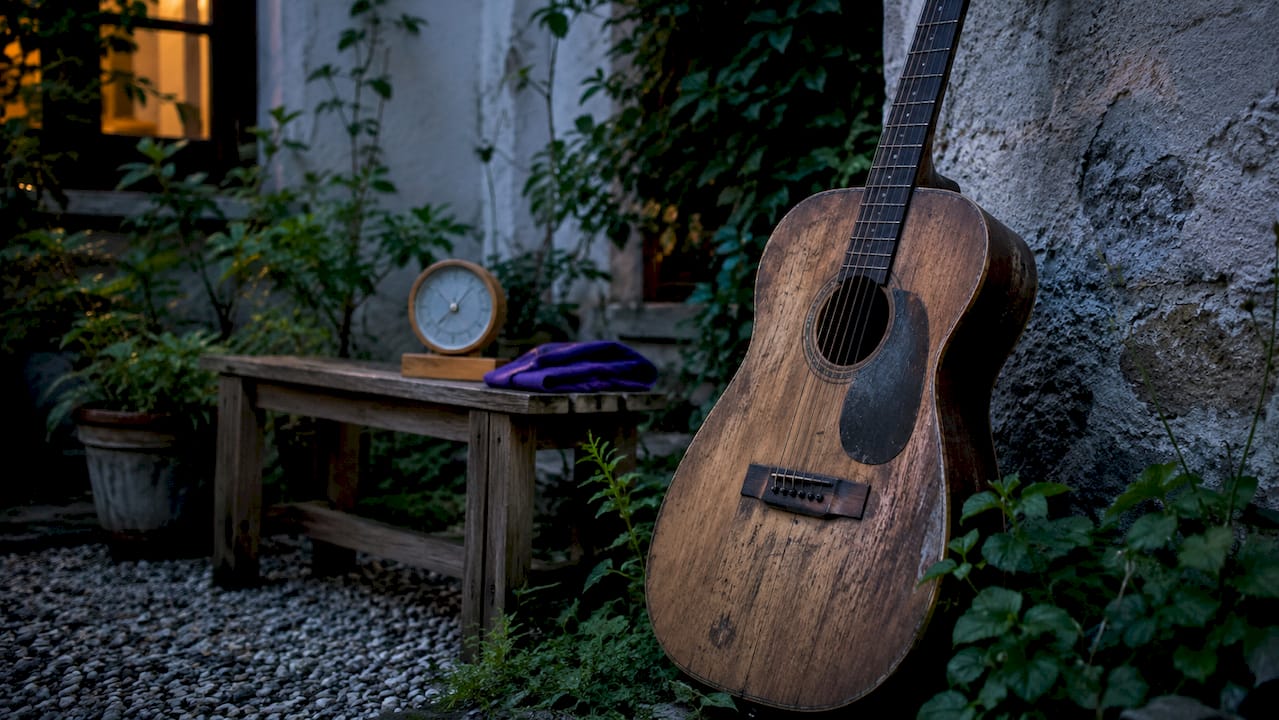
The tonal character of a vintage guitar is one of its most prized qualities. That character depends on the wood vibrating freely and the instrument being set up correctly. Neglect disrupts both. A guitar with a warped neck, dead strings, and a dirty fretboard does not sound like a vintage instrument. It sounds like a neglected one.
Proactive maintenance also prevents the kind of structural damage that forces expensive repairs. A small crack caused by low humidity can spread into a major body fracture. A worn fret that goes unaddressed leads to buzzing, intonation problems, and eventually an unplayable instrument. Catching these issues early is far cheaper and less invasive than correcting them after the fact.
What environmental conditions impact vintage guitar health?
The environment where you store a vintage guitar determines more about its long-term condition than almost any other factor. Ideal storage conditions call for a stable temperature of 70–75°F and relative humidity between 40–50%. These ranges keep the wood stable and prevent the expansion and contraction that cause structural damage.
Humidity below 35% causes wood to shrink, which leads to fret sprout. Fret sprout means the metal fret ends extend beyond the fretboard edge, making the neck feel sharp and uncomfortable to play. In severe cases, the fretboard itself can crack. This is one of the most common and preventable forms of vintage guitar damage.
High humidity above 60% creates the opposite problem. Wood swells, glue joints weaken, and the guitar’s top can warp or develop a belly behind the bridge. Both extremes are damaging, which is why consistent humidity control is non-negotiable for serious collectors.
Here is a quick reference for environmental targets:
| Condition | Ideal Range | Risk if Ignored |
|---|---|---|
| Temperature | 70–75°F | Finish cracking, wood stress |
| Relative humidity | 40–50% | Fret sprout, warping, cracks |
| Humidity low extreme | Below 35% | Wood shrinkage, fret sprout |
| Humidity high extreme | Above 60% | Swelling, glue failure, belly |
The nitrocellulose lacquer found on most pre-1970s American guitars is especially sensitive to environmental swings. This finish allows the wood to breathe and age, which contributes to the tonal character collectors prize. Harsh chemicals, direct sunlight, and temperature extremes all degrade it. Protecting the finish protects the sound.
Pro Tip: Invest in a digital hygrometer and place it inside your guitar case. Models from brands like D’Addario or Oasis cost under $30 and give you real-time readings so you can act before damage occurs.
Quality hard cases provide a stable microclimate that slows environmental fluctuations. A guitar left on a wall hanger in a room with forced-air heating is exposed to dramatic humidity swings every day. A case with a small humidifier inside keeps conditions far more consistent.
Which routine maintenance tasks preserve playability and sound?
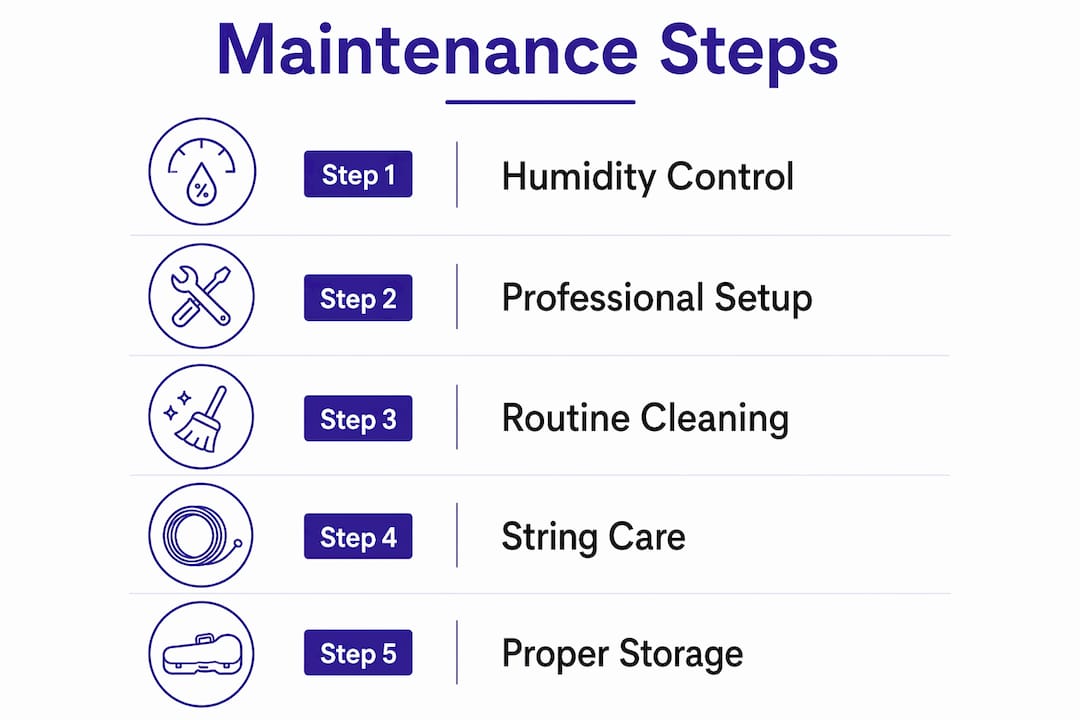
Consistent daily and monthly habits protect a vintage guitar far more effectively than occasional deep cleaning. These are the core tasks every collector should perform:
- Wipe down strings and the fretboard after every session. Sweat, skin oils, and dirt build up on strings and reduce tone quality and playability. A microfiber cloth takes ten seconds and meaningfully extends string life.
- Replace strings on a regular schedule. Dead strings rob a vintage guitar of its natural resonance. For a guitar played regularly, string replacement every four to six weeks maintains tone. For guitars played less often, replace strings at least twice a year.
- Condition the fretboard two to four times per year. Unfinished rosewood and ebony fretboards dry out without conditioning. Use a purpose-made fretboard oil such as Music Nomad F-ONE or Dunlop 65 Lemon Oil. Never use household oils or furniture polish.
- Adjust the truss rod when seasons change. The truss rod counters over 100 lbs of string tension and keeps the neck straight. Seasonal humidity changes cause the neck to shift. A small truss rod adjustment twice a year prevents buzzing and playability issues.
- Schedule a professional setup once a year. A yearly professional setup includes fret wear assessment, neck adjustment, electronics inspection, and intonation correction. This is the single most effective way to catch developing problems before they become costly repairs.
Pro Tip: When cleaning a vintage guitar, never use household cleaners like Windex or furniture polish. These products contain solvents that dissolve nitrocellulose lacquer. Use only products specifically formulated for vintage guitar finishes.
The acoustic guitar maintenance tips that apply to modern instruments apply to vintage ones too, but with greater care. Vintage materials are more fragile, and the stakes are higher. A wrong product choice on a 1958 Gibson J-45 is not easily undone.
How do maintenance and repairs affect vintage guitar value?
One of the most persistent myths in the vintage guitar world is that any repair automatically reduces value. The reality is more nuanced. Proper, well-executed repairs by a skilled luthier preserve and often protect market value. Sloppy, unnecessary, or irreversible modifications are what collectors penalize.
| Repair Type | Effect on Value | Notes |
|---|---|---|
| Professional refret | Neutral to positive | Restores playability; no discount applied by informed buyers |
| Neck reset | Neutral | Necessary for acoustic playability; expected on older instruments |
| Replaced tuners | Slight negative | Original hardware is preferred; keep originals if replaced |
| Structural crack repair | Neutral if invisible | Professional repair preserves integrity |
| Finish refinish | Significant negative | Destroys original patina and tonal aging |
Carter Vintage Guitars, one of the most respected dealers in the country, states that a proper refret carries no discount in their pricing. Playability is prioritized. A guitar with worn-down frets that cannot be played properly is worth less than one that has been correctly refreted and plays beautifully.
“A well-maintained vintage guitar is a living instrument that improves with age and use, not a static museum piece.” — Premier Guitar
The key distinction is between maintenance and modification. Replacing worn frets with period-correct wire, resetting a neck that has shifted over decades, or repairing a crack are all acts of preservation. Routing new pickup cavities, replacing the original bridge with a non-original part, or refinishing the body are modifications that destroy originality and reduce collector value.
The balance between preserving patina and maintaining function is a judgment call best made with a trusted luthier. Patina, the natural aging of wood and finish, is part of what makes a vintage guitar desirable. A professional understands how to restore function without erasing that history.
How can owners apply expert maintenance strategies at home?
Building a home maintenance routine does not require expensive tools or professional training. It requires consistency and the right basic equipment.
- Set a seasonal maintenance schedule. Align truss rod checks and fretboard conditioning with the change of seasons. Spring and fall bring the biggest humidity swings, which is when necks shift most.
- Use a digital hygrometer inside every case. Check it weekly. If humidity drops below 40%, add a case humidifier. If it rises above 55%, remove the humidifier and add a dehumidifier pack.
- Learn to assess neck relief. Hold the guitar at the first fret and the fret where the neck meets the body simultaneously. Look at the gap between the string and the 7th or 8th fret. A slight gap, roughly the thickness of a business card, is correct. More than that signals the need for a truss rod adjustment.
- Keep a microfiber cloth in every case. Wipe down the strings, body, and neck after every session. This takes less than a minute and prevents buildup that degrades tone and finish.
- Know when to call a luthier. Truss rod adjustments beyond a quarter turn, fret leveling, nut replacement, and any structural repair require professional hands. Attempting these without experience risks permanent damage to an irreplaceable instrument.
Pro Tip: Store guitars in their cases rather than on wall hangers, especially in climates with forced-air heating or air conditioning. Cases buffer against rapid humidity changes far better than open air.
Long-term storage requires extra attention. If you are storing a guitar for more than a few months, loosen the strings slightly to reduce tension on the neck and top. Check the case humidity monthly. A guitar stored correctly for years will emerge in the same condition it went in.
Key takeaways
Consistent, proactive maintenance is the most reliable way to preserve a vintage guitar’s playability, tone, and market value over time.
| Point | Details |
|---|---|
| Control humidity and temperature | Keep storage at 70–75°F and 40–50% humidity to prevent warping and fret sprout. |
| Clean after every session | Wiping strings and the fretboard after play extends string life and protects tone. |
| Schedule yearly professional setups | Annual luthier visits catch fret wear, neck issues, and electronics problems early. |
| Repairs preserve, modifications reduce value | Proper refrets and neck resets protect value; finish refinishing and hardware swaps hurt it. |
| Maintenance is an investment | Proactive care costs far less than correcting structural damage caused by neglect. |
What I’ve learned from years with vintage instruments
After years of working with vintage guitars, the pattern is always the same. The instruments in the best condition are the ones whose owners treated maintenance as a habit, not a chore. They did not wait for a problem to appear. They checked humidity, wiped down strings, and brought their guitars in for a setup every year without fail.
The collectors who regret decisions almost always regret neglect, not maintenance. A guitar that sat in a dry attic for a decade without a humidifier. A neck that developed a back-bow because no one checked the truss rod for years. These are the stories that end with expensive repairs or, worse, permanent damage to an instrument that cannot be replaced.
What surprises most people is how little time proper care actually takes. Ten seconds with a microfiber cloth after playing. A monthly humidity check. A yearly visit to a luthier you trust. That is the entire routine for most guitars. The return on that small investment is an instrument that plays better, sounds better, and holds its value for generations.
The other thing worth saying clearly: do not be afraid of your vintage guitar. Play it. Vintage instruments are meant to be used. The tonal aging that collectors prize happens when wood vibrates regularly. A guitar that sits unplayed in a case does not improve. It just waits.
— Vintage
Vintage-guitar-world: where care meets craftsmanship
At Vintage-guitar-world, every instrument in the catalog has been evaluated, tested, and prepared to the standard this article describes. You are not buying a guitar that needs work. You are buying one that is ready to play.

Whether you are building a collection or looking for your next player-grade instrument, the types of vintage guitars available at Vintage-guitar-world span classical, flamenco, acoustic, and electric categories, each with detailed provenance and condition notes. For collectors who want to understand what makes an instrument worth owning and protecting, the guitar valuation guide is the right place to start. Every guitar Vintage-guitar-world offers comes with the kind of documentation and expert assessment that makes long-term ownership and maintenance straightforward.
FAQ
Why does humidity matter so much for vintage guitars?
Humidity controls whether the wood in a vintage guitar expands or contracts. Levels below 35% cause fret sprout and cracking, while levels above 60% cause swelling and glue failure.
Does refretting a vintage guitar reduce its value?
A professional refret does not reduce value when done correctly. Dealers like Carter Vintage Guitars apply no discount for proper refrets because playability is a primary factor in market desirability.
How often should a vintage guitar be professionally serviced?
A yearly professional setup is the standard recommendation. It covers fret wear, neck adjustment, electronics inspection, and intonation, all of which prevent larger problems from developing.
What is the biggest mistake vintage guitar owners make?
The most common mistake is neglecting humidity control, especially in winter when forced-air heating drops indoor humidity well below the safe 40–50% range. A $20 hygrometer and a case humidifier prevent most of the damage this causes.
Can I adjust the truss rod myself?
Small adjustments of a quarter turn or less are manageable for owners who understand neck relief. Larger corrections, or any adjustment on a guitar with a stiff or unusual truss rod, should be handled by a professional luthier to avoid permanent neck damage.