














TL;DR:
- Lightly played guitars develop authentic tonal maturity through natural wood aging and habitual use, making them sought after. They offer significant savings—often 30% to 70% below new prices—while providing superior playability and character. Emotional bonds with these instruments stem from their genuine history, physical familiarity, and the unique “mojo” that enhances performance and ownership.
Lightly played guitars are defined by their rare combination of genuine tonal maturity, tactile familiarity, and documented history that new instruments simply cannot replicate off the shelf. The appeal of secondhand guitars in this condition goes far beyond cosmetics. When a guitar has been played with care but not abused, its wood, hardware, and finish have all begun the slow transformation that separates a living instrument from a factory product. For collectors and working musicians alike, that transformation is the point. Understanding why lightly played guitars appeal requires looking at the physical science of aging wood, the psychology of player identity, and the hard economics of the used instrument market.
Why lightly played guitars appeal: the physical science of tone
The most concrete reason gently played guitars attract serious buyers is what happens inside the wood itself. Aging wood improves stiffness-to-weight ratio, enhances resonance, and reduces internal dampening, contributing to tonal clarity and responsiveness. That means a guitar that has been played regularly for five to ten years will project sound more efficiently than an identical model fresh from the factory. The physics are real, not romantic.
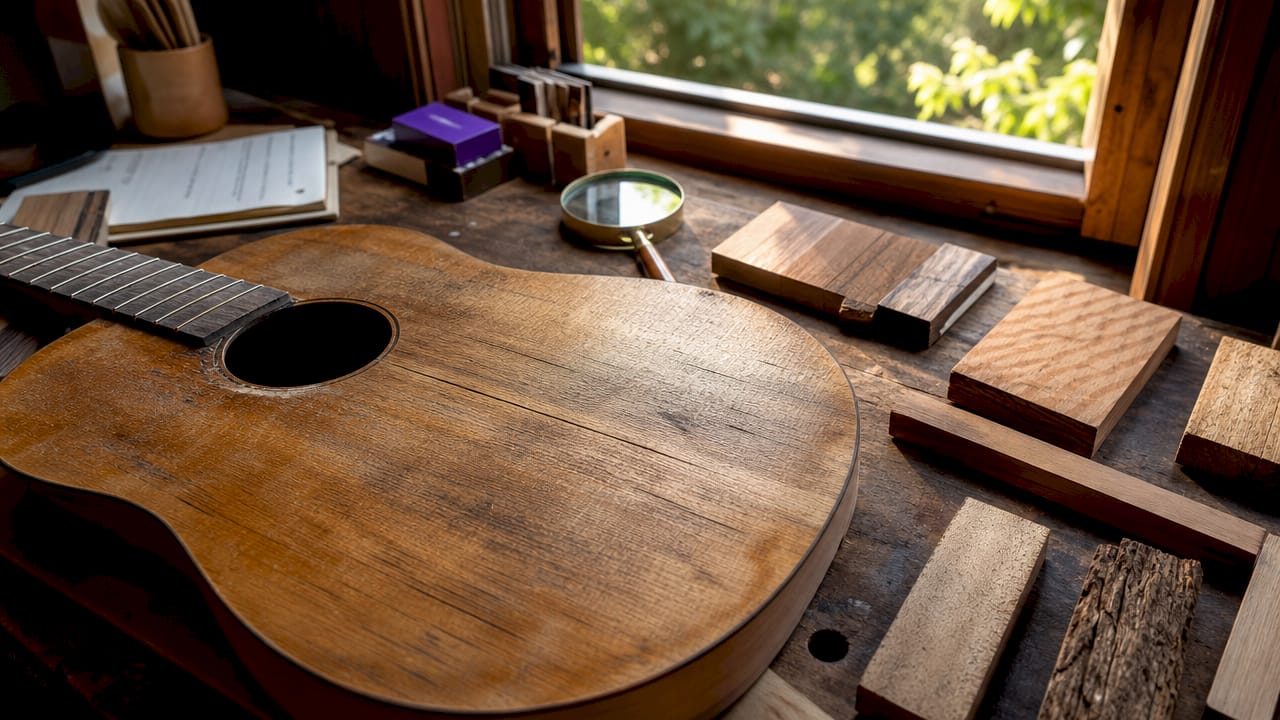
The process works like this. As hemicellulose breaks down and resins crystallize inside the wood, the soundboard becomes lighter yet stiffer, amplifying tonal clarity and responsiveness in ways that no artificial treatment fully replicates. This is why luthiers and acoustic engineers consistently note that old-growth wood and natural aging produce tonal qualities rarely matched by modern manufacturing. The difference is audible on quality instruments and perceptible even on mid-range models.
Beyond the wood itself, the physical wear patterns on a lightly played guitar contribute to playability in measurable ways. A fretboard that has been played regularly develops a subtle smoothness that makes position shifts faster and more comfortable. Neck profiles soften slightly with use, conforming to the natural grip of a player’s hand. The finish, particularly on nitrocellulose-lacquered instruments, thins and opens up over time, allowing the body to vibrate more freely.
The key distinction here is between natural aging and artificially relic’d guitars. Natural wear on a lightly played instrument reflects actual use. Every mark has a cause. Artificially aged guitars, while crafted with skill, start their life already worn. They look played in but have not yet developed the internal wood changes that produce the tonal benefits described above.
- Natural aging: genuine tonal improvement through wood chemistry and real use
- Fretboard smoothing: faster, more comfortable playability from consistent contact
- Finish thinning: improved body resonance, especially on nitro-finished instruments
- Hardware patina: reduced surface friction and tactile warmth from oxidation
What are the financial benefits of buying lightly played guitars?
The economics of buying lightly used guitars are straightforward and significant. Savings of 30% to 70% compared to new prices are standard in the secondhand guitar market, and that gap gives buyers access to professional-grade instruments they could not otherwise afford. A player who budgets $800 for a new mid-tier acoustic can often find a lightly played professional model in the same price range. That is not a minor upgrade. It is a category shift.

The practical advantages compound when you factor in build quality. Guitars made ten or fifteen years ago, particularly from major manufacturers, often feature tighter wood grain, better fret work, and hardware that has already proven its durability. Better fret work, neck profiles, and hardware improve feel and playability in ways that are often more perceptible than tonal differences at high price points. Feel drives practice consistency, and practice consistency drives development. Buying a lightly played guitar with superior construction is often the most direct path to a better playing experience.
That said, the financial case for secondhand instruments requires due diligence. Before committing to any purchase, work through this checklist:
- Fret wear: Check for flat spots or deep grooves on the frets. A full refret can cost $200 to $400 and affects the guitar’s original character.
- Neck condition: Look for warping, back bow, or excessive relief. Neck repairs can be costly and are often harder to detect than surface wear.
- Electronics: Test every pickup, switch, and pot on electric guitars. Crackling or dead pickups signal deferred maintenance.
- Nut and saddle: Worn or improperly cut nuts cause tuning instability and intonation problems that are easy to miss on a quick play-through.
- Body integrity: Check for cracks, lifted braces on acoustics, and any signs of amateur repair work around the binding or finish.
Pro Tip: Focus on the “wear-to-value” ratio. Minimal fret wear combined with a stable neck means you are buying character without inheriting expensive problems. Always test before buying to confirm mechanical health before price becomes the deciding factor.
Why do players form emotional bonds with lightly played instruments?
The emotional pull of a lightly played guitar is not sentimental weakness. It is a documented psychological phenomenon with real consequences for performance and creativity. Instruments with honest wear provide superior tactile experiences that take years of consistent play to replicate on new guitars. Players experience reduced decision fatigue and greater performance consistency from familiarity with a well-played instrument. When your hands already know the guitar, your mind is free to focus on music.
The concept collectors call “mojo” describes this quality. It is the accumulated character of an instrument that has been played, repaired, adjusted, and loved. Mojo is not a marketing term. It refers to the specific combination of wear patterns, tonal development, and physical history that makes one guitar feel alive in a way that an identical new model does not. Rory Gallagher’s famous 1961 Fender Stratocaster is the most cited example in guitar culture. Gallagher rejected the idea of gear as a status symbol entirely, playing the same heavily worn Strat for decades because it had become an extension of his hands and his voice.
“The guitar is a tool for making music. The wear is proof it has done its job.” This philosophy, attributed to Gallagher’s approach, captures why so many serious players and collectors actively seek instruments with genuine history rather than pristine condition.
The psychological benefits extend beyond familiarity:
- Reduced performance anxiety from playing an instrument that already feels broken in
- Stronger sense of identity and ownership when a guitar carries visible history
- Freedom from the anxiety of “first scratch” that comes with a brand-new instrument
- Connection to a lineage of players who shaped the instrument’s character before you
Relic’d guitars, which are factory-aged instruments like the Fender Road Worn series, address some of these needs. Fender masterbuilders note that relic preferences are deeply personal and exist for tactile satisfaction and aesthetic enjoyment, not to fake a history the player did not earn. That distinction matters to collectors, even if it is irrelevant to casual buyers.
Lightly played vs. relic’d vs. vintage vs. new: which is right for you?
Understanding the differences between these four categories is the most practical thing a buyer can do before entering the market. Each category has a distinct profile of cost, tone, maintenance, and collector value.
| Category | Typical price range | Tonal character | Maintenance risk | Collector value |
|---|---|---|---|---|
| Brand new | Full retail | Factory fresh, no aging | Lowest | Depreciates immediately |
| Lightly played | 30%–70% below retail | Early tonal development, genuine wear | Low to moderate | Holds value well |
| Factory relic’d | Near or above retail | New instrument with worn aesthetics | Low | Limited collector appeal |
| Vintage (pre-1980) | Premium to very high | Fully aged, old-growth wood | Higher, specialist care | Strong investment value |
The tonal superiority of vintage instruments comes from old-growth wood, decades of natural aging, and hand-crafted details rarely replicated in modern production. That superiority carries a price premium that puts true vintage guitars out of reach for many buyers. Lightly played guitars occupy the most practical middle ground: genuine tonal development, real history, and a price that reflects actual market value rather than collector scarcity.
Factory relic’d guitars like the Fender Road Worn series combine craftsmanship and artistry to replicate a played-in feel and offer immediate tactile comfort. They are a legitimate choice for players who want that feel without the search process. The trade-off is that they lack the internal wood aging that produces genuine tonal benefits, and they carry little collector value compared to authentically worn instruments.
Pro Tip: Use the guitar craftsmanship checklist to assess authenticity and build quality before committing to any category. The difference between a well-maintained lightly played guitar and a neglected one is not always visible at first glance.
Key takeaways
Lightly played guitars appeal because they deliver genuine tonal maturity, superior tactile familiarity, and real financial value that new instruments at the same price point cannot match.
| Point | Details |
|---|---|
| Wood aging improves tone | Natural hemicellulose breakdown creates a lighter, stiffer soundboard with better resonance and clarity. |
| Savings of 30%–70% | Buyers access professional-grade instruments at a fraction of new retail prices. |
| Mojo is real | Genuine wear creates tactile familiarity and psychological comfort that reduces performance anxiety. |
| Inspect before buying | Fret wear, neck condition, and electronics must be evaluated to avoid costly hidden repairs. |
| Relic’d is not the same | Factory-aged guitars offer aesthetics and comfort but lack the internal tonal development of naturally aged instruments. |
What years of working with used guitars actually taught me
I have handled hundreds of lightly played and vintage instruments over the years, and the single most consistent observation I can share is this: the guitars that players remember are never the pristine ones. They are the ones that fought back a little, that had a story in the grain and a feel in the neck that no spec sheet could describe.
The mistake I see most often from newer collectors is treating condition as the primary variable. They pass on a 1970s Gibson with a repaired headstock because it is not “clean,” and they buy a flawless modern reissue because it photographs well. Six months later, they are playing the reissue and wondering why it does not inspire them. The repaired Gibson would have made them play differently, think differently, and probably better.
What I have found actually works is evaluating a used guitar the way you would evaluate a used car from a careful owner. Light, honest wear is a positive signal. It means the instrument was played, not stored. It means someone cared enough to use it. The 7-point checklist for buying vintage guitars I recommend to every serious buyer focuses on mechanical health first and aesthetics second. That order is not arbitrary. A guitar that plays in tune, holds its neck, and responds to your touch will inspire you every time you pick it up. A guitar that looks perfect but feels dead will collect dust.
My honest advice: stop worrying about the finish and start listening to the wood.
— Vintage
Find your next lightly played guitar at Vintage-guitar-world

Vintage-guitar-world curates a selection of lightly played, gently used, and fully vintage instruments that have been evaluated by experts before they reach any buyer. Every guitar in the collection is assessed for mechanical health, tonal quality, and authentic character. You will not find factory-fresh instruments dressed up to look old. You will find real guitars with real histories, priced to reflect genuine market value. Whether you are searching for a classical, flamenco, acoustic, or electric instrument, the types of vintage guitars available cover a range of eras, styles, and price points. Browse the collection or contact the team directly to discuss what you are looking for.
FAQ
What makes a guitar “lightly played”?
A lightly played guitar shows minimal but genuine wear from regular use, including slight fretboard smoothing, light finish checking, and hardware patina, without significant fret wear or structural damage. The term is used in the secondhand market to indicate an instrument in excellent functional condition with authentic character.
Do lightly played guitars really sound better than new ones?
Many do, particularly acoustics and hollow-body electrics. Aging wood improves resonance and reduces internal dampening, producing tonal clarity that new instruments have not yet developed. The difference is most noticeable on quality instruments with solid wood construction.
What should I check before buying a used guitar?
Prioritize fret wear, neck stability, and electronics. Hidden issues like neck fatigue or worn frets can require expensive repairs that eliminate the financial advantage of buying secondhand. Always play the instrument before purchasing, or have it evaluated by a qualified technician.
How is a lightly played guitar different from a relic’d guitar?
A lightly played guitar has developed its wear and tonal character through actual use over time. A relic’d guitar is artificially aged at the factory to replicate that look and feel. Fender masterbuilders confirm that relic finishes are designed for personal enjoyment and tactile comfort, not to deceive buyers about an instrument’s history.
Are lightly played guitars a good investment?
Lightly played guitars from reputable manufacturers hold their value better than new instruments, which depreciate immediately after purchase. Instruments with genuine tonal development and documented provenance tend to appreciate over time, particularly those from discontinued production runs or limited editions.