














TL;DR:
- A custom order vintage guitar is a purpose-built instrument designed to replicate a specific historical model according to the buyer’s specifications. The process involves careful decision-making, selecting a skilled luthier, and thorough documentation to ensure authenticity and provenance. Clear communication, accurate specifications, and detailed records enhance the instrument’s value and historical integrity.
A custom order vintage guitar is a purpose-built instrument crafted to replicate the tone, construction, and aesthetic of a specific historical era, tailored entirely to your specifications. This custom guitar order process sits at the intersection of luthiery, music history, and personal expression. Whether you want a late-1950s Les Paul recreation or a pre-war acoustic with modern playability, the path from concept to finished instrument follows a clear sequence. This guide covers every stage of that process, from setting your goals and choosing a builder to verifying vintage authenticity and documenting provenance.
What to consider before starting your custom order vintage guitar
The most consequential decisions in any custom vintage guitar commission happen before you contact a single builder. Getting these choices right determines whether your finished instrument genuinely captures the vintage feel you want or falls short in ways that are expensive to fix.

Define your era and model inspiration first. The vintage guitar world is vast. A 1952 Telecaster, a 1959 Les Paul Standard, and a 1963 ES-335 each demand different construction methods, tonewoods, and hardware. Narrowing your target era and model gives every subsequent decision a reference point. Without that anchor, builders cannot source the right materials or apply the right construction techniques.
Budget and timeline shape everything. Custom vintage builds typically span several months, and build timelines from consultation to delivery can run six months to over a year for complex commissions. Costs vary widely based on materials, aging work, and builder reputation. Set a realistic ceiling before you start, and factor in shipping, setup, and potential appraisal fees.
Decide how far you want to go on vintage correctness. This is the central tension in every custom vintage commission. Some players want a guitar that is historically accurate down to the hide glue and period-correct nickel hardware. Others want vintage aesthetics with modern conveniences like a rolled fretboard edge or a locking nut. Neither approach is wrong, but you need to decide before the build starts.
The table below summarizes the key specification categories and the choices you will face in each:
| Specification | Vintage-Correct Option | Modern Variation |
|---|---|---|
| Body wood | Period-accurate mahogany or alder | Lightweight swamp ash or chambered body |
| Neck profile | Chunky C or V shape per era | Slimmer modern C for comfort |
| Frets | Vintage narrow/low nickel-silver | Stainless steel jumbo frets |
| Hardware | Nickel-plated Kluson-style tuners | Locking tuners, gold hardware |
| Finish | Nitrocellulose lacquer | Polyurethane for durability |
| Electronics | Period-correct pots and caps | Modern shielded wiring, push-pull pots |
Tonewoods, neck profiles, and hardware are not cosmetic choices. They define how the guitar sounds, feels, and ages. A vintage vs. new guitar comparison makes clear that the construction methods of a given decade are inseparable from the sonic character collectors prize.
How to find and choose the right luthier or custom shop
Selecting the right builder is the single most important decision in the custom guitar order process. A skilled luthier who specializes in vintage recreations brings not just woodworking ability but deep knowledge of historical construction methods, period-correct materials, and finishing techniques.
Start your research by reviewing portfolios focused specifically on vintage-style builds. A builder who excels at modern metal guitars may not understand the subtleties of a 1950s neck joint or the behavior of nitrocellulose lacquer over time. Look for documented examples of the era you want recreated, and read customer feedback that speaks directly to accuracy and communication.
Key questions to ask any prospective builder before committing:
- What vintage eras do you specialize in, and can you show completed examples?
- Do you source period-correct or historically accurate reproduction parts?
- Will you provide documentation, including a build log, spec sheet, and photos throughout the process?
- What is your policy on design changes once the build has started?
- Can you support provenance documentation or connect me with an appraiser?
Luthier selection criteria consistently point to portfolio review, reputation checks, and upfront budget discussions as the foundation of a successful commission. Transparency about materials and timelines is non-negotiable.
Pro Tip: Ask your builder to send photos at three specific milestones: after the body and neck are shaped, after the finish is applied, and after final setup. This gives you clear checkpoints to catch any issues before they become permanent.
Established programs like the Gibson Custom Shop demonstrate what a well-structured vintage replication program looks like at scale. Their Historic Reissue program replicates late-1950s Les Paul guitars using vintage-correct methods, parts, and construction principles. Independent luthiers can match this level of accuracy, but only if they have the experience and the right sourcing relationships.
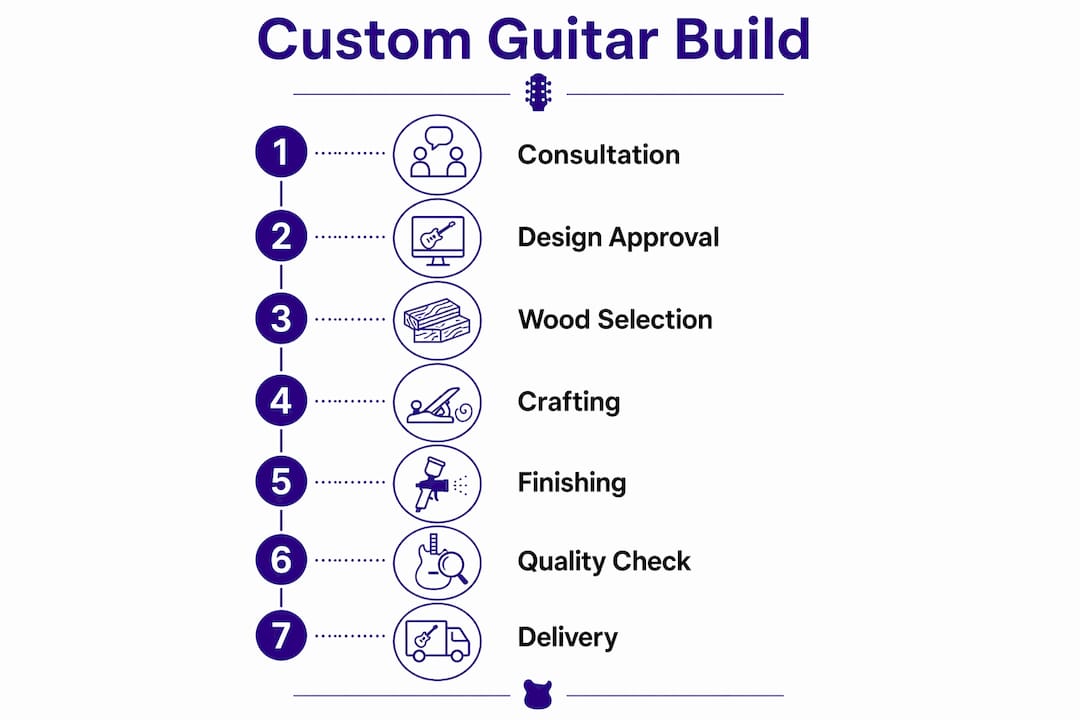
What does the custom guitar order process look like step by step?
Understanding the full sequence of a custom vintage commission removes the anxiety of the unknown and helps you stay an informed participant rather than a passive customer.
-
Initial consultation. You present your target era, model inspiration, and key specifications. The builder assesses feasibility, discusses material availability, and provides a quote and estimated timeline.
-
Design approval and contract. Both parties agree on a written spec sheet covering body shape, wood species, neck profile, hardware, finish type, and electronics. A deposit, typically 30 to 50 percent of the total cost, is paid at this stage.
-
Materials sourcing. The builder locates vintage-accurate components. This may include aged tonewoods, period-correct hardware, and reproduction pickups wound to vintage specifications. Sourcing quality materials can add weeks to the timeline.
-
Build phase. The luthier constructs the guitar in stages: body and neck shaping, joinery, fretwork, finishing, and electronics installation. Active communication during the build allows you to catch and correct details before they are locked in.
-
Aging and finishing. If you have requested a vintage patina, this stage involves applying artificial aging techniques to the finish, hardware, and fretboard. Programs like Murphy Lab have refined this process to replicate finish checking, lacquer wear, and tarnishing at multiple levels of intensity.
-
Final setup, inspection, and shipping. The builder performs a full playability setup, photographs the completed instrument, and packages it for safe transit. You should receive a build log, spec sheet, and any provenance documentation at this point.
The table below maps each stage to its typical duration and your key responsibility as the buyer:
| Build stage | Typical duration | Your role |
|---|---|---|
| Consultation and spec agreement | 1 to 2 weeks | Define goals, review contract |
| Materials sourcing | 2 to 8 weeks | Approve any substitutions |
| Body and neck construction | 4 to 10 weeks | Review milestone photos |
| Finishing and aging | 2 to 6 weeks | Confirm aging level and color |
| Final setup and shipping | 1 to 2 weeks | Inspect on arrival, confirm specs |
How to ensure vintage authenticity and document provenance
Authenticity in a custom vintage guitar is not just about original parts. Transparent provenance documentation is equally critical to value and buyer confidence. A guitar with a complete paper trail commands more respect and, in many cases, more resale value than one with no documentation at all.
The Gibson Certified Vintage program sets a clear standard here. Certified Vintage instruments include a certificate of authenticity, a letter of appraisal detailing the instrument’s history, and full disclosure of any restoration work or replaced parts. Custom commissions should aim for the same level of transparency.
Key documentation your builder should provide:
- A detailed spec sheet listing every material and component used
- A build log with dated photos from each construction stage
- Certificates for any vintage-correct or certified reproduction parts
- An appraisal letter from a qualified instrument appraiser if the commission value warrants it
- Written disclosure of any components that deviate from the original vintage specification
Artificial aging techniques pioneered by Murphy Lab replicate finish checking, lacquer wear, and hardware tarnishing to give new guitars an authentic vintage patina. These techniques are legitimate and widely respected, but they must be disclosed. A builder who presents artificially aged work as natural wear is misrepresenting the instrument.
Provenance is the biography of your guitar. The more complete and honest that biography is, the more the instrument is worth to you and to every future owner.
Pro Tip: Commission a formal guitar appraisal once your custom build is complete. An independent appraisal letter creates an official record of the instrument’s specifications, condition, and value at the time of completion.
Understanding how to verify vintage authenticity is a skill worth developing before your guitar arrives. Knowing what to look for means you can confirm that the finished instrument matches your agreed specifications rather than relying entirely on the builder’s word.
Common challenges when commissioning a custom vintage guitar
Even well-planned commissions encounter friction. Knowing the most common setbacks in advance lets you respond without panic or conflict.
Build delays are the norm, not the exception. Sourcing vintage-accurate tonewoods or period-correct hardware can take longer than anticipated. A builder who quotes six months may need eight. Build this buffer into your expectations from the start, and agree in writing on how the builder will communicate delays.
Specification drift happens gradually. A builder may substitute a slightly different hardware piece or adjust a neck dimension without flagging it explicitly. Luthier communication practices confirm that late-stage changes can add time and cost, but catching them early through milestone photos prevents bigger problems.
Watch for these specific issues when your guitar arrives:
- Hardware finish does not match the agreed specification (nickel vs. chrome, for example)
- Neck profile feels noticeably different from the agreed shape
- Finish color or aging level does not match approved samples
- Electronics do not function as specified
- Documentation is incomplete or missing components
If you identify a discrepancy, document it immediately with photos and contact your builder in writing. Most reputable luthiers will address legitimate issues. The key is to act quickly and keep the conversation factual rather than emotional.
Key takeaways
A successful custom vintage guitar commission depends on clear specifications, a skilled and transparent builder, and thorough provenance documentation from day one.
| Point | Details |
|---|---|
| Define your era before anything else | Choosing a specific vintage decade and model gives every build decision a clear reference point. |
| Vet your builder on vintage-specific work | Review portfolios of completed vintage recreations, not just general custom builds. |
| Document every stage of the build | Photos, spec sheets, and build logs create provenance that protects your investment long-term. |
| Aging must be disclosed | Artificial patina techniques are legitimate but must be declared openly in all documentation. |
| Inspect on arrival against your spec sheet | Compare the finished guitar point by point to the agreed contract before accepting delivery. |
Why provenance matters more than people expect
I have seen players spend months agonizing over pickup winding specs and neck profiles, then accept a finished guitar with zero documentation. That is the wrong priority order. The physical instrument matters, of course. But the paper trail is what separates a well-documented commission from a guitar that future buyers or appraisers will treat with skepticism.
The most satisfying custom vintage commissions I have encountered share one quality: the builder treated documentation as part of the craft, not an afterthought. Build logs, dated photos, spec sheets, and appraisal letters are not bureaucratic overhead. They are the biography of the instrument. A guitar’s provenance can add significant confidence and collector value, and that value compounds over time.
My honest advice is to spend as much energy choosing a builder who communicates clearly and documents thoroughly as you spend on tonewood selection. The wood matters. The paper matters just as much.
— Vintage
Discover vintage guitar craftsmanship at Vintage-guitar-world

Vintage-guitar-world offers a curated selection of rare, restored, and expertly evaluated instruments spanning classical, flamenco, acoustic, and electric categories. Every guitar in the collection comes with detailed historical context and condition documentation, so you know exactly what you are buying. If you are building your knowledge of vintage styles before commissioning a custom build, exploring the types of vintage guitars available gives you a concrete reference for the eras and models worth replicating. For buyers weighing a commission against a direct purchase, the vintage vs. reissue comparison at Vintage-guitar-world lays out the trade-offs clearly. Expert valuation and certification services are also available for collectors who want formal documentation on any instrument.
FAQ
What is a custom order vintage guitar?
A custom order vintage guitar is a newly built instrument designed to replicate the specifications, materials, and aesthetics of a specific historical guitar model. It differs from a reissue in that every detail is tailored to the buyer’s preferences rather than a manufacturer’s standard production spec.
How long does the custom guitar order process take?
Most custom vintage guitar commissions take between six months and one year from initial consultation to delivery. Complex builds requiring rare tonewoods or extensive aging work can take longer.
How do I verify vintage authenticity in a custom build?
Request a full spec sheet, build log with photos, and certificates for any vintage-correct parts used. Compare the finished guitar against the agreed specifications on arrival, and consider commissioning an independent appraisal to create an official record.
What is Murphy Lab aging and should I request it?
Murphy Lab is Gibson’s artificial aging program that replicates finish checking, lacquer wear, and hardware tarnishing at multiple intensity levels. Independent luthiers use similar techniques. It is a legitimate way to achieve a vintage patina, but it must be disclosed in all documentation.
Does provenance documentation affect the value of a custom vintage guitar?
Yes. Transparent documentation including appraisal letters, certificates, and build logs builds buyer confidence and supports resale value. A well-documented custom commission is treated with far more credibility by collectors and appraisers than an undocumented instrument.