














TL;DR:
- Displaying collectible guitars requires careful environmental control to preserve their finish and structure over time. Using appropriate mounts or cases, managing light exposure with UV filters, and maintaining a regular care routine are essential for long-term preservation. Creative, targeted display arrangements enhance collection storytelling while safeguarding these valuable instruments.
Knowing how to display collectible guitars well is harder than it looks. The guitar that survived decades deserves better than a nail in the wall and a prayer. Most collectors struggle with the same tension: you want your instruments visible, striking, even conversation-stopping. But every hour a guitar spends exposed to light, humidity swings, and dust is an hour that chips away at its finish, its wood, and its value. This guide walks you through every layer of that problem, from environment control and mounting options to lighting strategy, ongoing maintenance, and creative styling ideas that make your collection look like it belongs in a museum.
Table of Contents
- Key takeaways
- How to display collectible guitars: preparation comes first
- Comparing wall mounts, stands, and display cases
- Lighting and UV exposure: the hidden threat
- Ongoing maintenance for displayed guitars
- Creative display ideas that actually work
- My perspective on displaying guitars the right way
- Explore display-worthy guitars at Vintage-guitar-world
- FAQ
Key takeaways
| Point | Details |
|---|---|
| Control the environment first | Maintain 40%–55% relative humidity and 70°F–78°F before choosing any display method. |
| Match display method to guitar value | Use open wall mounts for players and sealed display cases for rare or fragile collectibles. |
| Manage light exposure deliberately | UV-filtering glass and timer-controlled lighting protect finishes without sacrificing visual impact. |
| Maintain a care routine | Dust, humidity checks, and condition inspections should happen on a regular schedule, not just when something looks wrong. |
| Document your collection | Photograph and register each instrument to protect its history and support insurance or resale. |
How to display collectible guitars: preparation comes first
Before you hang a single guitar, you need to know what you are hanging it into. The room itself is the first variable, and most collectors skip straight to the hardware.
The non-negotiable baseline is humidity. Guitars are wood, and wood moves. The recommended safe zone for displayed instruments is 40%–55% relative humidity at a temperature between 70°F and 78°F. Go below 40% and you risk cracking, fret sprout, and glue joint failure. Go above 55% for extended periods and the top can swell, the neck can warp, and mold becomes a real possibility.
Here is what a solid preparation checklist looks like before you begin your setup guide for collectible guitars:
- Place a hygrometer in the room, not just inside a case. Room-level monitoring catches HVAC fluctuations before they stress your instruments.
- Identify problem zones. Exterior walls, windows, heating vents, and air conditioning registers create microclimates that can differ from the center of the room by 10 or more humidity points.
- Clean each guitar before display. A light wipe-down removes skin oils, dust, and any residue that will bond to the finish under consistent light exposure. For detailed steps, the guitar care and storage guide at Vintage-guitar-world is a practical starting point.
- Check hardware, tuning machines, and nut slots. Anything loose now will only get worse in a display setting where the guitar is stationary for long periods.
- Do not display guitars on exterior walls in uninsulated rooms. Temperature differentials between the wall surface and room air cause repeated expansion and contraction cycles that punish the finish over months.
Pro Tip: A soundhole hygrometer placed inside an acoustic guitar gives you accurate internal humidity data, which can differ significantly from room readings, especially in open display settings.
Comparing wall mounts, stands, and display cases
Once the environment is under control, you can choose your display method with confidence. Each option involves real trade-offs between protection, accessibility, and visual impact.
Wall hangers
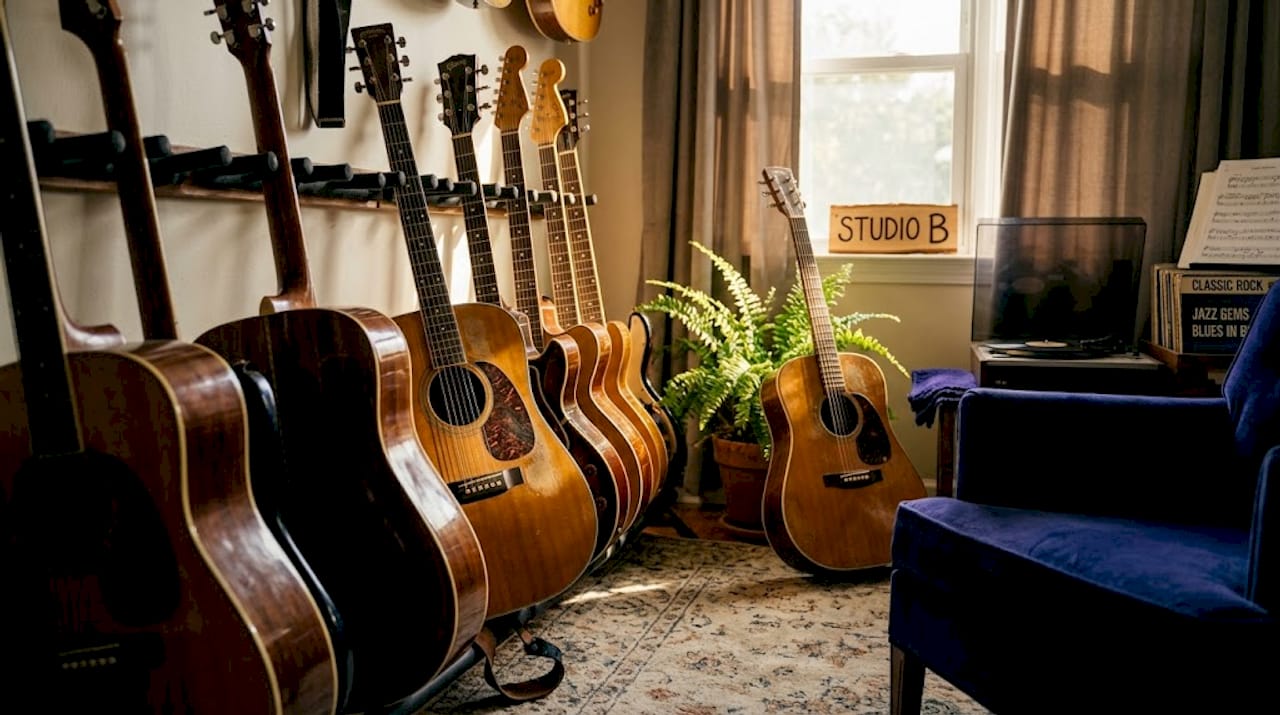
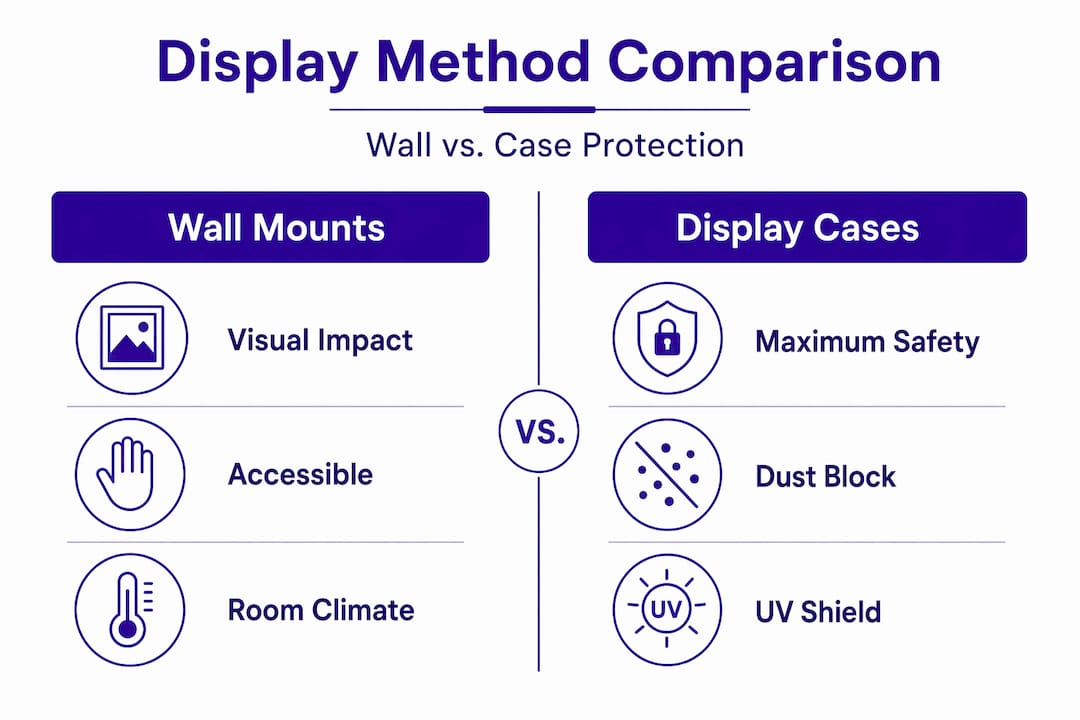
Wall hangers keep guitars off the floor, reduce tipping risk, and create the most visually dramatic effect for a collection. They work well for guitars you play regularly or rotate through your hands frequently. The downsides are real, though. Open wall mounting exposes instruments directly to HVAC-driven humidity fluctuations, and there is zero dust protection. Use wall mounts for guitars that tolerate handling and environment variation, not your most fragile or valuable pieces.
Stands
Floor stands and countertop cradles offer flexibility and low cost. They are ideal for temporary displays or for showing a single guitar prominently. The risk is tipping, especially in households with children, pets, or high foot traffic. Stands provide no dust or humidity buffering at all, so they function best in rooms where you have already achieved stable environmental control.
Display cases
Display cases decouple the guitar from the room environment almost entirely, which makes them the strongest option for rare instruments. Cases with UV-filtering glass or acrylic panels protect the finish from light damage, and the sealed interior can be equipped with small in-case humidifiers for precise humidity management. The trade-off is access. You will not grab a cased guitar for a quick play, which makes cases best suited for instruments you own primarily as collectibles rather than players.
Here is a comparison that covers the main display options side by side:
| Method | Protection level | Dust control | UV protection | Accessibility | Best for |
|---|---|---|---|---|---|
| Wall hanger | Low | None | None | High | Player-grade collectibles |
| Floor/countertop stand | Low | None | None | High | Short-term or rotating display |
| Open display shelf | Medium | Low | None | Medium | Decorative arrangements |
| Enclosed display case | High | Excellent | Optional (UV glass) | Low | Rare or high-value instruments |
Pro Tip: For collectors who want the visual impact of a wall display with better protection, look into display cases designed for wall mounting. This approach, sometimes compared to how minimalist vs traditional sword displays work for edged weapon collectors, gives you wall-level drama with case-level protection.
Lighting and UV exposure: the hidden threat
Light is the most underestimated enemy in any display setup. It looks harmless. It makes your guitars shine. But damage accumulates as a product of lux level multiplied by exposure time, which means a low-wattage light left on all day can be just as destructive as a bright halogen left on for an hour.
The specific risk from UV radiation is well documented in museum conservation practice. Museum-standard lighting keeps UV output below 75 milliwatts per lumen and sets practical lux levels to prevent fading of organic materials, which includes the lacquer, stain, and wood of your guitars. Direct sunlight through a window is completely off the table for any displayed instrument you care about.
Your practical options:
- LED lighting with no UV emission. Modern LED strips and spotlights designed for artwork or retail display emit negligible UV and run cool, which eliminates heat stress on finish and glue.
- UV-filtering film on windows. If your display room has natural light, apply UV-blocking window film. It does not darken the room visibly but cuts the spectrum that causes fading.
- Display cases with UV-filtering acrylic or glass. This is standard for museum cases and worth the cost for rare instruments.
- Motion sensors or timers on display lighting. A guitar lit only when someone is in the room accumulates a fraction of the light exposure of one lit continuously. This single change can extend the life of a finish by years over a decade of display.
A lux meter is a small investment that pays off quickly. Point it at your displayed guitars and check the reading. Anything above 200 lux for extended daily periods is pushing into territory that fades finishes over a few years.
Ongoing maintenance for displayed guitars
Display is not a set-it-and-forget-it arrangement. The guitars that stay in the best condition are the ones whose owners check on them regularly and respond to what they find.
- Check humidity weekly. Use your room hygrometer and any in-case sensors. If the reading drops below 40% in winter, add a room humidifier or an in-case humidifier for cased instruments. The full humidity guidance from MusicNomad Equipment Care is worth reading in full if you have acoustics on display.
- Dust every two weeks at minimum. Use a soft microfiber cloth and work gently around hardware. Dust on a lacquer finish is abrasive, and dust in tuning machines or bridge slots accelerates wear.
- Inspect finish and wood monthly. Look for hairline cracks around the binding, checking pickup routes on electrics, and anywhere the finish meets bare wood. Catching a small crack early is infinitely better than finding a full check three months later.
- Rotate handling. If a guitar on display is also a player, take it down, play it, tune it, and check string condition. Static string tension over months without play can pull a neck in unexpected directions.
- Photograph your collection every six months. This supports your management of guitar collection records and provides documentation for insurance claims if anything is damaged or stolen.
Pro Tip: When storing or resting a guitar between rotations, loosen the strings slightly to reduce neck tension. This matters most for guitars with lighter construction or older bracing.
Learning how to store collectible guitars properly between display rotations is just as important as the display setup itself. The Vintage-guitar-world care guide covers this in detail, including specific advice for acoustic versus electric instruments.
Creative display ideas that actually work
Once your environment and protection strategy are solid, the fun part begins. Here is where collectors can express genuine personality through their setup.
- Themed arrangements by era or builder. Group a 1960s Telecaster-style electric with period-accurate amplifier gear and photography. Group acoustic instruments by tonewoods or country of origin. This kind of curation makes a display read like a narrative rather than a storage solution.
- Floating shelves with recessed lighting. A set of well-placed floating shelves at varying heights creates depth and visual rhythm. Adding small LED strips above or below each shelf lets you control exactly which instrument draws the eye.
- Mix in related objects. Vintage tuners, period sheet music behind glass, handwritten setlists, and original cases stacked nearby give context to the guitars without competing with them.
- Rotate the featured instrument. Change which guitar occupies the most prominent position every few months. This reduces light and environmental exposure for each piece, and it keeps the display feeling fresh for anyone who sees it regularly.
- Photograph each guitar attractively for listings or your collection records. When you learn how to photograph collectible guitars well, you protect their story. Use a neutral backdrop, natural or diffused light, and shoot from multiple angles. Close-up detail shots of the headstock, label, and any unique figuring in the wood are particularly useful when you later need to photograph vintage guitars for insurance or consignment purposes.
Understanding signs of collectible value in each instrument also informs which pieces to feature most prominently in your display rotation.
My perspective on displaying guitars the right way
I have seen collections where every guitar looked perfect from ten feet away and was quietly deteriorating from the inside out. The owner had invested heavily in visual presentation and almost nothing in environmental control. It is an easy mistake because the damage is invisible until it is not.
My honest take: the display methods that photograph best are often the worst for long-term preservation. Open wall mounts look spectacular in a sunlit room, and they are genuinely fine for guitars you play and replace. For anything with real age or rarity, the case is not a compromise. It is the right answer.
What I have learned from years of working with vintage and handcrafted instruments is that rotation is the underused tool in most collections. No guitar should live in the same spot, under the same light, at the same temperature, indefinitely. Moving instruments every few months is not extra work. It is the kind of stewardship that keeps a 40-year-old instrument playable for another 40 years.
Customize your approach to your actual collection and lifestyle. A collector with three carefully chosen instruments needs a different setup than someone managing 30. Start with environment, layer in the right display hardware, and then let the aesthetics follow. That sequence protects what you own and makes it worth displaying in the first place.
— Vintage
Explore display-worthy guitars at Vintage-guitar-world

The guitars worth displaying are the ones built with enough care and history to reward close attention. Vintage-guitar-world specializes in exactly that category, offering a curated selection of rare, restored, and handcrafted instruments across classical, flamenco, acoustic, and electric styles. Whether you are adding to an existing display or starting a focused collection, the types of vintage guitars page gives you a thorough overview of what makes each instrument historically significant and worth preserving. For collectors who want to understand the deeper story behind each piece, the why we love vintage guitars page captures exactly what drives the passion. Every guitar in the catalog comes with detailed provenance and condition notes, so you know what you are displaying before it arrives.
FAQ
What humidity level is best for displayed guitars?
The ideal range is 40%–55% relative humidity, maintained consistently. Drops below 40% risk cracking and fret sprout, while levels above 55% can cause swelling and glue failure.
Are wall mounts safe for valuable collectible guitars?
Wall mounts work well for guitars you play regularly, but they expose instruments to room-level humidity and temperature swings. For rare or fragile pieces, enclosed display cases with UV-filtering panels offer much stronger protection.
How do I protect my displayed guitars from light damage?
Use LED lighting with no UV output, apply UV-filtering film to windows, and consider display cases with UV-blocking glass or acrylic. Timers or motion sensors on display lighting significantly reduce cumulative light exposure over time.
How should I photograph guitars for my collection records?
Shoot on a neutral backdrop using diffused or natural light without direct flash. Capture multiple angles including the headstock, label, body, and any distinctive grain or figuring. These images support insurance documentation and make managing guitar collection records much easier.
How often should I inspect guitars that are on display?
Check humidity weekly, dust every two weeks, and do a full visual inspection of finish and wood monthly. Catching small cracks or changes in neck relief early prevents much larger problems down the line.