













TL;DR:
- Body shape is crucial in flamenco guitars, affecting resonance, attack speed, and ergonomics. Shallower, narrower bodies produce brighter, percussive sounds ideal for flamenco techniques and posture, while classical shapes limit responsiveness. Choosing the right body profile enhances both tone and playability, ensuring the instrument supports advanced flamenco performance.
Most guitarists assume wood choice is the dominant factor in flamenco guitar tone. Cypress versus rosewood, spruce versus cedar. That debate gets all the attention. But the role of body shape in flamenco guitars is just as foundational, and far less discussed. The shape of the body determines how air moves inside the instrument, how quickly it responds to attack, and whether the guitar can physically support the demands of flamenco technique. Get the shape wrong, and no amount of premium tonewood will save you.
Table of Contents
- Key Takeaways
- The role of body shape in flamenco guitars starts here
- How body shape affects flamenco tone
- Body shape, tonewoods, and construction together
- Practical implications for flamenco players
- Comparing flamenco body shapes side by side
- My perspective on an underestimated factor
- Find your ideal flamenco guitar at Vintage-guitar-world
- FAQ
Key Takeaways
| Point | Details |
|---|---|
| Shape drives tone fundamentals | Body size and depth directly control resonance, brightness, and how percussive the guitar sounds. |
| Thinner body accelerates response | A shallower flamenco body produces faster attack and less sustain compared to a deeper classical body. |
| Ergonomics affect technique | Body contours, waist position, and overall dimensions determine how comfortably you execute rapid flamenco movements. |
| Shape and wood work together | Body shape provides the structural foundation, but tonewoods and bracing patterns complete the tonal picture. |
| Classical bodies limit flamenco sound | Even with setup adjustments, a classical guitar’s deeper, heavier body restricts the percussive immediacy flamenco requires. |
The role of body shape in flamenco guitars starts here
Flamenco guitars look similar to classical guitars at a glance, but the physical differences are deliberate and meaningful. Understanding those differences is the starting point for everything else.
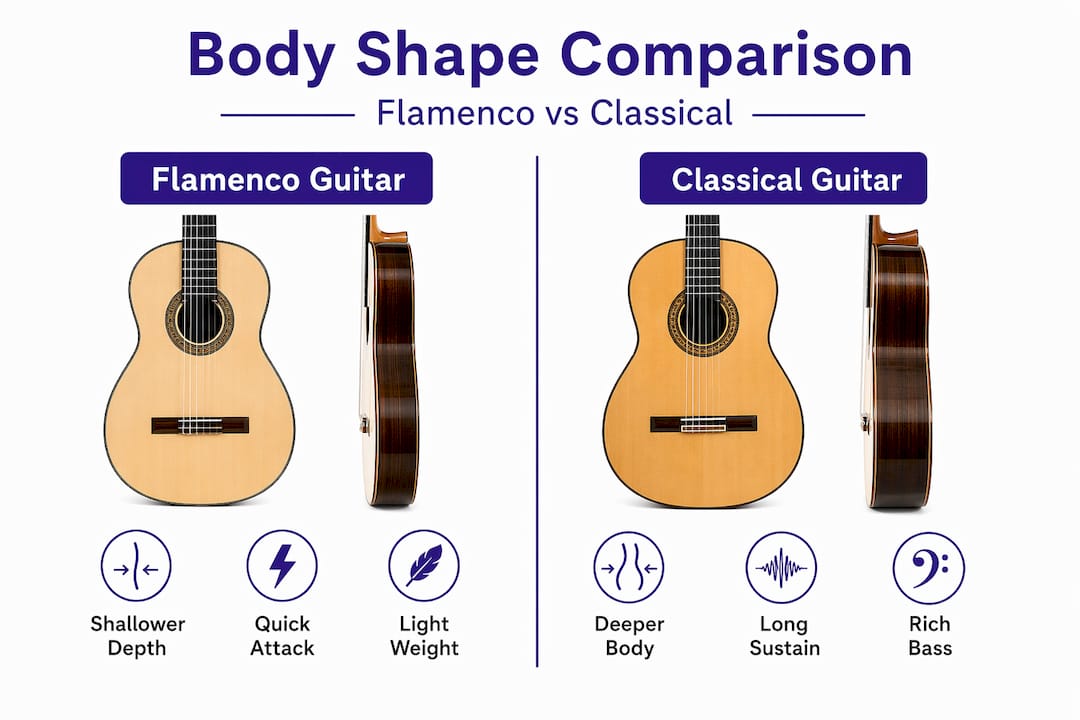
The body of a traditional flamenco guitar sits noticeably shallower than a classical guitar. Where a classical body might measure around 100mm in depth, a flamenco body typically runs 5 to 10mm thinner. That reduction is not cosmetic. It changes the internal air volume, which changes how the guitar resonates and projects.
Key physical features that distinguish flamenco guitar body types:
- Shallower body depth: Reduces internal air volume, producing a brighter, more direct sound with quicker decay.
- Narrower waist: Supports comfortable positioning against the thigh, which flamenco players favor over classical positioning.
- Lighter overall construction: Flamenco guitars are lighter with thinner tops and less internal bracing, enabling faster response.
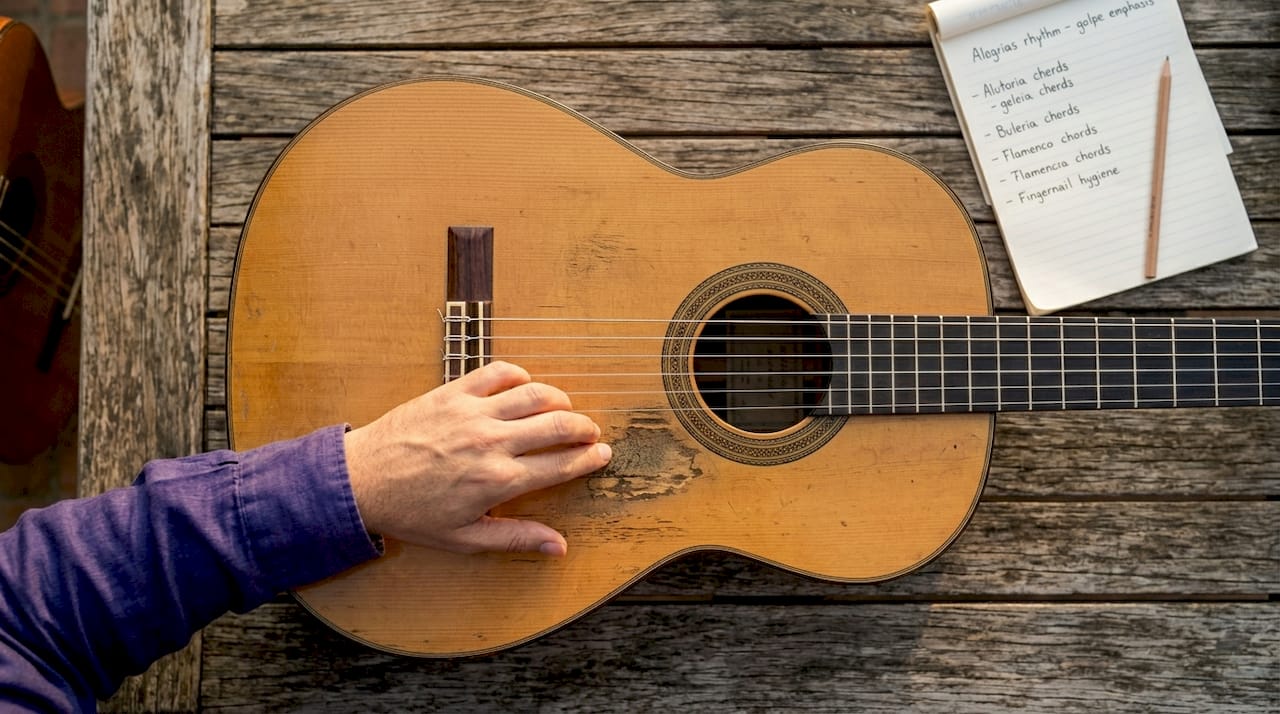
- Golpeador (tap plate): This clear plastic plate protects the soundboard from percussive finger taps, a defining feature of the design of flamenco guitars that would not exist without the body being used as a percussion surface.
- Compact overall dimensions: The smaller footprint keeps the guitar responsive and bright rather than warm and full.
Pro Tip: If you are comparing a flamenco guitar to a classical guitar in a store, tap the top lightly with a fingernail. The flamenco guitar should respond immediately with a dry, crisp tap. A classical top will feel slightly dampened by comparison.
The body shape governs air movement, which controls projection, bass response, and player comfort. These are not abstract acoustic concepts. They are the physical reasons why a flamenco guitar sounds and feels the way it does.
How body shape affects flamenco tone
This is where the acoustics get genuinely interesting. The dimensions of the guitar body do not just house the strings. They determine the character of every note you play.
Resonance chamber and air movement
When a string vibrates, the soundboard transfers that energy into the air inside the body. The volume of that air column, shaped entirely by the body’s dimensions, determines which frequencies get amplified. A smaller body with a thinner, shallower chamber favors higher frequencies. That is exactly why flamenco guitars produce that distinctive bright, cutting tone rather than the round warmth of a classical instrument.
A larger resonance chamber produces more bass and sustain. This is ideal for concert classical playing but counterproductive for flamenco, where the guitar needs to cut through rhythmic handclapping, foot stomping, and often a vocal performance happening simultaneously.
Body depth and the percussive quality
The thinness of the flamenco body contributes directly to its percussive attack. The smaller body and string tension together create a bright, percussive sound that defines the genre. When the soundboard is thin and the body shallow, the guitar responds almost instantly to plucking with minimal energy wasted on sustain. Notes speak immediately and decay quickly, which suits rhythmic styles like bulerías or soleares far better than a lingering, sustained note would.
| Feature | Flamenco Guitar Body | Classical Guitar Body |
|---|---|---|
| Body depth | Shallower (approx. 90mm) | Deeper (approx. 100mm) |
| Tone character | Bright, percussive, dry | Warm, full, sustained |
| Bass response | Leaner, less pronounced | Rich and prominent |
| Attack speed | Fast, immediate | Slower, more rounded |
| Sustain | Short to moderate | Long |
| Golpeador | Standard | Absent |
Comparing to classical guitar influence
A classical guitar body is designed to sustain and project across a concert hall. That design philosophy produces a very different instrument. The heavier rosewood construction of a classical guitar limits authentic flamenco attack even when you adjust the setup. Lower the action on a classical guitar, and you get some improvement. But the body shape itself constrains the sound ceiling. The air volume is too large, the response too slow.
Body shape, tonewoods, and construction together
Body shape provides the structural foundation. But it reaches its full potential only when paired with the right tonewoods and bracing philosophy. This is where a lot of guitarists misread the situation.
Cypress is the traditional material for flamenco guitar backs and sides. Combined with a spruce top and a shallow body, cypress and spruce produce a brighter tone with reduced sustain. That is the classic blanca sound. The body shape amplifies what cypress naturally does: it reinforces the cut and snap rather than adding warmth.
How body shape interacts with construction elements:
- Lighter bracing: Flamenco guitars use less internal bracing mass, which allows the soundboard to vibrate more freely within the body’s contours. More vibration from a smaller chamber means more pronounced upper frequencies.
- Thinner soundboard: A thinner top responds faster to touch. Combined with the shallow body, it creates the guitar’s characteristic immediacy.
- Neck angle and body join: The shallow body requires a specific neck angle to maintain low action without fret buzz. This is a geometric consequence of body shape, not just a setup choice.
- Rosewood flamenco negra models: These use the flamenco body shape but with rosewood back and sides, adding warmth while retaining the shallower body’s brightness. The body shape still sets the tonal ceiling.
Pro Tip: When evaluating a flamenco guitar, run your knuckle along the back. A cypress back will feel lighter and less dense than rosewood. But pay attention to how the body feels against your arm. The shallower depth should sit differently on your body, more forward and upright, which is exactly what flamenco posture requires.
The craftsmanship behind flamenco guitar sound is always a conversation between shape, wood, and builder intent. None of these variables exists in isolation.
Practical implications for flamenco players
Understanding the acoustic theory matters. But the body shape has equally significant effects on how the guitar plays, not just how it sounds. These are practical implications you will feel every time you pick up the instrument.
-
Lower action through design: Flamenco guitars feature lower action to facilitate rapid techniques like alzapúa and picado. That lower action is only achievable because the shallow body and neck geometry work together. It is not just a setup preference; it is a structural outcome.
-
Golpe technique and body responsiveness: Flamenco is partly a percussion instrument. The guitar body must be able to absorb and project taps without damping the string tone. The body shape allows the guitar to act as a percussion box while still supporting expressive melodic technique. A deeper body would absorb those taps differently, changing the relationship between golpe and melodic note.
-
Ergonomics for long performance sets: Body shape affects posture and fatigue during extended playing. The shallower, narrower flamenco body positions the guitar closer to the body, reducing shoulder strain. Flamenco guitarists often perform for hours in a single evening. An instrument that fights your posture will cost you both energy and accuracy.
-
Stage mobility: The compact flamenco body allows freer movement. Flamenco performance involves physical expression, sometimes dancing, always rhythmic body movement. A bulkier classical body would restrict that freedom noticeably.
-
Matching body shape to musical style: A flamenco negra with its rosewood body leans warmer and suits players who blend flamenco with classical or jazz influences. A traditional blanca in cypress with its shallower body is the right tool for pure flamenco styles. Choosing the right vintage flamenco guitar means understanding which body profile serves your playing.
Comparing flamenco body shapes side by side
Not every flamenco guitar body is identical. There are meaningful variations worth knowing before you buy or play.
| Body Type | Tone Profile | Sustain | Best For |
|---|---|---|---|
| Traditional blanca (cypress) | Bright, dry, percussive | Short | Pure flamenco styles, rhythmic players |
| Flamenco negra (rosewood) | Warmer, fuller, still responsive | Moderate | Fusion styles, solo concert work |
| Compact blanca | Very bright, fast response | Very short | Tablao performance, accompaniment |
Key trade-offs to keep in mind:
- A deeper body gives you more volume in open spaces but slows the percussive response.
- A negra body adds tonal color but requires more effort to achieve the dry snap of a blanca.
- Shallower bodies favor experienced players who can compensate for the reduced sustain with dynamic technique.
The body shape influence on flamenco is ultimately about prioritizing the right tonal and ergonomic qualities for your specific context. There is no single best body shape for flamenco. There is only the best shape for what you need the guitar to do.
My perspective on an underestimated factor
I’ve spent years handling, evaluating, and listening to flamenco guitars, and the shape conversation almost never comes up the way it should. Players obsess over whether a guitar is cypress or rosewood, whether it has a cedar or spruce top. Meanwhile, body shape sits quietly in the background doing more structural work than most people realize.
In my experience, the single most revealing test of a flamenco guitar is not the wood grain or the finish. It is how the body sits against you and how quickly the instrument speaks when you barely touch a string. Those two things are determined almost entirely by body dimensions. I’ve played negra guitars that felt more authentically flamenco than poorly proportioned blancas, simply because the body geometry was right.
What I’ve found is that players who struggle with a flamenco guitar are often fighting the body shape, not the strings or the action. A body that doesn’t sit naturally in your posture will force compensations that show up as tension in your technique. That tension costs you speed, accuracy, and expressiveness.
My advice is straightforward: before you evaluate wood, evaluate shape. Hold the guitar in playing position. Does it sit where it should? Does the soundboard feel responsive under your arm? If the body geometry works for you, everything else becomes easier to assess.
— Vintage
Find your ideal flamenco guitar at Vintage-guitar-world
If this deeper understanding of body shape has sharpened your sense of what you are looking for, Vintage-guitar-world is where you take that knowledge and apply it.

At Vintage-guitar-world, the curated collection of vintage flamenco and classical guitars includes instruments that represent the full range of body profiles discussed here. From traditional cypress blancas with that dry, percussive snap to rosewood negras built for concert versatility, each guitar is evaluated for tonal quality, structural integrity, and authenticity. If you are serious about finding an instrument where body shape, wood, and construction align properly, browsing the flamenco guitar buying guide is the right next step.
FAQ
What is the main difference between flamenco and classical guitar body shape?
Flamenco guitar bodies are shallower and lighter than classical guitar bodies, which reduces internal air volume and produces a brighter, more percussive tone with faster attack and shorter sustain.
Does body shape affect playability as well as tone?
Yes. Body depth, waist width, and overall dimensions directly affect posture, string action, and how comfortably you execute rapid flamenco techniques like picado and golpe during long performance sets.
Can a classical guitar body produce authentic flamenco sound?
Not fully. Even with setup adjustments, a classical guitar’s heavier, deeper body restricts the percussive immediacy that flamenco requires. The body shape sets a hard limit on tonal character.
What is the difference between a flamenco blanca and negra body?
A blanca uses cypress back and sides with a shallower body for maximum brightness and minimal sustain, while a negra uses rosewood for a warmer, fuller sound. Both use the flamenco body profile, but they serve different playing contexts.
How do I choose the best body shape for flamenco?
Match the body shape to your playing style. A traditional shallow blanca body suits rhythmic accompaniment and pure flamenco styles. A negra body works better for players who blend flamenco with classical or contemporary influences.