












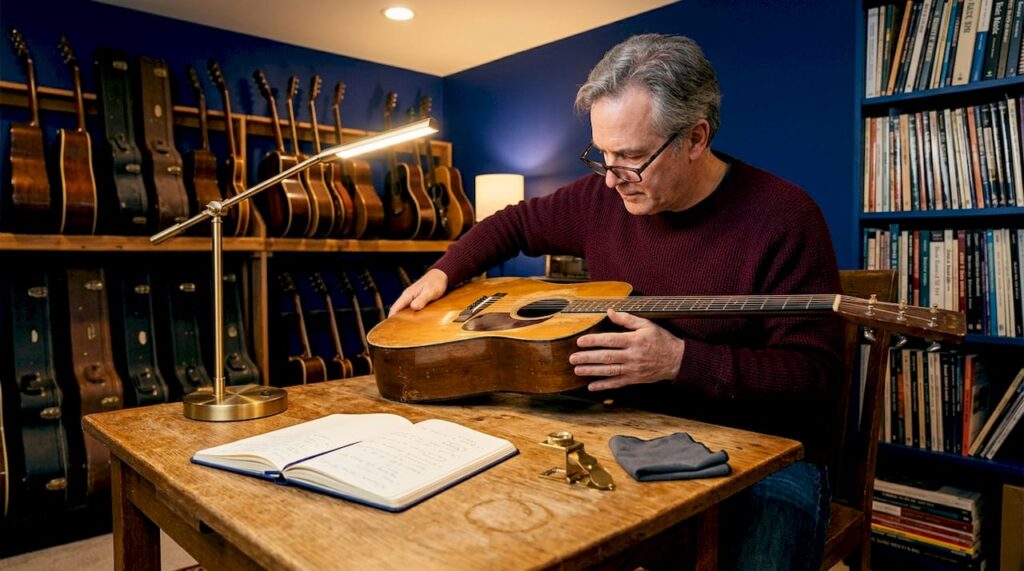

TL;DR:
- Genuine guitar craftsmanship involves examining structural joints, bracing, fretwork, and wood quality, not just appearance. Conducting detailed inspections with proper tools and documentation helps identify true quality and avoid costly misjudgments. Recognizing builder intent and internal details distinguishes handcrafted excellence from mass-produced instruments, safeguarding your investment.
Few moments sting quite like discovering, months after a purchase, that a guitar you believed was exceptional is actually a poorly built instrument hiding behind a beautiful finish. Whether you’re chasing a rare vintage acoustic or investing in a handmade classical, misreading craftsmanship can cost you thousands and strip the joy out of collecting. This guide walks you through every layer of what genuine quality looks like, from structural joints to finishing details, so you can assess any guitar with the kind of confidence that comes from real knowledge rather than guesswork.
Table of Contents
- What defines quality craftsmanship in guitars?
- Essential tools and preparation for craftsmanship evaluation
- Step-by-step: How to assess a guitar’s build quality
- Common mistakes and red flags when judging craftsmanship
- How to verify your findings and make an informed purchase
- Our take: What most collectors miss about true guitar craftsmanship
- Ready to invest in exceptional guitar craftsmanship?
- Frequently asked questions
Key Takeaways
| Point | Details |
|---|---|
| Craftsmanship matters most | Well-built guitars offer better tone, durability, and long-term value. |
| Preparation is essential | Use basic tools and a keen eye to spot quality quickly and confidently. |
| Follow a step-by-step approach | Structured inspections avoid costly mistakes and catch hidden flaws. |
| Look out for red flags | Beware of poor fretwork, messy joints, and inconsistent finishes during evaluation. |
| Expert verification adds security | Double-check findings with reliable sources or appraisers to protect your investment. |
What defines quality craftsmanship in guitars?
Understanding quality guitar craftsmanship starts with separating the visible from the structural. A guitar can look stunning and still be poorly built, and that gap between appearance and substance is exactly where many collectors lose money.
Craftsmanship, in the truest sense, refers to the skill and intentionality applied at every stage of a guitar’s construction. It’s not just about beautiful wood or fancy inlays. It’s about whether the luthier made sound decisions that serve playability, tone, and longevity over decades.
Here’s what separates a genuinely well-made guitar from one that merely looks the part:
- Neck joint integrity: A tight, well-fitted neck joint whether dovetail, mortise-and-tenon, or bolt-on transfers vibration efficiently and holds intonation over time.
- Bracing quality: The internal bracing pattern determines how the top resonates. Poorly fitted braces, even if the pattern is correct, will rob the guitar of its voice.
- Fretwork precision: Frets should be level, properly seated, and polished. High or uneven frets cause buzzing and intonation problems that are costly to fix.
- Wood selection and grain orientation: Quarter-sawn tops and backs not only look striking, they’re structurally more stable under string tension and humidity changes.
- Glue and joinery: Hidden inside the body, this is where many shortcuts appear. A quality instrument shows clean, consistent glue lines without excess squeeze-out.
The role of craftsmanship also shifts depending on whether you’re evaluating a vintage instrument or a modern handmade one. For vintage guitars, original construction methods carry historical significance and tonal character. For modern handmade instruments, consistency and innovation often matter just as much as tradition.
“Traditional dovetail and set-neck joints are generally favored for their sustain and warmth, while bolt-on designs offer easier repair access. Similarly, X-bracing produces a classic, warm tone, while lattice and modern bracing systems prioritize projection and volume.”
This is a critical distinction. Neither approach is universally superior. The best builders understand their goals and execute their chosen methods with complete precision. That intentionality is exactly what defines craft. You can see examples of craftsmanship at the highest level when every element of the instrument reflects a coherent design philosophy rather than a collection of shortcuts.
It’s also worth understanding that craftsmanship and luxury value are deeply linked. Instruments built with genuine care command higher resale values and stronger collector interest over time, which makes this knowledge directly relevant to your financial decisions.
Essential tools and preparation for craftsmanship evaluation
Before you begin a detailed inspection, make sure you have the right tools and mindset to spot true quality. Walking into a guitar evaluation without preparation is like walking into a negotiation without research. You’re at a disadvantage from the start.
Here are the key tools every serious collector should bring to an inspection:
| Tool | Purpose | What to look for |
|---|---|---|
| LED flashlight | Illuminate interior bracing, glue lines, finish | Gaps, squeeze-out, cracks |
| Dental mirror or inspection mirror | View inside the body through the soundhole | Tidy brace gluing, clean kerfing |
| Magnifying glass (10x) | Examine frets, inlays, finish details | Level fret ends, clean purfling |
| String action gauge | Measure string height at nut and 12th fret | Proper setup and neck relief |
| Phone camera with flash | Document your findings | Before and after comparison |
The mental checklist matters just as much as the physical tools. Rushing through an evaluation is one of the most common mistakes collectors make, especially when a guitar looks impressive at first glance. Slow down deliberately, and treat each element of the instrument as a separate inspection point.
When documentation and provenance are available, reviewing them before you touch the guitar gives you a baseline. Original receipts, repair records, and certificates of authenticity all tell part of the story. When valuing a handmade guitar, that paper trail can account for a meaningful portion of the instrument’s worth.
Knowing how to identify collectible guitars also means understanding what documentation gaps might signal. A seller with no records for a supposedly rare instrument is not necessarily hiding something, but it warrants deeper scrutiny during the physical evaluation.
Pro Tip: Always assess guitars in strong, natural light or under a high-quality LED light source. Overhead fluorescent lighting common in music stores flattens the surface and makes it easy to miss finish inconsistencies, tiny cracks, or poorly blended repairs.
Step-by-step: How to assess a guitar’s build quality
Equipped with your tools, you can now move through each inspection point with confidence. Follow this sequence to ensure you don’t miss critical details.
-
Start with the neck joint. Grip the neck firmly and check for any wobble. Look at the heel area where neck meets body for gaps, finish cracks, or signs of previous repairs. On a vintage guitar, minor refrets are acceptable; a re-set neck can be fine if done properly, but always factor in that cost.
-
Check the frets carefully. Run your thumb slowly along the fret ends on both sides of the neck. Sharp, poking ends signal poor finishing or humidity damage. Press each string at multiple frets and listen for buzzing that suggests uneven leveling.
-
Examine the nut and saddle. These small components have an enormous impact on tone and playability. They should be precisely fitted, with no gaps at the slot edges and no visible glue on the sides. Bone or quality synthetic materials are generally superior to plastic for tone transfer.
-
Use your mirror inside the body. Peer through the soundhole and use the inspection mirror to check brace gluing, kerfing (the internal lining strips), and the back braces. Gaps, loose braces, or sloppy glue work are serious structural concerns. Tidy, clean work inside is a strong positive signal.
-
Assess the finish across the entire body. Check for checking (fine cracks in the finish), bubbling, clouding, or areas of inconsistent sheen. On vintage guitars, checking can be expected and even desirable. On a newer handmade instrument, it signals a rushed application.
-
Look at the bridge and saddle alignment. The bridge design directly affects how well the guitar transmits string vibration into the top. A poorly fitted bridge, even on an otherwise excellent guitar, will compromise tone and create structural problems over time.
-
Evaluate wood grain and joinery. Book-matched tops and backs are a mark of quality selection. Check where the two halves meet at the center seam. On a high-quality instrument, this join is nearly invisible when you look closely.
The process of discovering craftsmanship inside a guitar often reveals more than the exterior ever could. Internal tidiness reflects the builder’s standards even when no one is expected to see it.
Pro Tip: Sight down the neck from the headstock toward the body. You should see a very slight forward bow (relief) when strings are at pitch. A completely flat or backbowed neck may indicate dryness or structural issues worth investigating further.
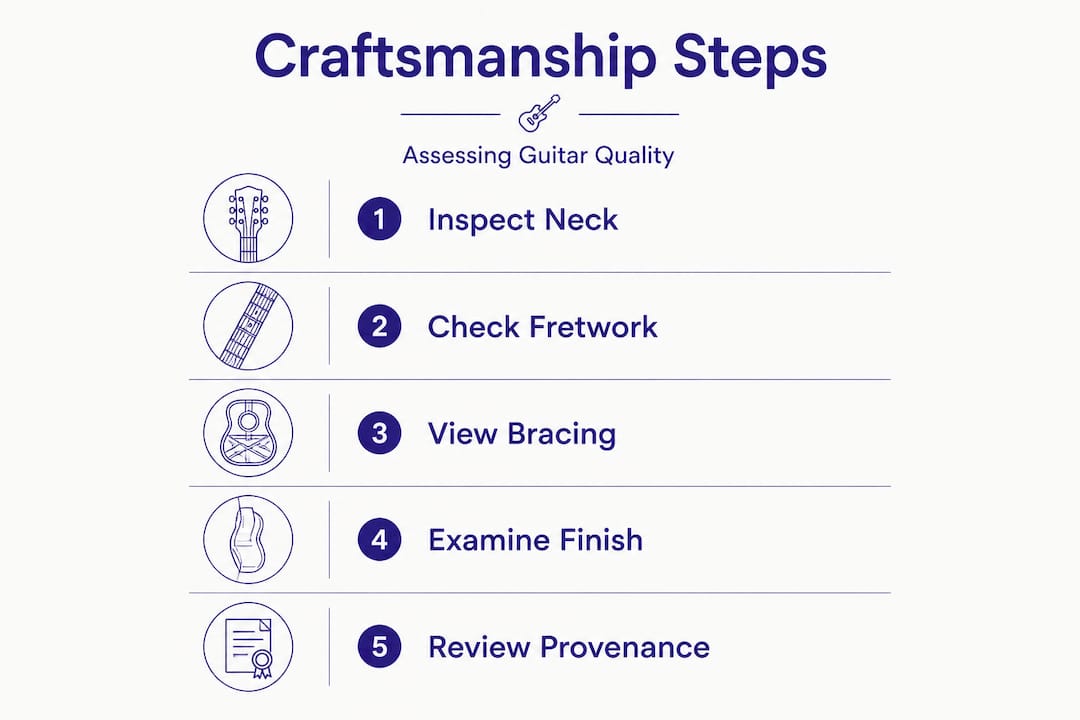
As evidence of how much construction method matters, build quality indicators consistently show that set-neck and dovetail joints outperform bolt-on connections for sustain, while modern carbon-fiber bracing can produce measurably higher projection values compared to traditional X-bracing. Neither is better in absolute terms; both represent deliberate choices that should be executed perfectly.
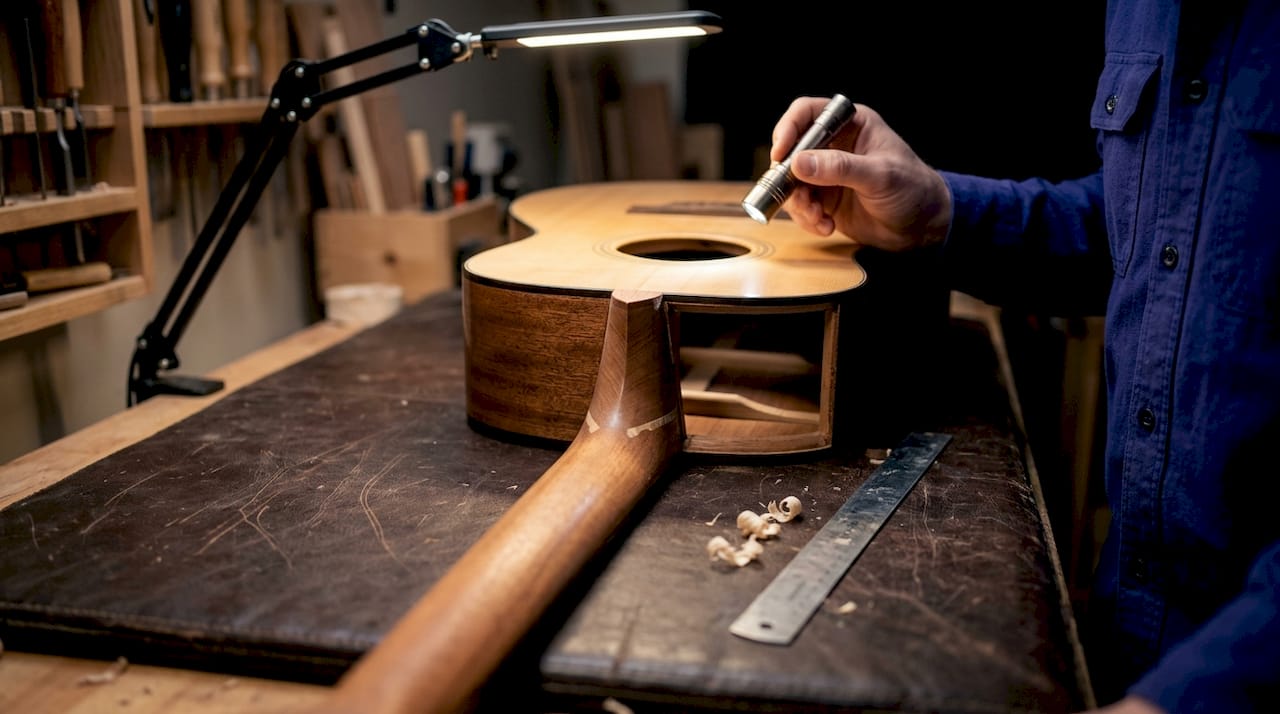
Knowing how to approach recognizing a handmade guitar versus a factory instrument often comes down to exactly these interior details. Handmade instruments frequently show subtle, skillful human touches inside the body that automated production lines simply cannot replicate.
Common mistakes and red flags when judging craftsmanship
Even seasoned collectors can make mistakes; here’s how to avoid the most common ones.
The biggest trap is over-relying on brand reputation. A famous name on the headstock is not a guarantee of quality, particularly for instruments produced during periods when manufacturers prioritized volume over precision. Some of the most disappointing guitars in terms of build quality carry celebrated names, while some exceptional instruments come from luthiers you’ve never heard of.
Here are the most common red flags to watch for:
- Visible tool marks on the interior: Random scratches or gouge marks inside the body suggest rushed or careless workmanship.
- Uneven fret heights: Run a straightedge across multiple frets. Any rocking or high spots indicate poor leveling.
- Glue smears on visible surfaces: Excess glue at the bridge plate, around braces, or along kerfing strips is a sign of sloppy technique.
- Asymmetric shaping: Check whether the two sides of the body are mirror images of each other. Visible asymmetry points to inconsistent workmanship.
- Rough or unfinished areas in hidden spots: Inside the body near the endblock or headblock, quality builders finish their work properly even where it’s not visible.
- Poor fret seating: Frets should be pressed fully into their slots with no lifting at the ends or middle. Lift a string and press directly on each fret to feel for any spring in the fret itself.
“A guitar that passes a quick visual inspection but fails on closer interior examination is one of the most common quality traps in the collector market. The details that distinguish true craft are almost always found where the builder thought no one would look.”
One nuance that trips up many buyers is confusing natural aging with poor construction. Vintage instruments will show wear at the fret board, checking in old lacquer finishes, and shrinkage cracks in the wood. These are expected and often desirable signs of age, not quality failures. The key question is whether the crack or wear is structural or purely cosmetic. A complete explanation of these distinctions is covered in our guide on craftsmanship explained, which helps collectors draw that crucial line with confidence.
How to verify your findings and make an informed purchase
Once you have assessed craftsmanship, here’s how to ensure your decision is well grounded and your investment is secure.
-
Cross-reference with reputable sources. After your hands-on inspection, compare your findings against documented examples of the same model or builder. Online resources, vintage guitar books, and specialist forums all offer reference points for what “correct” looks like on any given instrument.
-
Document everything thoroughly. Photograph each element you inspected, including interior shots through the soundhole. This documentation protects you in any dispute and creates a valuable baseline record for insurance or future resale.
-
Request additional information from the seller. Ask about any known repairs, previous ownership, and storage history. A credible seller will have answers. Hesitation or vague responses about known issues is itself meaningful information.
-
Verify the construction method against known build indicators. Matching your findings to documented construction standards for the period or maker adds an important layer of confidence to your assessment.
-
Confirm return policies and authenticity guarantees before committing. Any serious dealer should stand behind the instruments they sell with clear terms. Understanding those terms before you hand over payment is non-negotiable.
Pro Tip: For any guitar valued above $2,000, consider hiring an independent appraiser or luthier to review the instrument before purchase. The cost of an appraisal, typically $50 to $150, is trivial compared to the risk of a poorly assessed acquisition. The guide on reviewing handmade guitars offers further detail on how appraisals work and what they cover.
Our take: What most collectors miss about true guitar craftsmanship
Here’s the honest truth that most buying guides won’t tell you: the majority of collectors, even experienced ones, are still primarily buying with their eyes. A stunning flame maple top, elegant binding, or a famous headstock logo activates something emotional that overrides analytical judgment. Builders and dealers who understand this dynamic use it to their advantage.
We believe the most underappreciated element of true craftsmanship is builder intent. A mass-produced guitar can be consistent and technically clean, but a handmade instrument built by someone with a specific tonal vision carries something qualitatively different in the way its components relate to each other. Every chamfer, every brace angle, every choice of glue type reflects a decision made by a skilled person trying to achieve something specific. That intentionality produces instruments that play and age differently from anything a factory can build.
The collectors who develop the most reliable judgment are the ones who train themselves to value the interior of an instrument as much as the exterior. They look inside. They feel fret ends with their eyes closed. They listen for the difference between a guitar that’s loud and one that’s alive. This is what we mean when we talk about handcrafted excellence as a standard rather than a marketing term.
Chasing popular models or brand names without this foundation is expensive. Developing a collector’s eye for construction substance is what separates buyers who grow in knowledge with each instrument from those who simply accumulate guitars and hope for the best.
Ready to invest in exceptional guitar craftsmanship?
If you’re ready to take the guesswork out of your next guitar investment, here’s where to deepen your exploration.
At Vintage Guitar World, every instrument in our catalog has been evaluated against exactly the standards covered in this guide. Our team assesses neck joints, internal construction, fretwork, and provenance before any guitar reaches the listing stage.

You can explore our full selection of handcrafted guitars with detailed construction notes, or browse our curated range of types of vintage guitars spanning classical, flamenco, acoustic, and electric categories. For high-value decisions, our guitar appraisal guide explains exactly how our certification process works and what it means for your investment security. Serious collecting starts with serious knowledge, and we’re here to support both.
Frequently asked questions
What are the most important features to check for guitar craftsmanship?
Focus on neck joint stability, clean fretwork, tidy bracing, and uniform finish for a quick assessment. These four core indicators give you the most reliable picture of overall build quality in the shortest time.
How can I distinguish handmade guitars from factory-built ones?
Handmade guitars typically show more attention to joinery, unique inlays, and subtle tool marks distinct from mass-produced models. Look inside the body where the real differences between hand and machine work are most visible.
Are certain construction methods always better for vintage sound?
Methods like dovetail neck joints and X-bracing are favored for warmth and sustain, but modern construction methods offer measurable benefits in projection and ease of repair that suit different players and contexts.
Should I always get a guitar appraised before buying?
For high-value or vintage guitars, expert appraisal is strongly recommended before any purchase. The relatively small cost of an independent appraisal is excellent insurance against a much larger financial mistake.
What documents add value to a collectible guitar?
Provenance records, certificates of authenticity, and original purchase receipts can all meaningfully boost a guitar’s value for collectors and provide important protection during resale.