













TL;DR:
- Traditional flamenco guitars are crafted for attack, quick decay, and clarity to support singers and dancers.
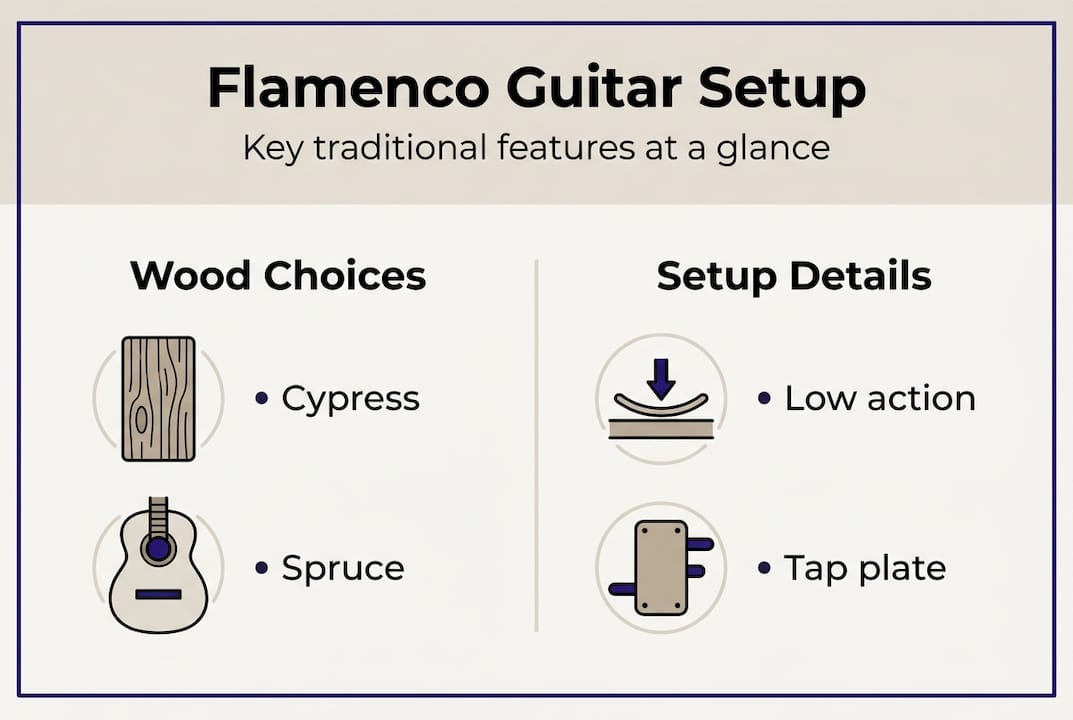
- Key features include cypress back and sides, low action, lightweight construction, and a golpeador for percussive playing.
- Maintaining authentic setup enhances playing responsiveness, technical development, and cultural connection.
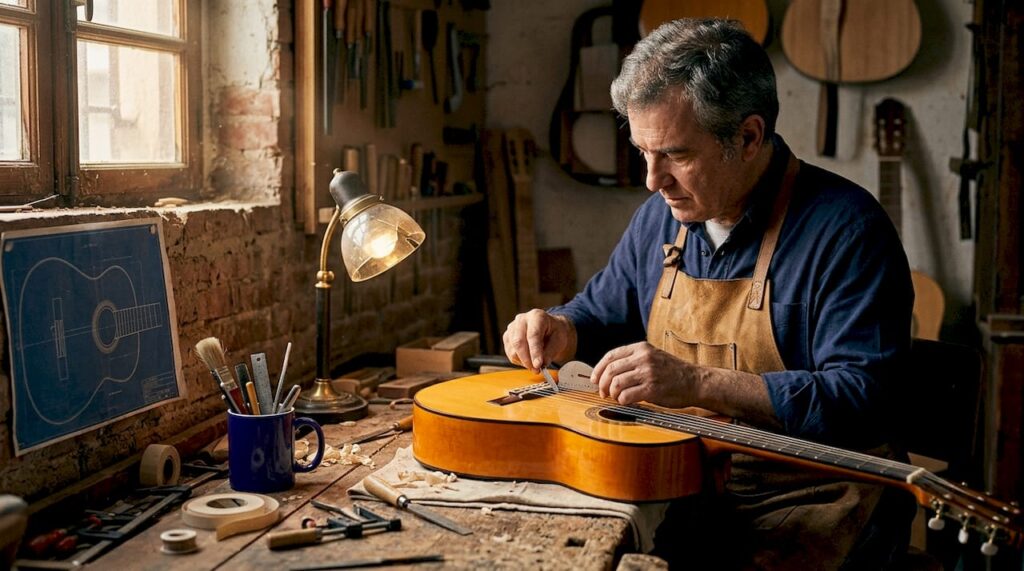
Few things in music hit you quite like a great flamenco guitarist. The sharp crack of a golpe, the waterfall of a rasgueado, the way a single note can slice through a crowded tablao with startling clarity — none of that happens by accident. It happens because of setup. The traditional flamenco guitar setup is a carefully developed system of choices in wood, dimensions, action, and construction, each one shaped by centuries of musical need. Understanding these choices will transform how you hear, play, and seek out your next instrument.
Table of Contents
- The roots of traditional flamenco guitar setup
- Essential features: Wood, action, and body shape
- Traditional setup vs. classical guitar: What’s different?
- The benefits and expressive power of traditional setup
- Why the traditional setup matters more than ever today
- Find your perfect flamenco or vintage guitar
- Frequently asked questions
Key Takeaways
| Point | Details |
|---|---|
| Cultural roots matter | Traditional flamenco setup has deep historical and musical significance that shapes its modern incarnation. |
| Materials impact sound | Cypress wood and light body construction produce the percussive, clear voice flamenco demands. |
| Setup boosts technique | Low action and build choices support fast, expressive playing and authentic flamenco styles. |
| Comparison reveals why | Flamenco setups differ from classical guitars to support rhythm, dynamics, and interaction with dance. |
The roots of traditional flamenco guitar setup
To understand why certain setup choices matter, it’s essential to first look at the cultural and musical roots that shaped the flamenco guitar.
Flamenco emerged in the Andalusian region of southern Spain, drawing from Romani, Moorish, and Spanish folk traditions. By the 19th century, the cante jondo (deep song) tradition was fully formed, and the guitar had become its essential companion. But flamenco guitar was never a solo instrument first. Its entire identity was built around supporting singers (cantaores) and dancers (bailaores). That role demanded specific acoustic qualities that a standard classical or folk guitar simply could not provide.
The history of flamenco guitar is a story of constant functional refinement. Players and luthiers in cities like Granada, Seville, and Almería developed regional styles and subtle build variations, all aimed at one goal: cutting through the room without overwhelming the voice. This is why the flamenco guitar was never designed to sustain a note the way a classical guitar does. Sustain can muddy an ensemble. What flamenco needed was attack, clarity, and quick note decay.
“Traditional flamenco guitars use cypress wood for back and sides to produce a bright, percussive sound with quick attack and less sustain, ideal for accompanying singing and dance where clarity cuts through other elements.”
This single construction choice — cypress over rosewood — tells you everything about the genre’s priorities. Builders like Antonio Torres, the 19th-century luthier widely credited with standardizing the modern guitar form, understood that the material itself was a musical decision. His influence on Spanish lutherie is still felt in every cypress-back flamenco guitar made today.
Regional luthiers passed down their methods through apprenticeships, not textbooks. This oral and hands-on transmission of craft created a living tradition. Names like Hermanos Conde, José Ramírez, and Manuel Reyes built instruments that shaped how generations of players understood what a flamenco guitar should feel and sound like. Their legacy isn’t nostalgia — it’s a proven blueprint.
Key historical factors that shaped the traditional flamenco setup include:
- The need to project over palmas (handclaps), footwork, and singing in live settings
- Close ensemble playing that demanded fast note decay to avoid harmonic clashes
- Physical playing style involving forward posture, the guitar resting on the left leg, and aggressive right-hand techniques
- Regional luthier traditions that became codified standards over generations
Essential features: Wood, action, and body shape
Having seen the roots and traditions, let’s break down the physical elements that truly define the flamenco guitar’s voice.
The most discussed material choice is cypress for back and sides, which produces a bright, percussive tone with fast decay. But wood is just the starting point. The top (soundboard) is almost always European spruce or western red cedar, with spruce being the more traditional choice for blancas (white flamenco guitars). Spruce adds stiffness and projection, helping the guitar respond quickly to aggressive picking.
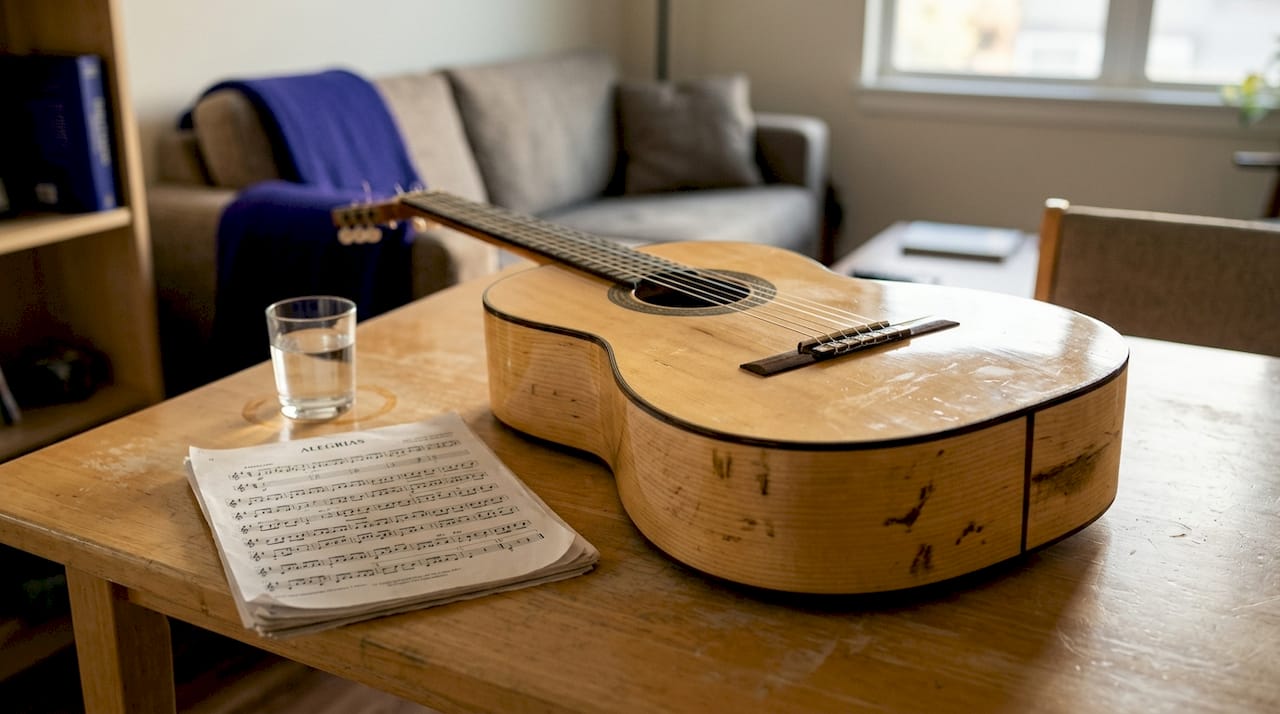
You can explore the full range of Spanish guitar woods to understand how material density, grain patterns, and moisture content affect resonance. But for flamenco specifically, the hierarchy is clear: responsiveness and brightness beat warmth and sustain every time.
Here’s a quick comparison of how the main wood choices affect tone:
| Wood | Tone character | Sustain | Best for |
|---|---|---|---|
| Cypress (back/sides) | Bright, percussive | Low | Traditional flamenco |
| Rosewood (back/sides) | Warm, rich | High | Classical, negra flamenco |
| Spruce (top) | Clear, responsive | Medium | Traditional flamenco |
| Cedar (top) | Warm, dark | Medium-High | Classical or modern flamenco |
Action, meaning the height of the strings above the fretboard, is another defining feature. Traditional flamenco guitars have noticeably lower action than classical guitars. We’re talking about string heights as low as 2.5mm on the bass side and 2mm on the treble side at the 12th fret, sometimes even lower. This setup allows rapid, effortless playing and gives techniques like picado (single-note runs) a crisp, physical bite.
Body construction is also lighter and thinner than classical builds. Lighter bracing patterns, thinner top plates, and reduced body mass all contribute to faster vibration response. The guitar reacts the moment you touch it, rather than building to a resonant bloom the way a classical instrument does. These differences to classical guitar are not superficial — they define how each instrument lives in an ensemble.
Pro Tip: If you’re evaluating a potential flamenco guitar, tap the top with your knuckle near the bridge. A traditional flamenco top should produce a dry, slightly hollow knock, not a deep resonant thud. That dry response tells you the top is lightly built and will react quickly under playing conditions.
The golpeador (tap plate) is another signature feature. This clear or tortoiseshell-colored plate is glued to the soundboard directly below the strings. It protects the top from the percussive finger taps central to flamenco technique. A classical guitar has no golpeador because classical players don’t tap the body as part of their technique. Its presence on a flamenco guitar is both protective and a visual signal of the instrument’s purpose. The craftsmanship and tonal impact of these seemingly small details adds up to a distinctly different playing experience.
Traditional setup vs. classical guitar: What’s different?
Once you know what makes up a flamenco guitar, it’s eye-opening to see how different these choices are from the classical guitar tradition.
Both instruments share a fundamental structure: nylon strings, a fan-braced spruce or cedar top, a Spanish heel neck joint, and a similar scale length. But beneath those surface similarities, the intent diverges sharply. Classical guitars are designed to produce a full, warm sound that sustains beautifully through complex polyphonic music. Flamenco guitars are built to punch, react, and decay quickly in a rhythmically complex ensemble setting.
Here is a direct comparison of the key differences:
| Feature | Traditional flamenco | Classical guitar |
|---|---|---|
| Back and sides | Cypress | Rosewood or maple |
| Top | Spruce | Spruce or cedar |
| Action | Very low (2-2.5mm) | Higher (3-3.5mm) |
| Body weight | Lighter | Heavier |
| Tap plate | Yes (golpeador) | No |
| Sustain | Short | Long |
| Sound character | Bright, percussive | Warm, resonant |
Understanding these classical vs. flamenco guitars differences helps you make better purchasing and setup decisions. Playing flamenco on a classical guitar is possible, but you’ll always be fighting the instrument. It wants to sustain. You need it to cut.
The traditional setup directly enables the core techniques of flamenco:
- Rasgueado: Fast, rolling strums across all strings using individual fingers in rapid sequence. Low action and bright tone make each strum articulate and crisp.
- Golpe: Percussive taps on the body with the ring finger or fingernails. The golpeador protects the top while the light construction amplifies the tap’s presence.
- Picado: Single-note runs executed at high speed with alternating index and middle fingers. Low action and fast string response allow clean, fast execution.
- Alzapúa: Thumb technique combining single notes and full strums. The bright, percussive cypress tone makes thumb strums cut through ensemble sound.
- Tremolo: A melody note repeated rapidly while bass notes provide harmonic foundation. Fast response and moderate sustain keep the melody clear without blurring.
Each technique maps directly to a specific setup feature. That’s not coincidence — it’s centuries of refinement proving itself through use.
The benefits and expressive power of traditional setup
Understanding the differences leads directly into the advantages and musical doors a traditional setup opens for players.
When your guitar is set up the way tradition intended, your connection to the music changes. The instrument becomes a partner rather than an obstacle. Lower action means your left hand moves faster between chord shapes. Lighter body construction means the guitar responds to the slightest dynamic shift. Bright, quick-decaying tone means your accompaniment never steps on the singer’s voice, even in a loud room.
There’s also a less obvious benefit: traditional setup teaches you discipline. A cypress-bodied flamenco guitar is unforgiving of sloppy technique. Every imprecise finger placement, every accidental dead note, every hesitation in a rasgueado registers immediately in the sound. This directness is uncomfortable at first, but it accelerates learning in a way that a more forgiving instrument cannot. Think of it like practicing on rough terrain before competing on a flat track.
Key benefits of a traditional flamenco guitar setup include:
- Dynamic sensitivity: The guitar responds to subtle changes in touch, allowing you to shape dynamics without changing technique.
- Rhythmic clarity: Fast note decay keeps the harmonic texture clean during complex rhythmic patterns like soleá or bulerías.
- Ensemble integration: Brightness and attack let the guitar communicate clearly with singers, dancers, and palmeros without dominating.
- Authentic technique development: The setup reinforces correct hand positions and angles for flamenco-specific techniques.
- Physical feedback: Light construction means you feel the instrument vibrate through your body, deepening your connection to the sound.
Pro Tip: If you’re working toward a more authentic flamenco sound on an existing guitar, start by lowering string action at the nut and saddle before considering any structural changes. This single adjustment can radically improve rasgueado clarity and picado speed at minimal cost. Seek learning with expert guidance before making irreversible setup changes on a quality instrument.
If you’re ready to evaluate your current instrument, a perfect flamenco setup checklist gives you a practical, step-by-step framework to assess and optimize your guitar’s readiness for traditional playing.
A well-set flamenco guitar also rewards consistent practice with genuine expressive power. Veteran players describe the relationship with a properly set instrument as a kind of physical dialogue. The guitar tells you when your technique is clean and when it isn’t. That feedback loop, over months and years of practice, builds an intuition for touch and tone that no amount of theory can replicate.
Why the traditional setup matters more than ever today
Here’s something worth sitting with: modern guitar manufacturing has never been better. CNC machining, carefully dried tonewoods, computer-modeled bracing patterns. You can buy a technically flawless guitar for less money today than at any point in history. And yet, for flamenco specifically, tradition still wins in ways that innovation hasn’t managed to replace.
Why? Because the traditional flamenco setup wasn’t engineered in a laboratory. It was shaped by cultural necessity, refined by working musicians in live performance, and passed down through hands-on apprenticeship. Those pressures produced an instrument that fits flamenco’s demands so precisely that no amount of modern optimization has found a better solution for the core idiom.
There’s also an authenticity dimension that matters deeply to flamenco culture. The music is inseparable from its social and historical context. Playing soleá or seguiriyas on a properly set traditional flamenco guitar connects you to a lineage of players, makers, and communities stretching back generations. That connection isn’t sentimental decoration. It shapes how you approach the music, how you listen, and how you develop as a player.
The enduring craftsmanship value of a traditionally built and set instrument also means these guitars hold their relevance and monetary value over time. Modern players who bypass tradition in favor of convenience often find themselves revisiting it years later, realizing they skipped a foundation they now have to rebuild. Starting with tradition isn’t limiting. It’s the most efficient path to genuine mastery.
Find your perfect flamenco or vintage guitar
For players ready to take the next step, here’s where to go for authentic instruments and deeper insight.
At Vintage Guitar World, we’ve spent years curating instruments that honor genuine craftsmanship, whether you’re searching for a traditional cypress-body flamenco guitar or a rare vintage piece with real playing history behind it. Our collection of unique vintage guitars spans styles, eras, and price points, with each instrument evaluated for quality and authenticity before it reaches you.

If you’re newer to the space and want to understand what types of instruments are available and how their histories shape their value, browsing our guide to types of vintage guitars is an excellent starting point. Every serious flamenco player deserves an instrument built to the standard the music demands. We’re here to help you find it.
Frequently asked questions
Why is cypress wood favored in traditional flamenco guitar setup?
Cypress produces a sharp, percussive tone with quick response and minimal sustain, perfectly matching flamenco’s rhythmic demands and ensemble context where clarity is essential.
How does a traditional flamenco guitar setup improve playability?
Lower string action and lightweight body construction make fast techniques like rasgueado and picado more effortless, while the quick attack response keeps rhythmic articulation sharp and clean.
What’s the difference between a classical and a flamenco guitar setup?
Flamenco setups use lighter cypress wood, lower action, and a golpeador tap plate to prioritize percussive brightness, while classical guitars favor heavier rosewood construction and higher action for sustained, resonant tone.
Can you retrofit a classical guitar to a traditional flamenco setup?
You can lower the string action and add a golpeador, but the heavier rosewood body and thicker bracing will always limit how far you can push the instrument toward the authentic flamenco voice.