














TL;DR:
- Vintage guitars from the 1950s and 1960s offer unique tonal qualities and emotional connections.
- They have strong investment potential, with annual returns up to 12 percent, especially for rare, original models.
- Proper evaluation, documentation, and care practices are essential for maximizing both enjoyment and resale value.
Few choices in the collector’s world force you to pick between heart and wallet the way vintage guitar collecting does. The truth is, you rarely have to choose. A 1959 Gibson Les Paul Standard sitting in your hands connects you to decades of music history while quietly appreciating in value. This article breaks down the real advantages of building a vintage guitar collection, from the tactile pleasure of playing a handmade instrument to the financial case for owning one. Whether you’re a seasoned collector or just starting to look seriously at the market, understanding both sides of the equation will sharpen every buying decision you make.
Table of Contents
- Why vintage guitars are a collector’s dream
- Investment potential: Outperforming traditional assets
- What drives value: Rarity, originality, and provenance
- Expert strategies to maximize enjoyment and return
- A collector’s perspective: Why passion and expertise go hand in hand
- Start your guitar collecting journey with expert support
- Frequently asked questions
Key Takeaways
| Point | Details |
|---|---|
| Emotional and financial rewards | Guitar collecting offers both deep personal satisfaction and real asset growth. |
| Top models outperform stocks | Certain vintage guitars have outperformed traditional investments with annual appreciation up to 12%. |
| Rarity and condition drive value | The most desirable collectibles combine originality, rarity, mint condition, and strong provenance. |
| Expert care is essential | Successful collectors use appraisals, documentation, and proper storage to safeguard their investments. |
| Balance passion with expertise | Combining personal enjoyment with informed decisions leads to the best collecting outcomes. |
Why vintage guitars are a collector’s dream
There’s something irreplaceable about picking up a guitar built in the 1950s or 1960s. The neck feels worn in ways a factory-fresh instrument never could. The wood has aged, opened up, and developed tonal qualities that modern production lines simply cannot replicate. These instruments aren’t museum pieces locked behind glass. They’re playable history.
Why collectors love vintage guitars comes down to a combination of craftsmanship, scarcity, and connection to music’s most defining moments. Guitars built during the golden era of American manufacturing were made by skilled craftspeople using techniques and materials that no longer exist at scale. Old-growth tonewoods, hand-wound pickups, and nitrocellulose lacquer finishes all contribute to a playing experience that collectors describe as alive in a way modern instruments aren’t.
Superior craftsmanship and playability set vintage guitars apart from anything coming out of a contemporary production facility, no matter how good that facility is.
The emotional dimension matters just as much as the technical one. Owning a guitar associated with an iconic era, a legendary recording session, or a specific maker creates a connection to music history that no streaming playlist can offer.
“Playing a vintage guitar is like holding a conversation with the past. The instrument carries the energy of every musician who played it before you.”
Here are the top reasons serious enthusiasts and investors pursue vintage pieces:
- Tonal superiority: Aged tonewoods produce warmth and resonance modern guitars often lack
- Historical significance: Each instrument represents a specific era of craftsmanship and culture
- Scarcity: Limited surviving examples from peak production years create natural rarity
- Playability: Many vintage instruments have been broken in to a point of near-perfect feel
- Community: Collectors share knowledge, stories, and genuine passion for the instruments
- Dual value: Emotional and financial rewards reinforce each other
Pro Tip: When evaluating a vintage piece, prioritize guitars with documented provenance tied to notable players or respected makers. A guitar with a verified ownership history commands significantly more interest from serious buyers and collectors.
Investment potential: Outperforming traditional assets
Once you appreciate what makes vintage instruments special, the financial case becomes hard to ignore. Vintage guitars from iconic brands like Gibson and Fender have shown annual returns of 8 to 12 percent, with select models exceeding stock market gains over the same periods.
Models like the Gibson Explorer, Flying V, and Fender Broadcaster have delivered remarkable returns for collectors who bought at the right time and held patiently. During periods of economic uncertainty, tangible assets tend to hold value better than paper investments. Vintage guitars fit that category well, and they have the added advantage of being usable and enjoyable while they appreciate.
To evaluate guitar investment value accurately, you need to understand the factors that separate a good return from a great one.
Key factors affecting investment value:
- Rarity: Low production numbers or discontinued models command premiums
- Originality: All-original parts and hardware significantly increase value
- Condition: Mint or near-mint instruments outperform heavily played examples
- Provenance: Documented ownership history, especially tied to notable figures
- Brand reputation: Gibson and Fender vintage models dominate collector demand
The numbers behind originality are striking. Original parts add 25 to 30 percent to a guitar’s value, while mint condition can push that premium to 30 to 50 percent above comparable played examples. Understanding accurate guitar market pricing before you buy protects you from overpaying and positions you for stronger returns.
Historic annual appreciation by model (estimated averages):
| Model | Era | Avg. Annual Appreciation |
|---|---|---|
| Gibson Les Paul Standard | 1958 to 1960 | 10 to 14% |
| Fender Stratocaster | 1954 to 1964 | 8 to 12% |
| Gibson ES-335 | 1958 to 1964 | 7 to 11% |
| Fender Telecaster | 1950 to 1964 | 8 to 10% |
| Gibson Flying V | 1958 to 1959 | 12 to 16% |
These figures reflect the broader truth about tangible versus intangible assets. A stock certificate has no sound. A vintage guitar plays, inspires, and grows in value at the same time.
What drives value: Rarity, originality, and provenance
Understanding financial potential leads directly to the practical question of what actually determines value. Rarity, originality, condition, and provenance are the four pillars that maximize collectible value. Each factor interacts with the others, and knowing how to weigh them is what separates experienced collectors from buyers who make expensive mistakes.
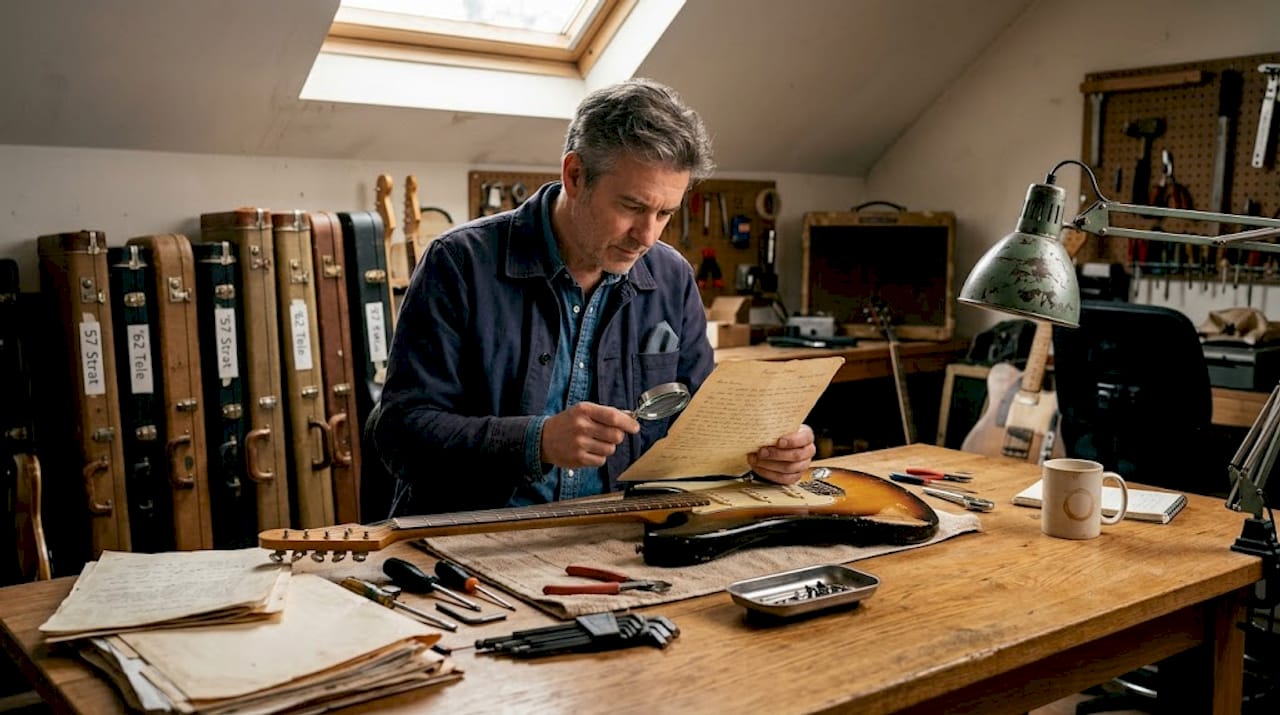
Comparison of value criteria:
| Criteria | Impact on Value | What to Look For |
|---|---|---|
| Rarity | Very High | Low production numbers, discontinued runs |
| Originality | Very High | Factory parts, unmodified hardware |
| Condition | High | Case queen vs. heavily worn |
| Provenance | High to Very High | Documentation, prior ownership history |
Here are the steps to evaluate whether a guitar qualifies as a serious collectible:
- Research production numbers: Lower numbers mean higher rarity and usually higher demand
- Inspect for original parts: Check tuners, pickups, pots, and finish for replacements
- Assess condition honestly: Cracks, refrets, and refinishes all reduce value
- Request documentation: Original receipts, case candy, or ownership records matter
- Cross-reference market data: Compare recent sales of similar examples before committing
You can explore guitar rarity vs condition in more depth to understand how these factors shift depending on the model and era. Post-pandemic demand accelerated interest across the board, and even so-called catalog brands that weren’t historically sought after have seen rising collectibility as buyers search for undervalued entry points.
Documentation reduces authenticity risk dramatically. A guitar with a paper trail is worth considerably more than an identical instrument without one. Learning to authenticate collectible guitars with expert-level scrutiny is one of the most valuable skills any collector can build. And understanding key collectible guitar features helps you spot value where others might overlook it.
Expert strategies to maximize enjoyment and return
Knowing what drives value is half the battle. The other half is building smart habits around buying, maintaining, and enjoying your collection. Proven collector methodologies include prioritizing reputable dealers, seeking certification, using climate-controlled storage, and keeping instruments in professionally maintained playing condition.
Best practices for collectors:
- Buy from dealers with established reputations and verifiable track records
- Always get third-party appraisals before significant purchases
- Maintain complete provenance files for every instrument you own
- Store guitars in a humidity-controlled environment between 45 and 55 percent relative humidity
- Insure your collection at current replacement value, not purchase price
- Schedule regular professional setups to keep instruments playable and preserved
Pro Tip: Never skip a third-party appraisal, even when buying from someone you trust. Independent verification protects your investment and gives you leverage if you ever need to sell quickly.
Common pitfalls to avoid include emotional bias toward a piece that doesn’t meet your value criteria, skipping insurance to save money, and over-restoring instruments. Refinishing a guitar or replacing original hardware in the name of aesthetics can cut resale value by 30 percent or more. Restoration should preserve, not modernize.
Climate control is non-negotiable for long-term value. Humidity swings crack tops, warp necks, and damage finishes. Detailed guidance on storing and protecting guitars can help you set up an environment that keeps instruments stable year-round. A thorough guitar care guide also covers the cleaning, setup, and inspection routines that preserve both playability and collector value. When it comes to fakes, the market has become more sophisticated, which means buyers need to be smarter. Up-to-date counterfeit risk reduction tips are essential reading before any major purchase.
A collector’s perspective: Why passion and expertise go hand in hand
Here’s a view that most pure-investment guides won’t offer: the collectors who get the most out of this market, financially and personally, are the ones who refuse to separate the two motivations.
Over-focusing on ROI creates tunnel vision. You start chasing trends instead of building genuine expertise, and you miss guitars that would have rewarded you in ways no spreadsheet captures. At the same time, collecting purely on emotion without discipline leads to overpaying, under-documenting, and owning a collection that’s impossible to liquidate at fair value.
The sweet spot is deep knowledge driven by genuine love for the instruments. When you know why a 1960 Fender Stratocaster sounds and feels the way it does, you make better buying decisions, spot fakes faster, and build a collection with both personal meaning and real market strength. The community dimension adds another layer. Serious collectors share information generously, and the relationships you build through this world often surface the best private sale opportunities before they ever reach the open market.
Document everything. Every receipt, every appraisal, every photograph. This practice serves both your investment and your story. Deepening your skills around authenticating vintage guitars is the single best investment you can make as a collector, because knowledge is the one asset that compounds without depreciation.
Start your guitar collecting journey with expert support
Building a vintage guitar collection rewards patience, knowledge, and genuine enthusiasm for the craft. You now have a clearer picture of what makes these instruments so compelling and how to approach the market with confidence.

At Vintage Guitar World, we specialize in exactly this kind of collecting. Whether you’re curious about the types of vintage guitars that best match your goals or want to understand the artistry behind handcrafted guitar craftsmanship, our team brings real expertise to every conversation. We offer valuations, certifications, and a carefully curated inventory for collectors at every level. Explore unique vintage guitars in our collection and find your next piece of music history.
Frequently asked questions
What are the main risks of collecting vintage guitars?
The main risks include high maintenance costs, counterfeit instruments, low market liquidity, and value fluctuations tied to shifting collector trends. Insurance and thorough documentation help mitigate most of these exposures.
How do I verify if a guitar is authentic?
Verify authenticity by purchasing from reputable dealers with certification, commissioning independent third-party appraisals, and demanding full provenance documentation before completing any transaction.
Do vintage guitars always increase in value?
Not always. While iconic brands show historical appreciation, value depends heavily on rarity, originality, condition, and current market demand, meaning some models plateau or decline while others surge.
Can modern or boutique guitars be good collectibles?
Boutique and modern guitars offer genuine enjoyment and fine craftsmanship, but they typically carry lower resale value and much weaker liquidity compared to established vintage brands with proven collector demand.