













TL;DR:
- “Guitar heritage” can mean Heritage Guitars brand or the broader tradition of craftsmanship.
- Authentic vintage guitars are valued for originality, provenance, and handcrafted construction.
- Modern handcrafted guitars influenced by traditional methods continue the living heritage of guitar making.
When collectors talk about “guitar heritage,” they often mean two very different things at once. Some are referring to Heritage Guitars, the celebrated boutique manufacturer born from the legendary Gibson factory in Kalamazoo, Michigan. Others are speaking about something broader: the living tradition of craftsmanship, provenance, and authenticity that makes certain instruments irreplaceable. Both meanings carry real weight in collector circles, and confusing them can cost you money, credibility, or the guitar of a lifetime. This guide untangles both meanings and shows you exactly what separates a true heritage instrument from everything else.
Table of Contents
- Understanding the dual meaning of ‘guitar heritage’
- The legacy of Heritage Guitars: From Kalamazoo to collectors
- Why heritage matters: What makes vintage guitars truly collectible
- The art of craftsmanship: How heritage tradition shapes guitar sound and value
- Our take: The future of guitar heritage is living, not locked in the past
- Discover more about vintage and handcrafted guitars
- Frequently asked questions
Key Takeaways
| Point | Details |
|---|---|
| Two definitions | Guitar heritage means both a boutique brand and the wider tradition of collectible guitars. |
| Collector priorities | Authenticity, craftsmanship, and provenance matter more than age alone. |
| Handcrafted value | Heritage Guitars and vintage icons share a commitment to hand-built quality. |
| Craftsmanship’s impact | Details like tonewood, finish, and bracing make a direct difference in sound and value. |
| Living tradition | Guitar heritage is an evolving story carried forward by passionate makers and collectors. |
Understanding the dual meaning of ‘guitar heritage’
Now that you understand the confusion around the term, let’s unpack its two key meanings.
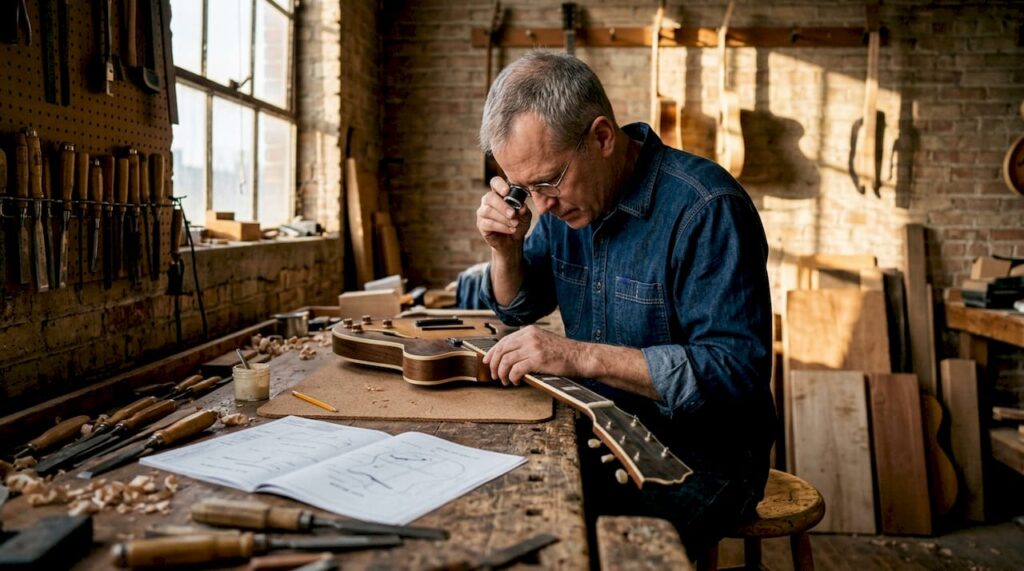
The word “heritage” does a lot of heavy lifting in the guitar world. On one hand, Heritage Guitars is a boutique manufacturer founded in 1985 by former Gibson employees who refused to leave Kalamazoo when Gibson relocated to Nashville. That origin story alone makes the brand historically significant. On the other hand, the phrase “guitar heritage” is used much more loosely by collectors and enthusiasts to describe heritage in guitar culture as a whole: the accumulated traditions, design philosophies, and handcrafted methods passed down through generations of luthiers.
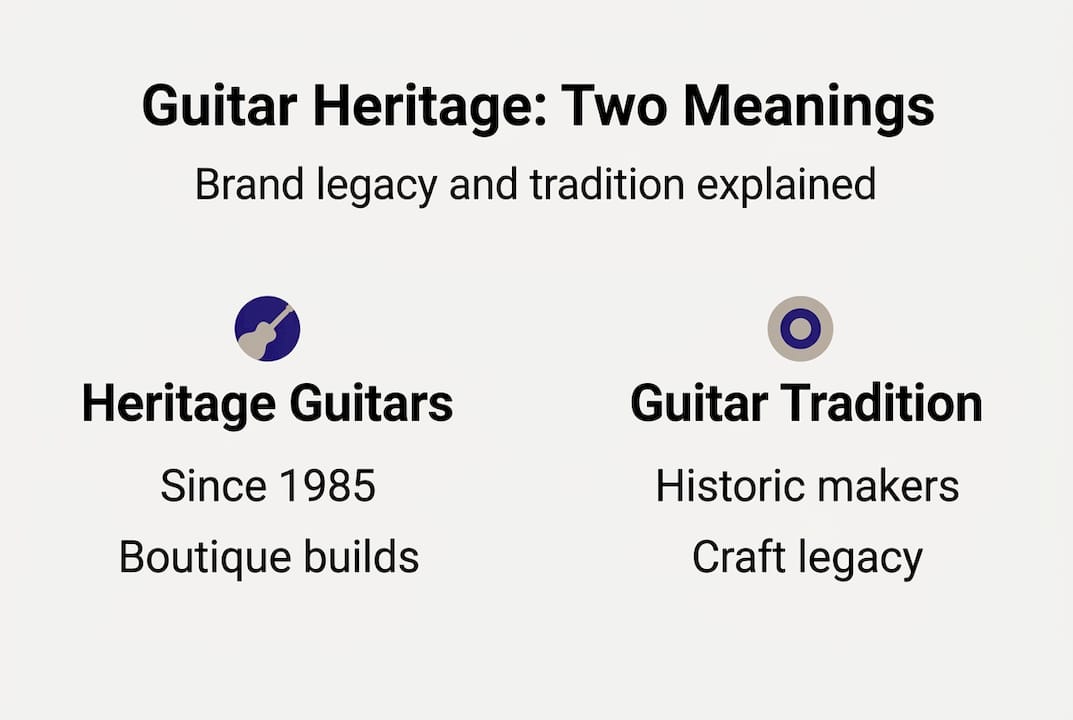
Understanding which meaning is in play matters. When a dealer says “this has real heritage,” they might mean it was built at a storied factory, played by a known musician, or constructed using methods that predate mass production. The collectibility of vintage guitars depends on history, craftsmanship, and authenticity rather than age alone.
Here is how the term typically breaks down depending on context:
- Brand context: Refers specifically to Heritage Guitars, their models, and their Kalamazoo factory lineage
- Collector context: Refers to provenance, historical significance, and traditional construction methods
- Cultural context: Refers to the broader tradition of guitar making passed through luthier apprenticeships and iconic eras
- Market context: Refers to instruments whose value is tied to documented history and original components
| Dimension | Heritage Guitars (brand) | Guitar heritage (general) |
|---|---|---|
| Origin | Founded 1985, Kalamazoo, MI | Spans centuries of luthier tradition |
| Focus | Handmade American archtops and solid bodies | Provenance, originality, craftsmanship |
| Guitars included | H-150, H-535, H-575 and related models | Pre-war Martins, vintage Gibsons, Fenders, and more |
| Collector appeal | Kalamazoo legacy, limited production | Rarity, documented history, tonal authenticity |
For collectors, these two meanings overlap constantly. A Heritage Guitars H-150 is both a brand-specific instrument and a living example of general guitar heritage. That overlap is exactly why the term carries so much meaning.
The legacy of Heritage Guitars: From Kalamazoo to collectors
Having seen the term’s dual meaning, let’s explore the boutique brand that embodies guitar heritage: Heritage Guitars.
In 1984, Gibson announced it was moving its operations from Kalamazoo to Nashville. A group of longtime Gibson craftsmen made a different choice. They stayed, leased the original factory space, and in 1985 launched Heritage Guitars. Their mission was simple: keep building guitars the way they had always been built, by hand, in the same building, with the same skills.
The result was a brand that used solid woods and handmade methods modeled directly after classic Gibson designs. The H-150 mirrors the Les Paul, the H-535 echoes the ES-335, and the H-575 draws from the ES-175. These are not copies. They are continuations, built by people who learned their craft directly from the Gibson tradition.
| Model | Vintage inspiration | Key features |
|---|---|---|
| H-150 | Gibson Les Paul | Solid mahogany body, carved maple top, hand-set neck |
| H-535 | Gibson ES-335 | Semi-hollow body, dual humbuckers, hand-wired electronics |
| H-575 | Gibson ES-175 | Full archtop, floating pickup, hand-applied finish |
| H-170 | Gibson SG | Lightweight mahogany, double cutaway, vintage appointments |
What makes Heritage prized by enthusiasts is not just the brand name. It is the verifiable continuity of method. When you hold an H-150, you are holding an instrument built with the same techniques used in Kalamazoo during the 1960s. That is a rare and tangible connection to guitar history.
Collectors pay attention to specific details: the hand-applied nitrocellulose lacquer, the hand-fitted neck joints, and the absence of CNC-routed uniformity. These are signs that a human being made decisions during construction, not a machine.
Pro Tip: When evaluating a Heritage Guitar, look for slight asymmetries in the binding, hand-inked serial numbers, and finish checking consistent with nitro lacquer aging. These are marks of authenticity, not flaws. They confirm you have a genuinely handcrafted instrument, which directly affects vintage versus new guitars in terms of collectibility and resale value.
Why heritage matters: What makes vintage guitars truly collectible
With Heritage Guitars as a case, let’s uncover what truly sets any guitar apart as a heritage collectible.
Age is the most misunderstood factor in guitar collecting. A 1975 guitar with replaced parts, refinished body, and no documentation is worth a fraction of what a well-preserved 1965 instrument with original hardware commands. Collectors prioritize documented provenance, original finishes, and historical significance over mere age. That distinction changes everything about how you evaluate an instrument.
Three core factors determine whether a guitar qualifies as a true heritage collectible:
- Originality: All original hardware, finish, and electronics intact. Replaced tuners, refrets with oversized wire, or a refin can reduce value by 30 to 60 percent depending on the market.
- Provenance: Documented history of ownership, especially ties to notable musicians, recording sessions, or significant events. A guitar with a paper trail is worth more than one without.
- Craftsmanship: Evidence of period-correct construction methods. Aged woods and hand-crafted bracing contribute to both tonal quality and collector desirability.
Here is how serious collectors assess a guitar’s heritage value:
- Research the serial number against factory records or published databases
- Inspect the finish under UV light to detect repairs or refinishing
- Check all hardware for correct date codes and manufacturer stamps
- Verify the neck joint, nut, and nut slots for original tooling marks
- Request or research any available documentation: receipts, photos, or certificates
“Provenance is the difference between a guitar and a story. Collectors don’t just buy instruments. They buy history.”
The pursuit of identifying collectible guitars has become increasingly sophisticated. Buyers now use blacklight inspections, dendrochronology (wood ring dating), and spectral analysis to verify originality. Understanding how aging changes guitar tone is equally important, since tonal character is part of what collectors are paying for.
The art of craftsmanship: How heritage tradition shapes guitar sound and value
To appreciate why heritage guitars carry their mystique, it’s crucial to understand the craftsmanship behind them.
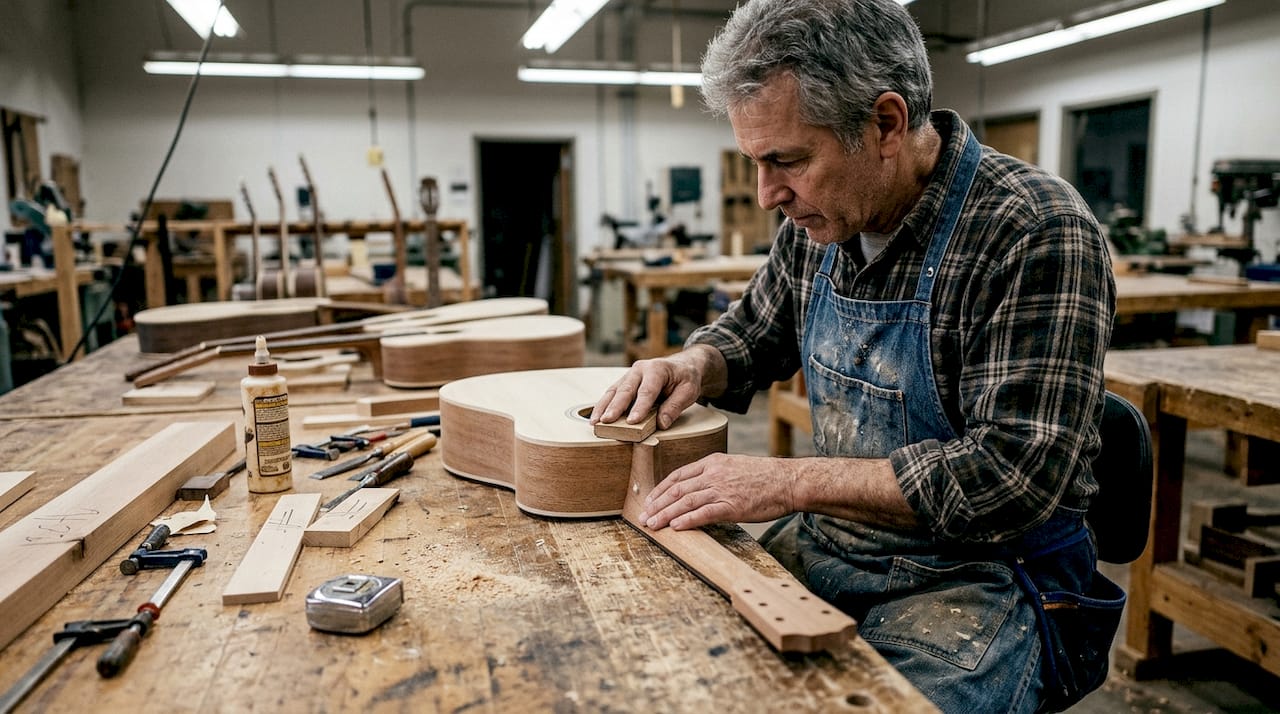
Mass-produced guitars are built for consistency and price efficiency. Heritage guitars are built for something else entirely. The difference shows up in the details, and those details translate directly into sound and long-term value.
Vintage guitars’ superior tone often comes from aged tonewoods, thin nitrocellulose finishes, and hand-scalloped bracing. Each of these factors affects how the wood vibrates, how the finish allows the top to move, and how the internal structure focuses resonance. A polyurethane finish on a modern guitar essentially seals the wood in plastic. A vintage nitro finish breathes.
Features that distinguish heritage and vintage guitars from mass-produced models:
- Hand-scalloped bracing: Each brace is shaped by hand to balance stiffness and flexibility, tuned to the specific top
- Aged tonewoods: Decades of drying reduce moisture content and increase stiffness-to-weight ratio, improving sustain
- Nitrocellulose lacquer: Thin, flexible, and porous, it allows the wood to vibrate more freely than thick modern finishes
- Hand-fitted dovetail joints: Tighter neck-to-body connection improves energy transfer and sustain
- Period-correct hardware: Original Kluson tuners, ABR-1 bridges, and PAF pickups all affect tone in measurable ways
Pre-war Martins and 1950s to 1960s Gibsons and Fenders set the benchmark for collectible craftsmanship. These instruments were built during eras when factory workers were skilled tradespeople, not assembly line operators. That difference in human attention is audible.
Pro Tip: When you examine craftsmanship in vintage guitars, pay close attention to the inside of the body. Rough tool marks, hand-written inspection notes, and irregular glue lines are signs of genuine handwork. Also study wood types and sound relationships, since the specific species and cut of wood used in a given era directly affects why old guitars sound better than most modern alternatives.
Our take: The future of guitar heritage is living, not locked in the past
Having explored the hallmarks of vintage and heritage guitars, here’s a fresh perspective.
There is a tendency in collector circles to treat heritage as a fixed point in time, something that ended when the golden era factories closed or when CNC machines replaced hand tools. We think that framing sells the tradition short.
True guitar heritage is not a museum exhibit. It is a practice. Every luthier who learns hand-scalloped bracing from a master, every collector who documents and preserves an instrument’s history, and every musician who chooses a handcrafted guitar over a factory model is actively carrying the tradition forward. The ongoing fascination with guitar heritage is proof that this is not nostalgia. It is a living discipline.
“Heritage isn’t just what’s left behind. It’s what we choose to carry forward.”
The most exciting guitars being built today are not imitations of the past. They are informed by it. Builders who understand why a 1959 Les Paul sounds the way it does are making instruments that will themselves become collectible. Heritage grows. Collectors, musicians, and builders all write the next chapter together.
Discover more about vintage and handcrafted guitars
Ready to deepen your understanding or searching for your own heritage piece? Here’s where to start.
At Vintage Guitar World, we have spent years building a resource that goes beyond listings. Whether you are learning to distinguish instrument types or ready to acquire something exceptional, our guides and curated shop are designed for collectors who take this seriously.

Explore our detailed breakdown of types of vintage guitars to understand what defines each category and what to look for when buying. If handmade instruments are your focus, our guide to handcrafted guitars covers everything from luthier methods to market value. When you are ready to browse, our vintage guitar shop features expertly evaluated instruments with full documentation. Every guitar we carry has been assessed for originality, condition, and authenticity.
Frequently asked questions
What does ‘guitar heritage’ mean for collectors?
‘Guitar heritage’ carries a dual meaning for collectors: it refers to the Heritage Guitars brand and to the broader tradition of history, authenticity, and craftsmanship that defines collectible instruments.
How does Heritage Guitars differ from Gibson?
Heritage Guitars was founded by former Gibson employees who stayed in Kalamazoo after Gibson relocated to Nashville, continuing the same handmade methods in the original factory building.
What factors make a vintage guitar highly collectible?
Collectors focus on originality, documented history, and craftsmanship quality, with provenance and originality consistently outweighing age as the primary value drivers.
Are modern guitars ever considered heritage?
Yes. Handcrafted modern guitars built using traditional techniques can absolutely embody heritage, particularly when method and tradition are prioritized over speed and volume.
Why do vintage guitars sound different than new ones?
Aged woods, nitro finishes, and handcrafted bracing allow vintage guitars to vibrate more freely and produce richer, more resonant tones than most modern mass-produced instruments.