












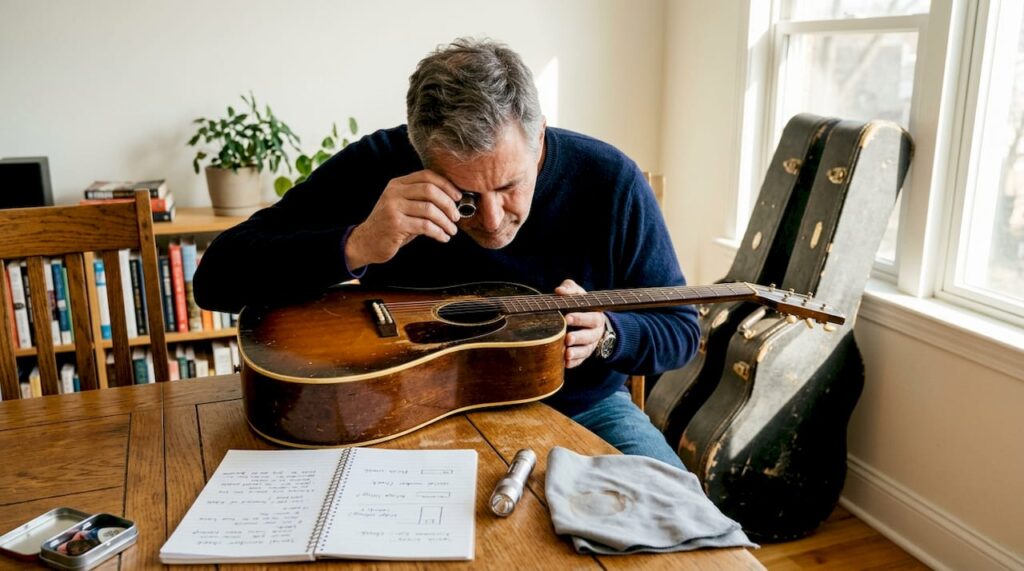

Counterfeit vintage guitars flood the collector market, threatening investments and eroding trust in valuable acquisitions. Authenticating vintage guitars protects your collection’s value and ensures every instrument meets genuine historical standards. This guide walks you through preparation, systematic inspection techniques, and expert verification methods that distinguish authentic vintage guitars from sophisticated reproductions. You’ll learn practical authentication steps, essential tools, and validation strategies that safeguard your collecting journey. Master these techniques to confidently evaluate craftsmanship, verify provenance, and make informed purchasing decisions that preserve both authenticity and investment returns.
Table of Contents
- Key takeaways
- Preparing to authenticate vintage guitars
- Step-by-step guide to authenticating vintage guitars
- Verifying and validating your authentication results
- Explore expert vintage guitars and guides
- FAQ
Key Takeaways
| Point | Details |
|---|---|
| Preparation matters | Successful authentication begins before handling the guitar and relies on understanding counterfeit tactics to recognize red flags. |
| Assemble essential tools | Prepare the right magnifier, UV light, calipers, and reference guides before evaluating a guitar to ensure accurate measurements and documentation. |
| Create model checklists | Develop a model specific checklist covering serial numbers wood hardware finish and labeling to guide verification. |
| Document provenance | Photograph every step and maintain provenance records to support remote expert verification. |
Preparing to authenticate vintage guitars
Successful authentication begins long before you touch the guitar. Understanding counterfeit tactics helps you recognize red flags during inspection. Forgers often replicate serial numbers, age finishes artificially, and swap original hardware with period-correct replacements that fool casual observers. Modern adhesives, incorrect wood species, and inconsistent aging patterns reveal sophisticated fakes under scrutiny.
Assemble essential authentication tools before starting your evaluation. You need a jeweler’s loupe or magnifying glass for examining fine details, a UV flashlight to detect modern repairs and refinishing work, digital calipers for measuring component dimensions, and manufacturer reference guides specific to your target model. A smartphone camera with macro capability documents findings and creates comparison records. Cotton gloves prevent fingerprint transfer and oil damage during handling.
Researching your target guitar model establishes authentication benchmarks. Study original factory specifications, production year variations, and known authentic examples through manufacturer archives and collector databases. Having a checklist and proper tools improves authentication accuracy by providing systematic evaluation frameworks. Note transitional periods when manufacturers changed construction methods, hardware suppliers, or finish formulations. These variations create legitimate inconsistencies that differ from counterfeit markers.
Create a model-specific authentication checklist covering critical verification points:
- Serial number format, placement, and stamping depth for production year
- Wood species, grain patterns, and construction methods used in era
- Hardware specifications including tuner brands, bridge designs, and pickup configurations
- Finish composition, application techniques, and aging characteristics
- Binding materials, inlay patterns, and decorative element styles
- Label designs, stamps, and internal markings specific to manufacturer
- Case candy, documentation, and original accessories from period
Your workspace significantly impacts inspection quality. Choose a well-lit area with natural daylight supplemented by adjustable LED lighting that reveals wood grain and finish details without creating glare. A clean, padded surface protects the guitar during examination. Organize reference materials, measurement tools, and documentation supplies within easy reach. Temperature and humidity control prevents instrument damage during extended evaluation sessions.
Pro Tip: Photograph every authentication step with consistent lighting and angles. These images create verifiable documentation for provenance records and provide comparison references when consulting experts remotely.
| Authentication Tool | Primary Use | Key Benefit |
|---|---|---|
| Jeweler’s loupe | Examining serial numbers, fretwork, finish details | Reveals stamping depth and tool marks |
| UV flashlight | Detecting repairs, refinishing, modern adhesives | Exposes hidden alterations invisible to naked eye |
| Digital calipers | Measuring component dimensions, fret spacing | Confirms period-correct specifications |
| Reference guides | Comparing authentic examples, factory specs | Establishes legitimate variation ranges |
Preparing mentally for authentication of vintage guitars requires patience and objectivity. Emotional attachment to desired outcomes clouds judgment and increases vulnerability to sophisticated fakes. Approach each evaluation with skepticism, treating every guitar as potentially inauthentic until evidence proves otherwise. Document observations systematically rather than forming conclusions prematurely.
Step-by-step guide to authenticating vintage guitars
Systematic inspection reveals authenticity through cumulative evidence rather than single indicators. Follow these sequential steps to build a comprehensive authentication profile.
-
Inspect build quality and construction details. Examine wood grain patterns for consistency with species used during production era. Authentic vintage guitars show natural aging in wood color and grain prominence. Check joint integrity at neck-to-body connections, noting glue squeeze-out patterns and joinery techniques. Period-correct construction uses hide glue showing characteristic cracking and amber coloration. Inspect finish application for hand-rubbed characteristics, buffing marks, and age-appropriate checking patterns. Modern polyurethane finishes applied over nitrocellulose indicate refinishing work.
-
Verify serial numbers against manufacturer records. Locate serial numbers stamped on headstock backs, neck heels, or internal labels depending on manufacturer practices. Examining craftsmanship and serial numbers helps identify authenticity through systematic comparison with documented examples. Measure stamping depth, character spacing, and font characteristics using magnification. Authentic serial numbers show consistent depth and aging that matches surrounding wood. Cross-reference numbers with manufacturer databases, noting production dates and factory locations. Be aware that some legitimate guitars have missing or illegible serial numbers due to refinishing or wear.
-
Evaluate hardware components for period accuracy. Remove pickup covers, tuner buttons, and access panels to examine internal markings and construction methods. Original hardware shows consistent aging patterns matching the instrument’s overall condition. Check tuner gear ratios, mounting screw thread patterns, and manufacturer stampings against period specifications. Examine bridge saddles for wear patterns consistent with string tension and playing style. Potentiometer date codes should precede or match guitar production dates, though replacement during repairs is common. Pickup windings, magnet types, and bobbin construction vary significantly across production eras.
-
Examine craftsmanship details and decorative elements. Inspect fretwork for filing techniques, crown shapes, and wear patterns indicating original installation versus replacement. Authentic vintage frets show consistent oxidation and playing wear. Study inlay work for cutting precision, material composition, and installation methods. Hand-cut inlays display slight irregularities absent in modern CNC work. Evaluate binding installation, noting scraper marks, joint gaps, and aging characteristics. Check internal bracing patterns through soundhole access, comparing scalloping techniques and wood species with documented examples.
-
Review provenance documentation thoroughly. Checking provenance and documented history supports authentication by establishing ownership chains and maintenance records. Examine original purchase receipts, warranty cards, and service records for consistency with claimed history. Verify dealer stamps, musician endorsements, and notable ownership claims through independent research. Photograph case candy including original strings, picks, and promotional materials. Compare documentation dates with guitar production timeline, noting any discrepancies requiring explanation.
Common authentication pitfalls compromise evaluation accuracy. Mistaking professionally refinished guitars for completely original examples leads to valuation errors. Refinishing reduces value significantly even when period-correct materials are used. Ignoring provenance gaps creates vulnerability to stolen instruments or fabricated histories. Over-reliance on single authentication markers rather than cumulative evidence increases error rates.
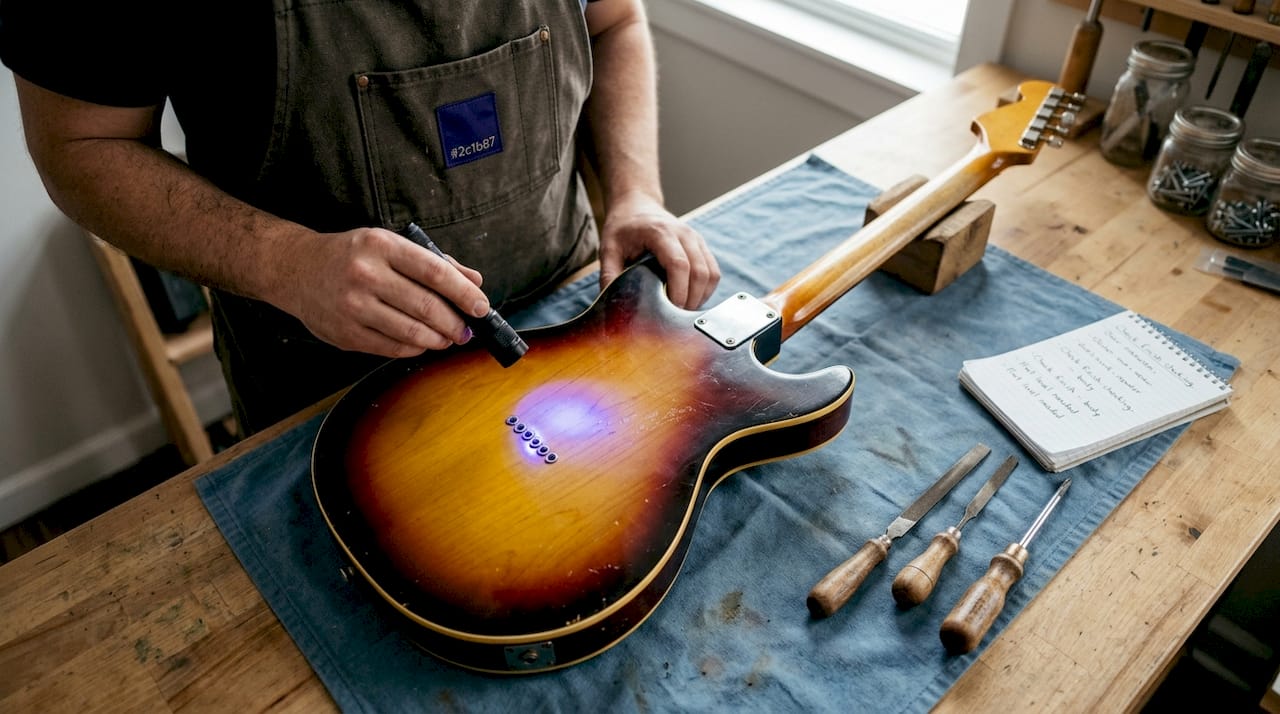
UV light examination reveals hidden modifications invisible under normal lighting. Modern adhesives, finish touch-ups, and structural repairs fluoresce distinctly under UV exposure. Scan the entire instrument systematically, noting areas showing different fluorescence patterns. Original nitrocellulose finishes display characteristic amber glow, while polyurethane repairs appear bright white or blue. Wood fillers, crack repairs, and replaced binding materials become immediately apparent.
Pro Tip: Create a detailed condition report documenting every observation, measurement, and photograph during authentication. This record supports insurance claims, resale transactions, and expert consultations while building your evaluation expertise over time.
Verifying and validating your authentication results
Authentication confidence grows through verification from multiple independent sources. Cross-reference your findings with credible databases maintained by manufacturer archives, collector organizations, and vintage guitar specialty retailers. Online resources provide serial number lookups, production specification sheets, and photographic comparisons of authenticated examples. However, treat single-source verification skeptically, as counterfeiters increasingly replicate documentation alongside physical guitars.
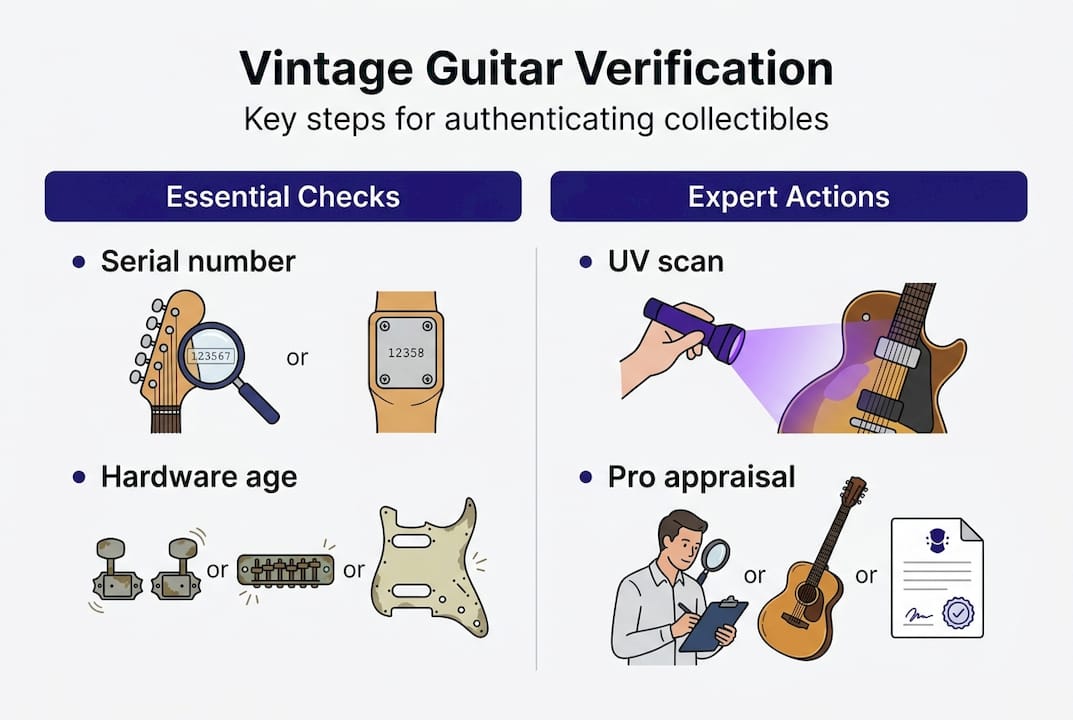
Seeking expert appraisals provides professional validation of your authentication work. Recognized vintage guitar experts bring decades of hands-on experience examining thousands of instruments across all condition grades. Consulting experts reduces counterfeit risk by 60% through specialized knowledge of subtle authentication markers invisible to casual collectors. Submit detailed photographs, measurements, and documentation alongside the physical instrument when possible. Expert consultations typically cost between $150 and $500 depending on instrument rarity and evaluation complexity, representing valuable insurance against costly authentication errors.
Common authentication mistakes undermine otherwise careful evaluation work. Over-reliance on cosmetic appearance ignores structural modifications and component replacements hidden beneath attractive finishes. Authentic vintage guitars often show honest wear, repairs, and aging that superficially resemble damage or alterations. Conversely, pristine condition raises authenticity questions for instruments claiming decades of age. Balance aesthetic appeal against realistic expectations for documented playing history and storage conditions.
Document your authentication process comprehensively to support provenance claims. Maintain organized files containing photographs from every inspection angle, measurement data, expert correspondence, and research notes. This documentation increases resale value, facilitates insurance coverage, and provides evidence for potential authentication disputes. Digital organization systems with cloud backup protect irreplaceable authentication records from loss or damage.
Comparison analysis strengthens authentication conclusions by highlighting differences between authentic and counterfeit markers:
| Feature | Authentic Vintage Guitar | Counterfeit Guitar |
|---|---|---|
| Serial number stamping | Consistent depth, period-correct font, natural aging | Shallow engraving, modern fonts, artificial aging |
| Wood grain | Species-appropriate patterns, natural color variation | Stained common woods, uniform artificial grain |
| Hardware aging | Consistent oxidation matching overall condition | Artificially aged or suspiciously pristine components |
| Finish checking | Natural crazing following wood grain and stress points | Random cracking or absent on aged instruments |
| Fretwork | Period-appropriate crown shapes, consistent wear patterns | Modern fret wire, uneven artificial wear |
| Provenance | Documented ownership chain, verifiable history | Vague stories, missing documentation gaps |
Validation extends beyond initial authentication to ongoing monitoring of market intelligence. Join collector communities, attend vintage guitar shows, and maintain relationships with reputable dealers who share authentication knowledge. Market awareness helps you recognize emerging counterfeit trends, newly discovered authentication techniques, and valuation shifts affecting your collection. Subscribe to specialty publications covering vintage instrument markets and authentication developments.
Verification sometimes reveals uncomfortable truths about cherished instruments. Approach authentication honestly, accepting that some guitars fail verification despite emotional attachment or financial investment. Instruments with questionable authenticity require disclosure during resale, as concealing known issues creates legal liability and damages collector community trust. Consider partial authenticity scenarios where original guitars received period-appropriate repairs or component replacements that preserve historical value despite modifications.
Pro Tip: Establish relationships with multiple authentication experts specializing in different manufacturer eras and instrument types. Diverse expert networks provide specialized knowledge for unusual authentication challenges and offer second opinions when initial evaluations produce ambiguous results.
Explore expert vintage guitars and guides
Authentication expertise develops through continuous learning and hands-on experience with verified instruments. Vintage Guitar World provides comprehensive resources supporting your collecting journey with detailed guides covering authentication techniques, valuation principles, and market trends. Discover why we love vintage guitars through curated collections showcasing exceptional craftsmanship and historical significance.

Explore our expert guide for collectors offering tried-and-true advice for evaluating instruments at every experience level. Browse authenticated vintage guitars in our vintage guitar shop, where each instrument undergoes rigorous evaluation ensuring authenticity and quality. Whether you’re beginning your collection or expanding existing holdings, access professional expertise supporting confident acquisition decisions.
FAQ
How can I tell if a vintage guitar has been professionally restored?
Look for non-original finishes showing modern application techniques, replaced hardware with inconsistent aging patterns, and modern adhesives visible under UV light examination. Professional restorations often include documentation detailing work performed, materials used, and before-and-after condition photographs. Request restoration records from sellers and verify restorer credentials through collector community references.
What is the most reliable source for verifying a vintage guitar’s serial number?
Official manufacturer archives provide the most authoritative serial number verification when available, though many vintage manufacturers maintain incomplete records. Trusted vintage guitar databases compiled by collector organizations and specialty retailers offer comprehensive cross-reference resources. Always verify serial numbers through multiple independent sources rather than relying on single database lookups, as counterfeiters increasingly replicate serial number formats.
Can provenance alone guarantee a vintage guitar’s authenticity?
Provenance provides valuable supporting evidence but cannot guarantee authenticity without physical inspection and expert validation. Sophisticated counterfeiters fabricate convincing documentation alongside fake instruments, creating complete provenance packages. Authenticity requires cumulative evidence from construction analysis, component examination, and expert evaluation combined with documented ownership history. Treat exceptional provenance claims with appropriate skepticism, verifying extraordinary histories through independent research.