














Guitar relicing has transformed how musicians and collectors approach vintage aesthetics. That beautifully worn Stratocaster might not be 50 years old at all. It could be a brand new instrument carefully distressed to replicate decades of playing wear. Guitar relicing artificially ages guitars to capture the look, feel, and vibe of vintage instruments without the price tag or fragility of genuine antiques. This guide explores relicing techniques, the heated debates surrounding authenticity, and practical considerations for anyone curious about this controversial craft. Whether you’re considering a reliced purchase or attempting your own aging project, understanding the methods and motivations behind relicing helps you make informed decisions about these intentionally weathered instruments.
Table of Contents
- Key takeaways
- Understanding guitar relicing: What it is and why it matters
- Techniques and materials used in guitar relicing
- The debate: Pros, cons, and expert perspectives on relicing
- Practical tips and cautions for aspiring relicers
- Explore unique vintage guitars and expert guides
- Frequently asked questions
Key Takeaways
| Point | Details |
|---|---|
| What relicing is | Relicing is artificially distressing guitars to mimic vintage wear and feel for affordable aesthetics and playability. |
| Finish aging focus | The approach centers on nitrocellulose finishes because polyurethane does not age authentically. |
| Core techniques | Temperature cycling creates spiderweb checking on nitrocellulose finishes, and targeted sanding plus controlled dings replicate decades of wear. |
| Targeted realism | Relicers focus on player contact areas to achieve believable comfort and appearance. |
Understanding guitar relicing: What it is and why it matters
Guitar relicing is the process of artificially distressing new or used guitars to replicate the worn appearance, patina, and broken-in feel of vintage instruments. This practice emerged as vintage guitar prices soared beyond most players’ budgets, creating demand for affordable alternatives that capture the aesthetic and tactile qualities of aged instruments. Major manufacturers like Fender and Gibson now offer factory-reliced models alongside their pristine counterparts.
The appeal extends beyond simple aesthetics. Musicians report that reliced guitars feel more comfortable immediately, without the break-in period new instruments typically require. The worn finish on neck backs allows smoother hand movement, while body wear suggests a guitar that’s been played hard and loved deeply. This psychological factor matters more than many players admit. A pristine instrument can feel precious and untouchable, while a reliced guitar invites uninhibited playing.
Collectors and players pursue reliced guitars for several interconnected reasons:
- Vintage aesthetics without the six-figure investment required for authentic 1950s and 1960s instruments
- Immediate playability that mimics decades of natural wear and finish settling
- Freedom to play without anxiety about creating the first scratch or ding
- Access to modern construction quality with vintage visual appeal
- Ability to customize aging patterns to personal taste rather than accepting whatever wear a vintage instrument accumulated
The vintage guitar market context drives much of this interest. Authentic pre-CBS Fender Stratocasters and 1950s Les Pauls command astronomical prices, placing them beyond reach for working musicians. Relicing democratizes the vintage aesthetic, allowing players to capture that worn-in vibe on instruments they can actually afford to play at gigs. For those seeking authentic vintage guitar restoration expertise, understanding relicing helps distinguish between genuine aging and artificial distressing.
Techniques and materials used in guitar relicing
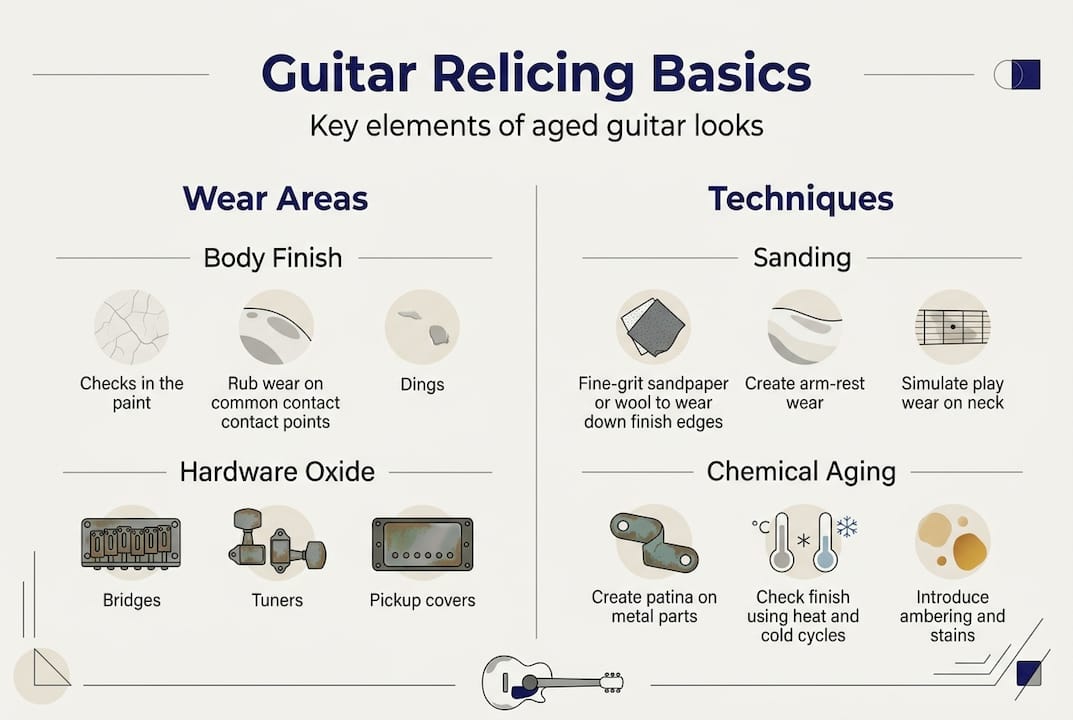
Relicing requires specific techniques tailored to different guitar components. The finish receives the most attention, as it provides the primary visual aging. Temperature cycling creates spiderweb checking on nitrocellulose finishes, achieved by moving the guitar between freezer and heat repeatedly. This thermal stress fractures the lacquer into the characteristic fine cracks seen on vintage instruments. The technique works exclusively on nitrocellulose because polyurethane finishes chip instead and do not age authentically.
Physical distressing replicates contact wear through strategic sanding and impact damage. Relicers use 600-grit or 320-grit sandpaper on body edges, horn tips, and areas where a player’s arm rests during performance. Keys, chains, and small tools create dings on the guitar’s back, simulating decades of belt buckle contact and handling wear. The art lies in knowing where wear naturally occurs versus creating random damage that screams artificial aging.
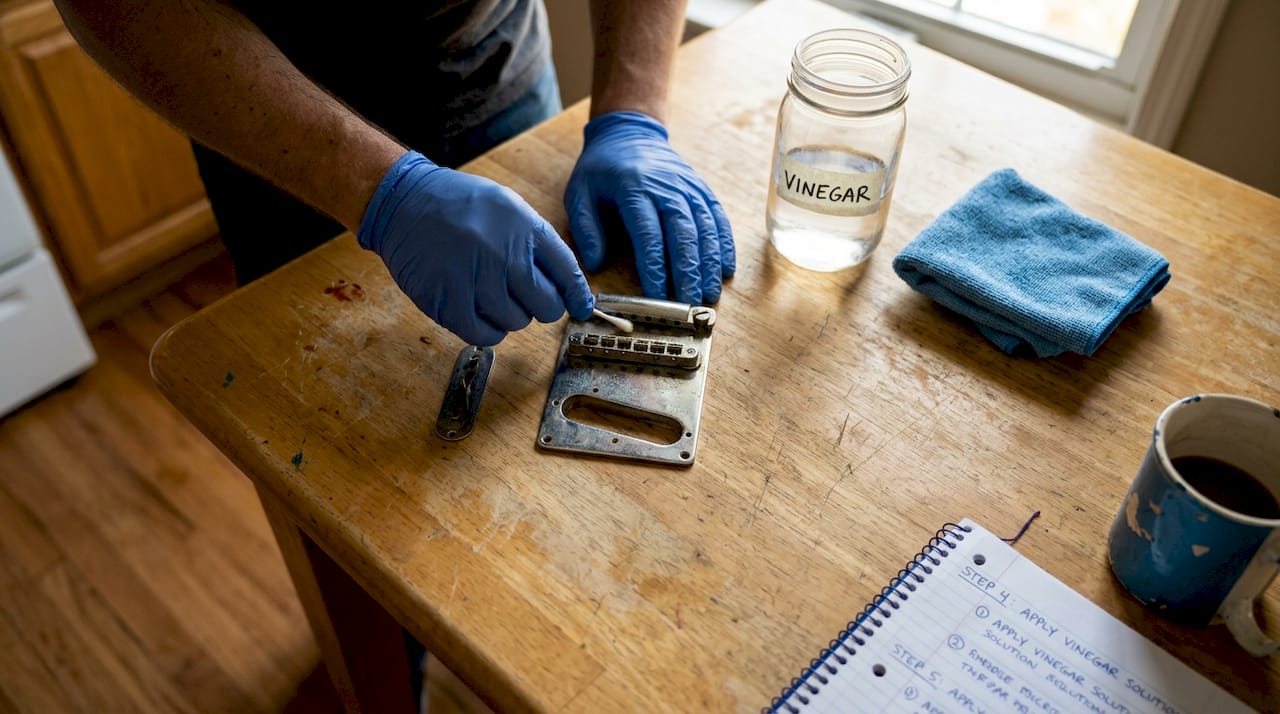
Hardware oxidation adds crucial authenticity to the overall appearance. Metal type determines patina development, with nickel and brass aging more convincingly than chrome or stainless steel. Chemical treatments accelerate oxidation through muriatic acid, vinegar, or saltwater exposure. Relicers must balance achieving visible aging against over-corroding components to the point of functional compromise.
Pro Tip: Start with the lightest aging level you find acceptable. You can always add more wear, but removing excessive relicing requires complete refinishing. Study photos of authentic vintage guitars in your target era to understand realistic wear patterns before touching sandpaper to finish.
| Technique | Materials/Tools | Effect Achieved | Best For |
|---|---|---|---|
| Temperature Cycling | Freezer, heat source | Spiderweb finish checking | Nitrocellulose lacquer only |
| Strategic Sanding | 320-600 grit sandpaper | Edge wear, forearm contact areas | Body contours, neck binding |
| Impact Distressing | Keys, chains, small tools | Dings, dents, scratches | Back of body, headstock |
| Chemical Aging | Vinegar, saltwater, muriatic acid | Hardware oxidation and patina | Metal components (nickel, brass) |
| Finish Tinting | Amber dyes, tobacco stain | Color yellowing | White and blonde finishes |
The finish type fundamentally determines relicing success. Vintage guitars used nitrocellulose lacquer, which ages gracefully through checking, yellowing, and gradual wear. Modern polyurethane finishes resist these natural aging processes, making them poor candidates for convincing relicing work. This technical limitation explains why serious relicers either work exclusively with nitro-finished instruments or strip polyurethane completely before applying nitrocellulose and then aging it. Understanding these material constraints helps when evaluating reliced guitars or planning guitar restoration projects.
The debate: Pros, cons, and expert perspectives on relicing
Relicing divides the guitar community more sharply than almost any other modification or finish option. Supporters and critics both present compelling arguments grounded in different values about authenticity, aesthetics, and the purpose of musical instruments. Understanding these perspectives helps navigate the sometimes heated discussions surrounding reliced guitars.
Proponents value multiple benefits beyond simple appearance. The vintage aesthetic provides visual appeal without the financial risk of owning a genuinely rare instrument. A reliced guitar delivers the broken-in playability of aged instruments, with smoother neck finishes and settled components that feel comfortable immediately. Perhaps most significantly, the psychological freedom matters tremendously. Players report feeling liberated to perform without anxiety about creating the first scratch, allowing more expressive and uninhibited playing. The guitar becomes a tool rather than a museum piece.
Critics raise legitimate concerns about authenticity and value. Extreme relicing often appears unrealistic because genuinely vintage guitars rarely show such dramatic wear unless owned by touring professionals who played them relentlessly. The artificial aging creates fake aesthetics lacking the genuine history and stories embedded in authentic vintage wear. Premium relicing adds thousands to a guitar’s price, yet the aging provides no functional benefit and can actually reduce resale value compared to pristine examples. Poorly executed relicing damages wood or creates wear patterns that immediately identify the guitar as artificially aged.
Expert perspectives typically fall somewhere between these extremes. Light to medium relicing gains preference from luthiers at major manufacturers like Fender’s Custom Shop and Gibson’s Historic division. These professionals recognize that subtle aging appears more authentic than heavy distressing. Extreme wear suits specific contexts like replicating guitars owned by heavy players such as Rory Gallagher or Stevie Ray Vaughan, but these represent edge cases rather than typical vintage instrument condition.
“The best relicing work makes you forget you’re looking at an artificially aged guitar. It should tell a plausible story about how the instrument was played and cared for over decades, not look like it survived a house fire or got dragged behind a tour bus.”
Pro Tip: Authentic-looking relicing concentrates wear in player-contact zones. Check whether aging appears on forearm rest areas, behind the neck where hands slide, and along body edges. Random scratches scattered across the guitar’s back or excessive checking on areas hands never touch signal amateur or unrealistic aging work.
The debate ultimately reflects different priorities. Some players prioritize the emotional connection and visual appeal of vintage aesthetics, while others value originality and the authentic patina earned through years of playing. Neither perspective holds absolute correctness. The choice depends on individual values about instruments, authenticity, and whether artificially created vintage character holds meaning. For those interested in comparing approaches, exploring vintage versus new guitars provides broader context for these aesthetic decisions.
Practical tips and cautions for aspiring relicers
No standardized methodology exists for guitar relicing, which makes the craft both challenging and highly personal. Luthiers often guard their specific techniques, emphasizing the hand-done uniqueness that distinguishes professional work from amateur attempts. This secrecy means aspiring relicers must develop skills through experimentation, careful observation of vintage instruments, and acceptance of inevitable mistakes during the learning process.
Player-contact areas provide the foundation for realistic aging. Focus distressing on locations where hands, arms, and body naturally contact the instrument during performance. Palm mute areas near the bridge show finish wear on heavily played guitars. Belt buckles create scratches and dings on the guitar’s back. Neck edges display smoothing and finish loss where the thumb repeatedly contacts wood during chord changes. Random wear scattered across surfaces that hands never touch immediately identifies amateur relicing work.
DIY relicing carries significant risks for those without experience handling vintage instruments. Overdoing the aging represents the most common mistake, as enthusiasts without reference points for authentic vintage condition often create unrealistically heavy wear. Heavy relicing can damage wood if aggressive sanding breaks through finish into the substrate, compromising structural integrity and tone. Once you’ve gone too far, the only remedy involves complete refinishing, which defeats the purpose and wastes considerable time and money.
For those determined to attempt relicing, follow this progression:
- Study authentic vintage guitars extensively through photos, museum visits, and guitar shop browsing to internalize realistic wear patterns
- Select an inexpensive guitar for your first attempt, never a valuable instrument you’d regret damaging
- Remove hardware carefully and work on finish aging before reassembly to avoid damaging components
- Start with the lightest techniques like subtle sanding on edges, adding more aggressive aging only after evaluating results
- Age hardware separately using mild chemical treatments, testing on spare parts first to understand timing and effects
- Reassemble and evaluate the overall appearance, noting areas that appear too aggressive or unrealistic
- Learn from mistakes and refine techniques on subsequent projects before attempting relicing on guitars you truly care about
Pro Tip: Practice relicing techniques on guitar body blanks or damaged instruments destined for parts before touching a playable guitar. This experimentation reveals how finishes respond to different aging methods without risking a functional instrument. Keep detailed notes on techniques, materials, and timing to refine your approach.
The finish type determines whether relicing makes sense for a particular guitar. Nitrocellulose lacquer remains the only finish that ages convincingly through checking, yellowing, and natural wear patterns. Attempting to relic polyurethane finishes produces unrealistic results because the material chips rather than wears smoothly. If you’re committed to relicing a poly-finished guitar, stripping to bare wood and applying nitrocellulose provides the only path to authentic-looking results, though this represents a major undertaking requiring spray equipment and finishing expertise.
Consider whether relicing aligns with your actual goals. If you want vintage aesthetics, purchasing a factory-reliced instrument from reputable manufacturers provides professional results without risk. If the process itself interests you as a craft to develop, accept that early attempts will likely disappoint and budget accordingly. For those focused on authentic vintage guitar restoration rather than artificial aging, understanding relicing techniques helps identify and appreciate the difference between genuine patina and manufactured wear.
Explore unique vintage guitars and expert guides
Whether you’re drawn to the authentic patina of genuinely aged instruments or appreciate the aesthetics of professionally reliced guitars, exploring both options helps clarify your preferences. Vintage Guitar World specializes in curated vintage and handcrafted guitars, offering instruments with genuine history alongside expert guidance for collectors and players. Our selection includes rare, restored, and well-maintained classical, flamenco, acoustic, and electric guitars, each evaluated for quality and authenticity.

Discover why we love vintage guitars and explore the characteristics that make these instruments special beyond simple age. Our expert vintage guitar buying guide provides detailed advice for evaluating condition, authenticity, and value when considering vintage instrument purchases. Visit Vintage Guitar World to browse our current inventory and access resources that help you make informed decisions about vintage and collectible guitars.
Frequently asked questions
What is guitar relicing?
Guitar relicing artificially ages new or used instruments to replicate the worn appearance and feel of vintage guitars through controlled distressing techniques. The process includes finish checking, strategic sanding, hardware oxidation, and careful aging of components to simulate decades of playing wear without the cost or fragility of genuine vintage instruments.
Does relicing affect guitar sound?
Relicing primarily affects appearance rather than tone, though finish type and thickness influence resonance regardless of aging. Nitrocellulose lacquer, preferred for relicing, allows more wood vibration than thick polyurethane finishes. The distressing process itself doesn’t improve sound, but thinner vintage-style finishes used on reliced guitars may enhance acoustic properties compared to heavily finished modern instruments.
Does relicing devalue guitars?
Relicing’s impact on value depends on execution quality and buyer preferences. Factory relicing from reputable manufacturers like Fender Custom Shop typically maintains resale value among enthusiasts who appreciate the aesthetic. Amateur or poorly executed relicing usually decreases value significantly. Pristine examples often command higher prices than reliced versions when selling to collectors prioritizing original condition.
What’s the difference between relicing and restoration?
Restoration preserves or returns vintage guitars to original condition, repairing damage while maintaining authenticity and historical integrity. Relicing creates artificial aging on newer instruments or adds distressing beyond natural wear. Restoration serves conservation and functionality, while relicing pursues aesthetic goals. Quality restoration increases vintage guitar value, whereas relicing adds character to modern instruments without historical significance.
Should I buy a reliced guitar?
Consider a reliced guitar if you value vintage aesthetics without the investment required for authentic instruments and appreciate the broken-in feel immediately. Avoid reliced guitars if you prioritize originality, resale value, or question whether artificial aging holds personal meaning. Try playing both pristine and reliced versions of the same model to determine whether the aesthetic and tactile differences justify any price premium or philosophical concerns about authenticity.