














Knowing which guitars will hold or increase in value over time separates serious collectors from casual buyers. The difference between a guitar that appreciates and one that languishes in a case often comes down to specific, identifiable features. This guide breaks down the essential characteristics that define collectible guitars, focusing on craftsmanship, originality, rarity, and historical significance. You’ll learn to evaluate vintage and handcrafted models with confidence, making informed decisions that align with both your passion and investment goals. Whether you’re building a collection or seeking a single exceptional instrument, understanding these features transforms how you approach every potential acquisition.
Table of Contents
- Understanding Craftsmanship In Collectible Guitars
- Original Features And Materials That Define Collectibility
- Rarity, Provenance, And Historical Significance
- Comparing Vintage And Handcrafted Guitars: A Feature Checklist
- Explore Vintage And Handmade Guitars With Vintage Guitar World
- FAQ
Key takeaways
| Point | Details |
|---|---|
| Craftsmanship quality | Handmade guitars offer superior repairability and customization compared to factory models, making them excellent long-term investments. |
| Original materials | Collectible value depends heavily on original wood, hardware, and finishes remaining intact and properly documented. |
| Rarity and provenance | Limited production numbers, unique features, and documented ownership history significantly increase a guitar’s collectible status. |
| Condition matters | Well-preserved guitars with minimal modifications and appropriate restoration maintain higher market value. |
| Vintage versus handcrafted | Both categories offer distinct advantages, with vintage guitars prized for aged tonewoods and handcrafted models valued for artistic detail. |
Understanding craftsmanship in collectible guitars
The way a guitar is built determines how well it ages and how easily it can be maintained decades later. Handmade guitars allow greater customization and repairability compared to factory-made instruments, giving them a distinct advantage in the collectible market. Factory production prioritizes speed and consistency, often using synthetic finishes that resist repair and prevent the wood from breathing naturally.
Traditional finishes like lacquer and French polish represent a fundamental difference in approach. These finishes can be sanded, buffed, and reapplied without stripping the entire guitar, allowing for spot repairs that preserve originality. Synthetic finishes, common in factory guitars, require complete removal for any meaningful restoration work. This difference becomes critical when a collectible guitar needs attention after 30 or 50 years.
Handmade guitars typically feature:
- Individual voicing and bracing adjustments for optimal tone
- Traditional joinery methods that allow for future repairs
- Carefully selected tonewoods matched for grain and resonance
- Hand-rubbed finishes that develop character over time
- Custom inlay work and binding that reflects artistic vision
The vintage guitar advantages extend beyond just age. Older instruments built by hand carry the same benefits of repairability and customization that modern handmade guitars offer. Factory guitars from any era face similar limitations in restoration potential, regardless of their vintage status.
Pro Tip: Examine the finish closely under good lighting. Traditional lacquer shows a warm, slightly uneven surface when viewed at an angle, while synthetic finishes appear uniformly glossy and plastic-like.
Original features and materials that define collectibility
Original components carry exponentially more value than replacements, even when the replacements are period-correct. A guitar with its original tuners, bridge, and nut tells a complete story, while replaced parts introduce questions about why changes were made and what else might have been altered. Collectors pay premium prices for instruments that retain factory specifications.
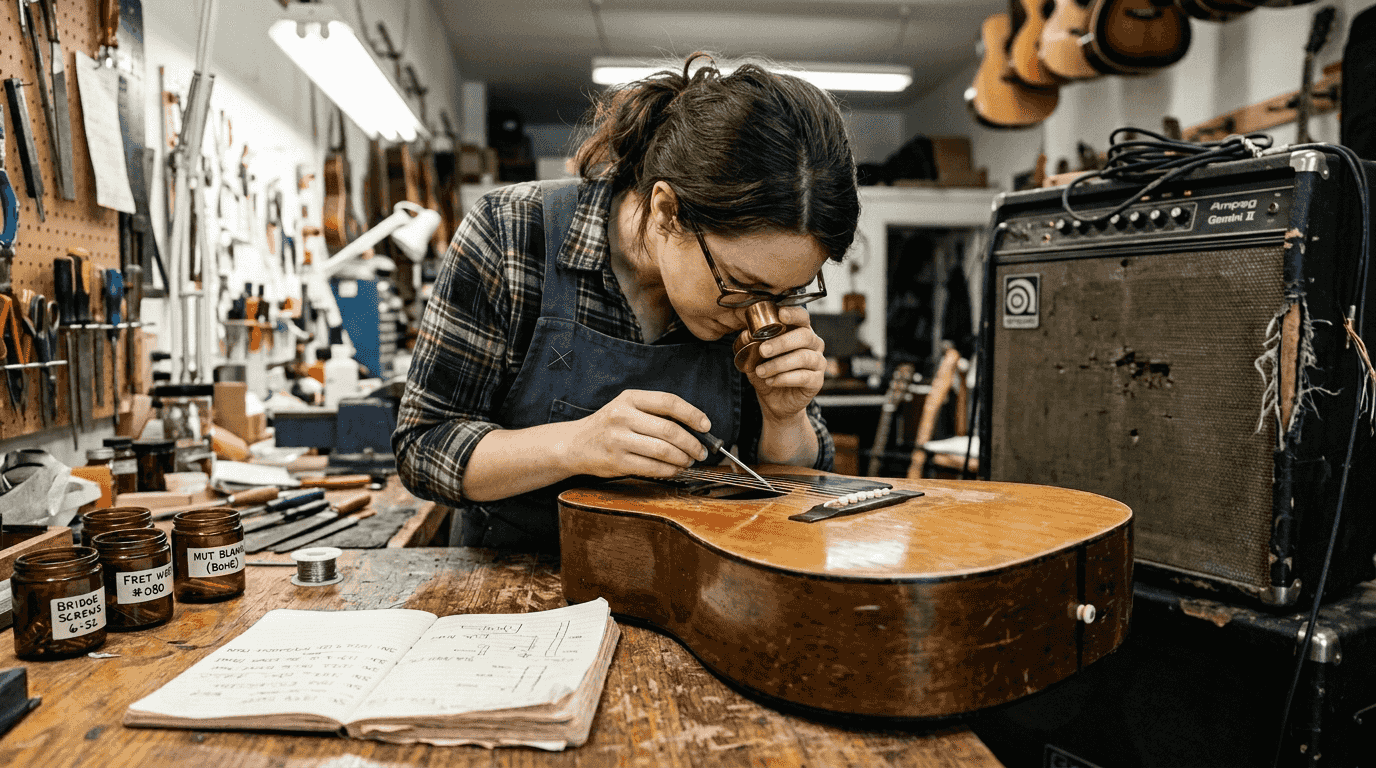
Solid spruce tops represent the gold standard for acoustic guitars, aging beautifully and opening up tonally over decades. Mahogany backs and sides provide warmth and projection, while rosewood offers complexity and sustain. These traditional tonewoods, when original to the instrument, verify its authenticity and contribute to its sonic character. Laminated woods or modern alternatives immediately reduce collectible value.
Verifying original features requires systematic inspection:
- Check serial numbers against manufacturer records and known dating systems
- Examine hardware for period-appropriate materials and patina consistent with the guitar’s age
- Inspect the finish for signs of refinishing, which drastically impacts value
- Look inside the soundhole for original labels, stamps, or builder signatures
- Compare bracing patterns and construction methods to documented examples
- Assess wear patterns to ensure they match the guitar’s purported history
Restoration decisions involve balancing playability with preservation. A crack repair using traditional hide glue maintains originality better than modern epoxy. Replacing a broken tuner with an exact vintage match preserves more value than installing modern equivalents. Understanding these nuances helps you evaluate guitar collectible features with the same perspective as serious collectors and dealers.
Some original materials carry special significance. Brazilian rosewood, banned from international trade since 1992, makes pre-1970s guitars with this wood particularly valuable. Certain spruce varieties from old-growth forests no longer exist in commercial quantities. These material rarities compound with age and craftsmanship to create truly exceptional collectible guitars.
Rarity, provenance, and historical significance
Rarity alone doesn’t guarantee collectibility, but it creates the foundation for value. A guitar produced in limited numbers, whether by design or circumstance, automatically attracts collector interest. Small-batch luthier creations, limited edition runs, or models discontinued after brief production all qualify as rare. However, rarity must combine with desirability to create true collectible status.
Provenance transforms a rare guitar into a significant one. Documentation showing previous ownership by notable musicians, use in famous recordings, or appearance in historical performances adds layers of value beyond the instrument itself. Letters of authenticity, photographs, concert programs, and recording session notes all contribute to establishing provenance. Even guitars without celebrity connections gain value from clear ownership chains and maintenance records.
Historical significance operates on multiple levels:
- Innovation in design or construction methods
- Association with important musical movements or genres
- Representation of a builder’s peak creative period
- Survival from a workshop that produced few instruments
- Connection to significant cultural or historical events
The relationship between rarity and value follows predictable patterns:
| Rarity Level | Production Numbers | Typical Value Impact | Example |
| — | — | — | |
| Common | Over 10,000 units | Baseline collectible value | Standard production models |
| Uncommon | 1,000 to 10,000 units | 1.5x to 3x baseline | Limited runs, specific years |
| Rare | 100 to 1,000 units | 3x to 10x baseline | Small luthier batches |
| Very Rare | Under 100 units | 10x+ baseline | Master builder specials |
Recognizing signs of collectible guitars means looking beyond surface appeal to understand context. A guitar’s story, documented and verifiable, often matters as much as its physical condition. Collectors invest in narratives as much as instruments, seeking pieces that connect them to musical history and craftsmanship traditions.
Comparing vintage and handcrafted guitars: a feature checklist
Vintage guitars offer the romance of aged tonewoods and historical authenticity. Spruce tops that have vibrated for 50 or 100 years develop tonal complexity impossible to replicate in new instruments. The natural aging process opens up the wood’s cellular structure, allowing it to resonate more freely. Vintage instruments also represent specific moments in lutherie history, capturing techniques and materials from their era.
Handcrafted guitars provide customization and artistic expression that vintage instruments rarely match. Modern luthiers combine traditional methods with contemporary understanding of acoustics, creating instruments optimized for specific playing styles or tonal preferences. Handmade guitars utilize traditional finishes that remain repairable decades later, giving them longevity advantages over many factory instruments.
Your collectible guitar evaluation checklist should include:
| Feature | Vintage Guitars | Handcrafted Guitars |
|---|---|---|
| Tonewood aging | Naturally aged, often superior resonance | New wood, potential for future aging |
| Finish type | Varies; best examples use traditional lacquer | Typically traditional, repairable finishes |
| Customization | Fixed specifications from original production | Can be built to exact specifications |
| Repairability | Depends on original construction method | Generally excellent with proper techniques |
| Historical value | Inherent due to age and context | Builds over time with luthier reputation |
| Investment potential | Established market, proven appreciation | Growing market, depends on builder recognition |
| Playability | May need setup or restoration | Optimized for modern playing standards |
Market demand shifts based on musical trends and collector preferences. Classical guitars from the 1960s Spanish masters command premium prices due to their tonal qualities and limited availability. Contemporary handmade guitars from recognized builders appreciate as their reputations grow. Both categories offer sound investment potential when you choose wisely.
Pro Tip: Balance your collection between proven vintage pieces and carefully selected handmade guitars from rising luthiers. This strategy provides immediate historical value while positioning you to benefit from future market appreciation as today’s master builders gain recognition.
Understanding why we love vintage guitars helps frame your decision-making process. Vintage instruments connect us to musical history and represent craftsmanship from eras when time and individual attention mattered more than production efficiency. Following a buy handmade guitar guide ensures you apply the same rigorous standards to contemporary instruments that you would to vintage acquisitions.
Explore vintage and handmade guitars with Vintage Guitar World
Finding collectible guitars that meet exacting standards requires access to expertly curated inventory and knowledgeable guidance. Vintage Guitar World specializes in rare, restored, and premium-grade instruments that satisfy serious collectors’ demands for quality and authenticity. Every guitar undergoes thorough evaluation to verify originality, condition, and collectible potential before being offered.

Whether you’re drawn to vintage guitars for their historical significance or prefer handmade instruments for their artistic merit, expert guidance makes the difference between a good purchase and an exceptional one. Detailed buying guides for vintage guitars walk you through evaluation processes, while handmade guitar resources help you identify rising luthiers worth watching. The combination of curated inventory, expert knowledge, and personalized service creates an ideal environment for building or expanding your collection with confidence.
FAQ
What is the difference between vintage and collectible guitars?
Vintage guitars earn that designation primarily through age, typically 25 years or older, but age alone doesn’t guarantee collectible status. Collectible guitars possess specific features like rarity, superior craftsmanship, historical significance, or exceptional condition that make them desirable to enthusiasts and investors. A vintage guitar becomes collectible when it combines age with these additional value factors. Understanding what makes guitars collectible helps you distinguish between simply old instruments and genuinely valuable pieces.
How can I verify a guitar’s authenticity and original features?
Authentication starts with serial number verification against manufacturer records and known dating systems for the brand and model. Examine all hardware, checking that tuners, bridges, and other components match period-appropriate specifications and show consistent aging patterns. Compare internal bracing, labels, and construction details to documented examples from reliable sources. Consulting with experts who specialize in specific brands or eras provides additional verification, especially for high-value acquisitions. Learning the signs of collectible guitars equips you to spot red flags during initial evaluation.
Why are handmade guitars often preferred by collectors?
Handmade guitars allow greater customization and repairability compared to factory-made models, making them excellent long-term investments for serious collectors. Traditional finishes used in handmade construction can be repaired and maintained without complete refinishing, preserving originality over decades. Individual attention during construction means each component is optimized for tonal quality and structural integrity. Following a comprehensive buy handmade guitar guide helps you identify builders whose work will appreciate as their reputations grow.
What role does condition play in collectible guitar value?
Condition directly impacts value, with pristine examples commanding significant premiums over instruments showing heavy wear or poor repairs. Original finish in excellent condition proves the guitar hasn’t been refinished, maintaining authenticity and value. Structural integrity matters more than cosmetic perfection, a stable, crack-free guitar with honest wear often outvalues a refinished example in superficially better condition. Appropriate professional restoration that preserves original materials and methods maintains value better than amateur repairs or modern replacement parts. Collectors must balance condition expectations with rarity, sometimes accepting condition compromises for exceptionally rare instruments.
How do I start building a collectible guitar collection?
Begin by focusing on a specific category that aligns with your musical interests and budget, whether vintage acoustics, handmade classical guitars, or instruments from particular builders or eras. Research thoroughly before purchasing, studying market trends, authentication methods, and fair pricing for your chosen category. Start with mid-range examples to develop your evaluation skills before investing in premium pieces. Build relationships with reputable dealers who can provide guidance and access to quality inventory. Document every acquisition with photographs, provenance information, and condition reports to establish clear histories for future sales or insurance purposes.