












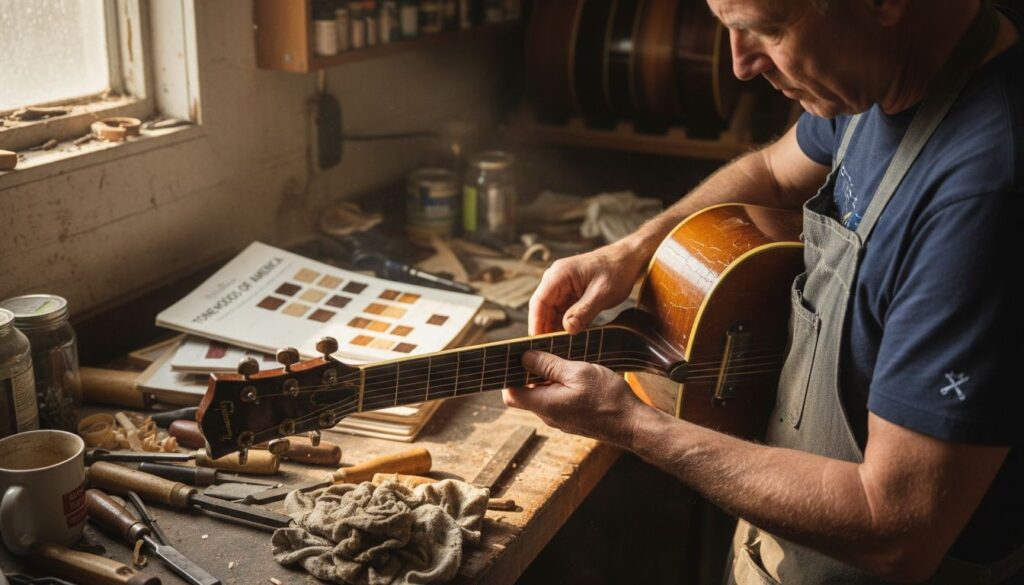

Many collectors believe every vintage guitar automatically sounds superior, yet research shows approximately 15% develop tonal dead spots from structural damage rather than improvement. Understanding how guitars genuinely age separates informed investment from costly mistakes. This guide reveals the science behind wood chemistry changes, finish evolution, and realistic timelines for tonal development so you can confidently evaluate vintage instruments.
Table of Contents
- Introduction To Guitar Aging: Why It Matters
- The Science Behind Wood Aging In Guitars
- Finish And Hardware Aging: Effects On Sound And Aesthetics
- Common Misconceptions About Guitar Aging
- Quantifiable Timeline Of Tonal Evolution In Aged Guitars
- Practical Guidelines For Maintaining And Enhancing Aged Guitars
- Explore Expert Vintage Guitar Resources
- Frequently Asked Questions
Key Takeaways
| Point | Details |
|---|---|
| Wood density reduction | Aging decreases wood density by 5 to 10% over 50+ years, fundamentally altering resonance characteristics. |
| Finish and hardware evolution | Nitrocellulose oxidation and checking modify vibrational response while marking authentic aging. |
| Tonal improvement timeline | Noticeable enhancements typically emerge after 20 to 30 years, peaking between 40 and 60 years. |
| Damage versus improvement | Not all aging benefits tone; structural issues can create dead spots and degrade sound quality. |
| Environmental control | Maintaining 40 to 50% humidity prevents cracking and supports beneficial wood evolution. |
Introduction to Guitar Aging: Why It Matters
Aging fundamentally reshapes how guitars vibrate, resonate, and sustain notes. Wood cells break down chemically over decades, hardware oxidizes, and finishes develop microscopic cracks that collectively alter tonal character. For collectors and professional musicians, recognizing these changes means distinguishing instruments that genuinely improved from those merely old.
The vintage guitar market assigns premium values to aged instruments, yet not every old guitar delivers superior sound. Structural damage from improper storage, finish repairs that stifle vibration, and uneven aging across components can diminish rather than enhance playability. Understanding these variables protects your investment and ensures you select instruments with authentic tonal evolution.
Key questions dominate collector conversations. Does finish checking actually improve tone or just signal authenticity? How long must a guitar age before tonal improvements become noticeable? Can maintenance practices accelerate beneficial changes while preventing destructive ones? Answering these requires examining the science behind material transformations.
Approximately 15% of vintage guitars show tonal dead spots due to structural damage, not improvement. This statistic underscores why expertise in aging mechanics matters when evaluating potential purchases. Recognizing the difference between beneficial aging and deterioration separates savvy collectors from those overpaying for compromised instruments.
Critical factors include:
- Wood density changes affecting resonance and sustain
- Finish chemistry evolution impacting vibrational freedom
- Hardware wear modifying tonal contribution and playability
- Environmental stress creating structural vulnerabilities
Mastering these elements gives you confidence when assessing why old guitars sound different and whether specific instruments justify their premium pricing.
The Science Behind Wood Aging in Guitars
Wood comprises cellulose fibers bound by lignin, the polymer providing structural rigidity. Over decades, lignin slowly degrades through oxidation and hydrolysis, breaking down molecular chains. Cellulose crystallinity also decreases as hydrogen bonds weaken. These chemical transformations reduce overall wood density and stiffness, fundamentally changing how soundboards and backs vibrate.
Research indicates wood density decreases 5 to 10% after 50+ years, impacting resonance. Lower density wood requires less energy to set into motion, potentially increasing sensitivity to player input. Reduced stiffness can also shift resonant frequencies, altering tonal balance between bass, midrange, and treble.
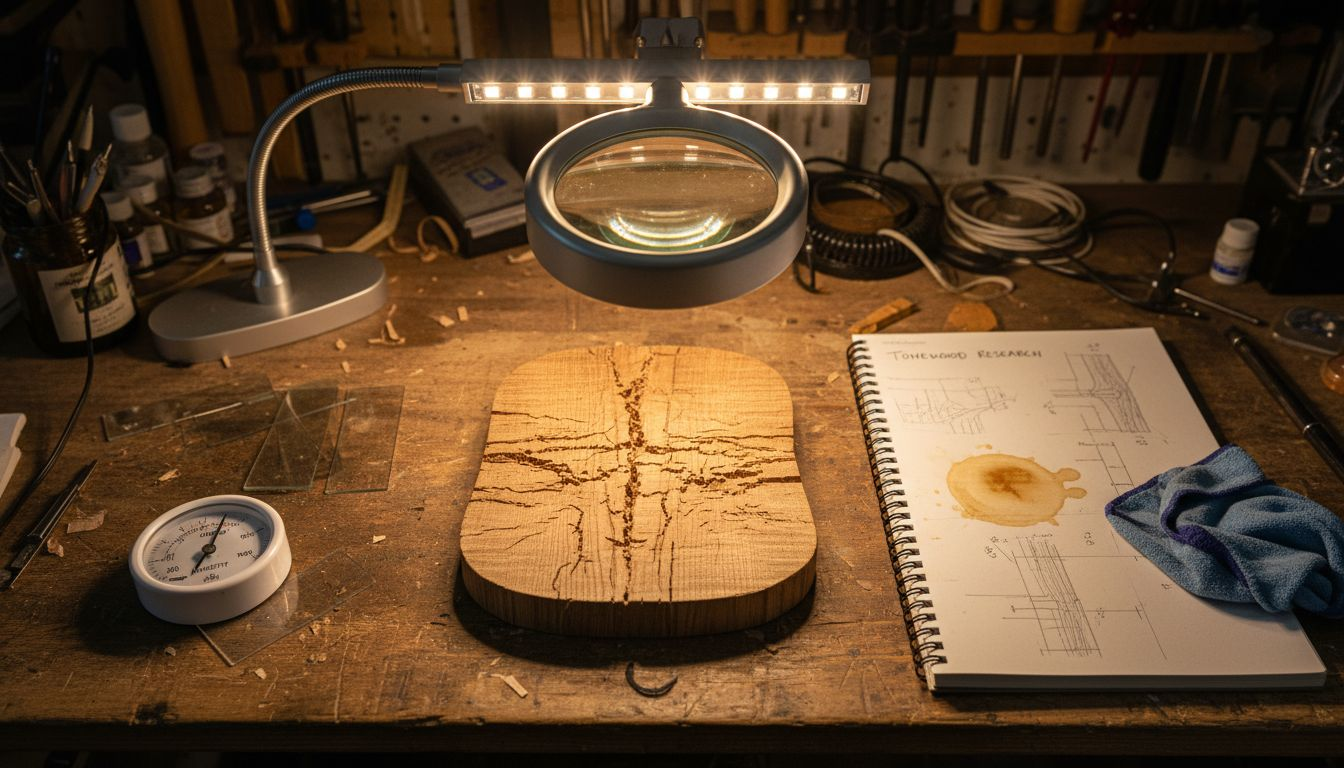
Moisture content fluctuations accelerate aging unevenly. Wood absorbs and releases water vapor based on ambient humidity, causing cellular walls to swell and contract. Repeated cycles stress lignin bonds and create microscopic fractures in cell structure. These changes accumulate over time, progressively softening wood fibers and modifying mechanical properties.
Temperature variations compound moisture effects. Higher temperatures speed oxidation reactions that break down lignin, while extreme cold can make wood brittle. Guitars stored in stable environments age more predictably than those exposed to seasonal swings. This explains why identical models from the same year can sound dramatically different based purely on storage history.
Key wood aging mechanisms:
- Lignin oxidation reducing structural rigidity
- Cellulose crystallinity loss softening fiber response
- Moisture cycling creating cumulative stress damage
- Temperature fluctuations accelerating chemical breakdown
Understanding the science behind wood changes clarifies why environmental control matters so critically for vintage instruments. Guitars aged in museum conditions develop different characteristics than those gigged extensively in varying climates.
Pro Tip: Store guitars at stable 40 to 50% relative humidity to optimize beneficial wood aging while preventing cracks, warping, or finish checking that degrades value. Use calibrated hygrometers and quality humidification systems rather than guessing.
Finish and Hardware Aging: Effects on Sound and Aesthetics
Nitrocellulose lacquer, standard on vintage guitars, oxidizes and shrinks over decades. This creates characteristic checking, the fine crack network collectors associate with authenticity. As finish loses flexibility, it influences how freely wood vibrates. Thinner, more brittle finishes may dampen vibrations less than fresh applications, subtly affecting tonal response.
Research confirms nitrocellulose finish checking is a key sign of natural aging affecting tone and collector value. However, the acoustic impact remains modest compared to wood density changes. Checking primarily serves as authentication evidence rather than a major tonal modifier. Still, refinished guitars often sound different because thick modern finishes restrict wood movement.
Hardware oxidation creates visible patina on tuners, bridge components, and metal pickguards. Corroded metals change mass and vibrational transfer characteristics, potentially altering sustain and harmonic content. More importantly, original oxidized hardware signals an unrestored instrument, dramatically affecting market value even if tonal differences prove subtle.
Visual wear patterns tell ownership stories. Genuine playing wear on necks, bodies, and hardware develops organically in high contact areas. Collectors scrutinize these patterns to verify authenticity and playing history. Artificial distressing attempts rarely replicate natural wear convincingly, making finish checking and hardware aging essential authentication tools.
Aging characteristics collectors examine:
- Finish checking density and pattern consistency
- Hardware patina matching expected age progression
- Wear patterns aligning with genuine playing contact
- Color shifts from ultraviolet exposure and oxidation
Authentic aging markers command premium pricing because they verify provenance and originality. Refinished or heavily restored instruments lose both tonal character and collectible status.
Pro Tip: Avoid refinishing vintage guitars to preserve both collector value and original tonal characteristics. Even minor finish repairs should use period correct materials and techniques. Original patina and checking represent irreplaceable authenticity markers worth preserving.
Common Misconceptions About Guitar Aging
The belief that all vintage guitars automatically sound better represents the most pervasive myth in collecting. Wood aging can enhance resonance, but structural damage, poor maintenance, and manufacturing defects often degrade tone instead. Studies show some vintage guitars have tonal dead spots where aging did not uniformly improve sound quality.
Artificial relicing mimics appearance without replicating acoustic evolution. Distressing techniques create cosmetic checking and wear but cannot reproduce decades of lignin breakdown, wood density reduction, or genuine stress seasoning. Reliced guitars look old while sounding new, disappointing players seeking authentic vintage tonal characteristics alongside visual aging.
Aging affects guitar components unevenly. Tops typically show more dramatic changes than backs or sides due to thinner dimensions and greater stress from string tension. Necks may remain relatively stable while bodies develop significant tonal shifts. This variability means generalizations about “vintage tone” oversimplify complex, instrument specific aging patterns.
Environmental damage masquerades as beneficial aging. Finish cracks from humidity swings differ from natural checking. Structural separations at glue joints reduce coupling efficiency between components, creating dead spots rather than improved resonance. Distinguishing healthy aging from deterioration requires examining common misconceptions about guitar aging that lead collectors astray.
Critical myths to reject:
- Age alone guarantees superior tone regardless of condition
- Artificial relicing provides acoustic benefits matching natural aging
- All wood types age identically with uniform improvements
- Playing guitars constantly accelerates beneficial tonal evolution
Informed collectors evaluate each instrument individually rather than assuming age automatically confers value. Structural integrity, storage history, and original condition matter as much as manufacturing date when assessing tonal potential.
Quantifiable Timeline of Tonal Evolution in Aged Guitars
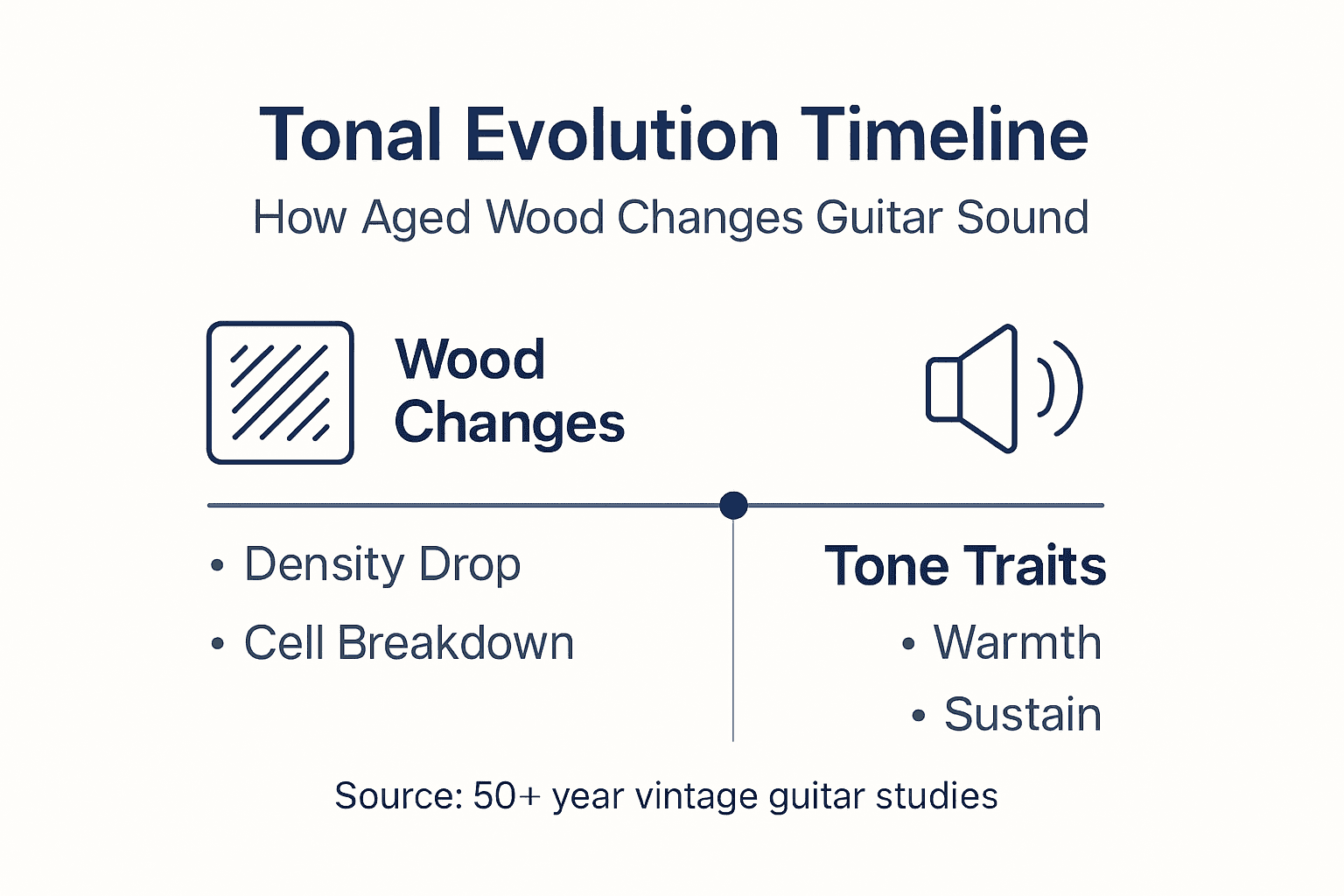
Tonal improvements follow predictable timelines, though individual variation exists. Research indicates tonal improvements generally start after 20 to 30 years, peaking at 40 to 60 years. Beyond this window, further changes tend toward diminishing returns unless exceptional storage preserves structural integrity.
| Age Range | Tonal Characteristics | Wood Density Change | Market Value Impact |
|---|---|---|---|
| 0 to 10 years | Breaking in period, tone brightens slightly | Minimal, under 2% | Standard used pricing |
| 10 to 20 years | Increased resonance, improved harmonic complexity | 2 to 4% reduction | Modest premium for desirable models |
| 20 to 40 years | Noticeable warmth, enhanced sustain and projection | 4 to 7% reduction | Significant vintage premium |
| 40 to 60 years | Peak tonal maturity, optimal balance and depth | 7 to 10% reduction | Maximum collectible value |
| 60+ years | Continued character, risk of structural issues | 10%+ reduction | Value depends heavily on condition |
Environmental factors create substantial timeline variability. Guitars stored in stable climates age more slowly and predictably than those exposed to humidity swings and temperature extremes. A 30 year old guitar from Arizona might show less aging than a 20 year old instrument from humid coastal regions.
Wood species also influences aging rates. Spruce tops typically show earlier tonal improvements than cedar, while mahogany backs age differently than rosewood. Laminated construction ages less dramatically than solid wood since glue layers restrict natural wood movement and chemical evolution.
Sequential aging stages:
- Initial settling period where new wood stiffness gradually relaxes
- Early resonance improvements as wood density begins decreasing
- Harmonic complexity development from lignin breakdown
- Peak tonal maturity when density reduction optimizes without structural compromise
- Potential decline if damage accumulates faster than beneficial changes
Understanding the timeline of tonal evolution helps collectors set realistic expectations. A 15 year old guitar won’t deliver the same characteristics as a 50 year old instrument, regardless of brand or price.
Practical Guidelines for Maintaining and Enhancing Aged Guitars
Humidity control represents the single most critical maintenance factor. Maintain 40 to 50% relative humidity year round using calibrated hygrometers and appropriate humidification systems. Lower humidity causes wood to shrink, creating cracks and finish checking. Higher humidity causes swelling that can lift bridges, warp necks, and separate braces.
Recognize authentic aging signs to avoid over restoration. Original finish checking, hardware patina, and playing wear add value when left undisturbed. Aggressive cleaning, polishing, or refinishing destroys these authenticity markers. Collectors increasingly prize original condition over cosmetic perfection, making preservation more valuable than restoration.
Monitor mechanical wear separately from cosmetic aging. Fret wear, nut damage, and bridge issues affect playability independent of beneficial wood aging. Address these functional problems while preserving original finishes and hardware. Skilled luthiers can perform mechanical repairs without compromising vintage character or collector value.
Expert maintenance principles from related fields, like those outlined in preservation strategies, emphasize gentle cleaning and environmental protection over aggressive intervention. Apply similar thinking to vintage guitars by minimizing chemical exposure and mechanical stress.
Essential maintenance practices:
- Use room humidifiers or case humidification systems consistently
- Clean with minimal moisture using microfiber cloths only
- Avoid temperature extremes during storage and transport
- Loosen string tension for long term storage periods
- Document original condition before any restoration work
Preservation beats restoration for maintaining both tonal characteristics and market value. Original components and finishes represent irreplaceable authenticity that modern work cannot replicate.
Pro Tip: Use only distilled water in humidification systems and minimal cleaning products. Harsh chemicals damage vintage finishes while minerals from tap water leave deposits. When cleaning is necessary, use products specifically formulated for nitrocellulose lacquer rather than modern polyurethane compatible cleaners.
Explore Expert Vintage Guitar Resources
Understanding aging science provides foundation, but successful collecting requires practical buying strategies and authentication skills. Apply the aging knowledge you’ve gained by exploring comprehensive resources designed for serious collectors and professional musicians.
Our 7 point checklist for buying vintage guitars translates theoretical aging knowledge into concrete evaluation steps. Learn exactly what to examine, which questions to ask sellers, and how to verify authenticity before committing to purchases.
The expert guide for collectors expands on valuation principles, covering everything from verifying serial numbers to assessing restoration quality. Discover how aging impacts pricing across different brands, models, and conditions.
Explore the advantages of vintage guitars to understand why aged instruments deliver benefits beyond nostalgia. From tonal characteristics to investment potential, these resources connect aging science to real world collecting success.

Frequently Asked Questions
What is the guitar aging process?
Guitar aging involves chemical, physical, and environmental changes that alter tone, structure, and appearance over decades. Wood cells break down through lignin oxidation and cellulose degradation, reducing density and stiffness. Finishes oxidize and develop checking while hardware accumulates patina. These transformations occur naturally through time and environmental exposure, distinguished from artificial relicing that mimics appearance without replicating wood chemistry evolution.
How does humidity affect vintage guitars during aging?
Humidity fluctuations cause wood to absorb and release moisture, swelling and shrinking repeatedly. This cycling stresses cellular structure, accelerates lignin breakdown, and can create cracks or finish checking. Stable humidity between 40 and 50% supports beneficial aging while preventing structural damage that degrades tone and value.
Can artificial relicing replicate natural aging effects on tone?
Artificial relicing techniques create visual wear and finish checking but cannot reproduce decades of wood chemistry changes. Distressed finishes look aged while wood density, stiffness, and cellular structure remain unchanged. Acoustic properties therefore match new instruments despite vintage appearance, disappointing players seeking authentic aged tone.
When do tonal improvements from aging typically start?
Noticeable tonal enhancements usually emerge after 20 to 30 years as wood density decreases and lignin breaks down. Improvements continue developing through 40 to 60 years when changes peak before diminishing returns set in. Environmental conditions and wood species create significant variation around these general timelines.