












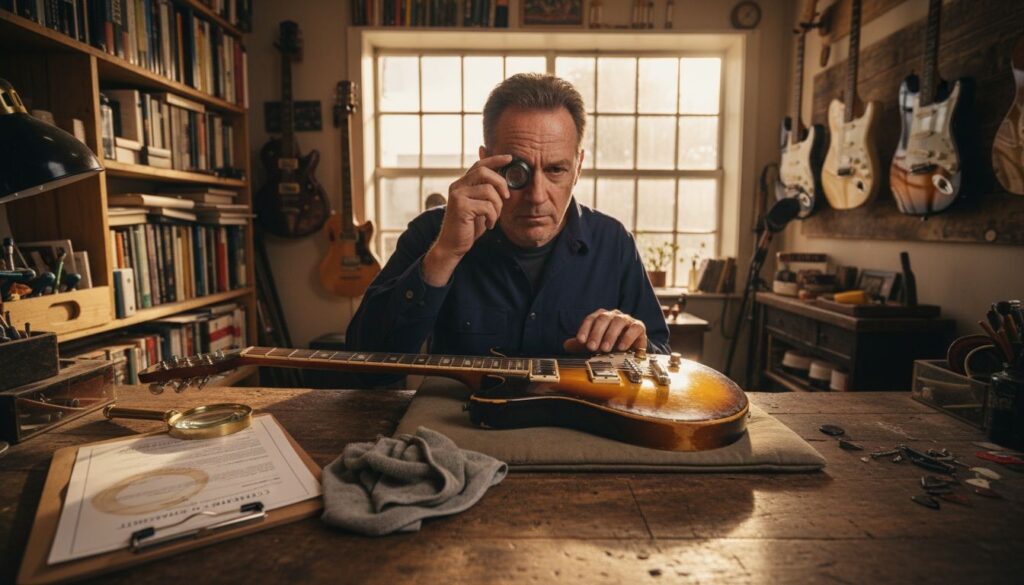

For serious vintage guitar collectors, placing trust in handwritten letters or word-of-mouth claims is no longer enough. As buyers face increasing risks of forgery and depreciation, modern certification methods provide vital reassurance rooted in science and documentation. Today, certified vintage guitars command higher resale prices and inspire global confidence by using advanced scientific analysis and credible paperwork to verify a rare instrument’s true authenticity and value.
Table of Contents
- What Vintage Guitar Certification Means Today
- How Experts Authenticate Vintage Guitars
- Main Types of Certification Documents
- Why Certification Safeguards Market Value
- Risks of Buying Uncertified Guitars
Key Takeaways
| Point | Details |
|---|---|
| Importance of Certification | Vintage guitar certification enhances trust and credibility in the market, directly affecting resale value and buyer confidence. |
| Scientific Methods | Modern certification employs advanced scientific analysis alongside expert evaluations to verify authenticity, reducing guesswork. |
| Documentation Matters | Comprehensive documentation, including provenance and appraisal reports, strengthens your position when purchasing vintage guitars. |
| Risks of Uncertified Instruments | Buying uncertified guitars poses significant risks, including exposure to counterfeit instruments, hidden modifications, and depreciation. |
What Vintage Guitar Certification Means Today
Vintage guitar certification has evolved significantly over the past decade. It’s no longer just about a dealer’s reputation or a handwritten note inside the case. Today’s certification combines expert evaluation with scientific verification to give collectors real confidence in their investments.
At its core, certification answers three critical questions: Is this guitar authentic? What condition is it really in? What’s a fair market value? These answers directly impact whether you’re paying $2,000 or $20,000 for that 1959 Les Paul.
The Science Behind Modern Certification
The certification landscape has shifted dramatically with the introduction of advanced scientific methods in guitar authentication. Modern experts now use spectrometers, analytical chemistry, and wood analysis alongside traditional visual inspection.
This scientific approach removes guesswork from the process. Rather than relying solely on an expert’s eye, technicians can now analyze wood grain patterns, finish composition, and hardware metallurgy. The result? Objective data that backs up authenticity claims.
- Wood analysis confirms period-correct materials and aging
- Finish testing identifies original lacquer or refinishes
- Hardware metallurgy reveals whether components are era-appropriate
- Serial number verification cross-references factory records
What Makes Certification Credible
Not all certificates carry the same weight. A legitimate certification should come from evaluators with verifiable credentials and transparent methodologies. When you’re spending serious money, you need to know exactly how someone reached their conclusions.
The best certifications document everything. They include detailed photographs, measurements, tone analysis, and electronic testing records. Think of it like a medical report for your guitar—the doctor doesn’t just tell you that you’re healthy; they show you the test results.
A credible certification gives you documentation, not just opinion. It shows the work behind the conclusion.
Market Impact and Collector Confidence
Certification directly affects resale value and buyer confidence. A certified vintage guitar typically sells faster and commands stronger prices than an uncertified equivalent. Collectors worldwide increasingly demand this assurance before making major purchases.
This shift has raised the entire market’s standards. Dealers now recognize that proper certification is an investment, not an expense. Museums, serious collectors, and institutional buyers require it before acquisition.
Key benefits of certified instruments:
- Higher resale value and faster sales
- Reduced risk of counterfeit purchases
- Insurance and estate appraisal documentation
- Transparent condition assessment
- Increased buyer confidence across borders
How to Verify Certification Quality
When evaluating a certificate, look for specific markers of legitimacy. The evaluator should clearly explain their methodology and list all tests performed. Red flags include vague language, missing documentation, or reluctance to discuss their process.
The most reliable certificates come from evaluators who specialize exclusively in vintage guitars and maintain detailed records. They often publish their authentication criteria publicly so collectors can understand their standards.
Before purchasing a certified vintage guitar, verify that the evaluator actually conducted hands-on inspection. Remote evaluations based solely on photographs lack the credibility of physical examination.
Pro tip: Request the complete certification report with all test results and photographs before finalizing any purchase over $1,000. Legitimate evaluators provide comprehensive documentation without hesitation.
How Experts Authenticate Vintage Guitars
Authentication isn’t guesswork. Real experts follow systematic processes that combine decades of hands-on experience with cutting-edge scientific analysis. When someone claims a guitar is authentic, there should be measurable evidence backing that claim.
The authentication process typically spans several days of intensive examination. Experts inspect physical characteristics, test materials, analyze construction methods, and cross-reference historical records. Each step builds a case for authenticity based on concrete findings, not hunches.
The Physical Inspection Process
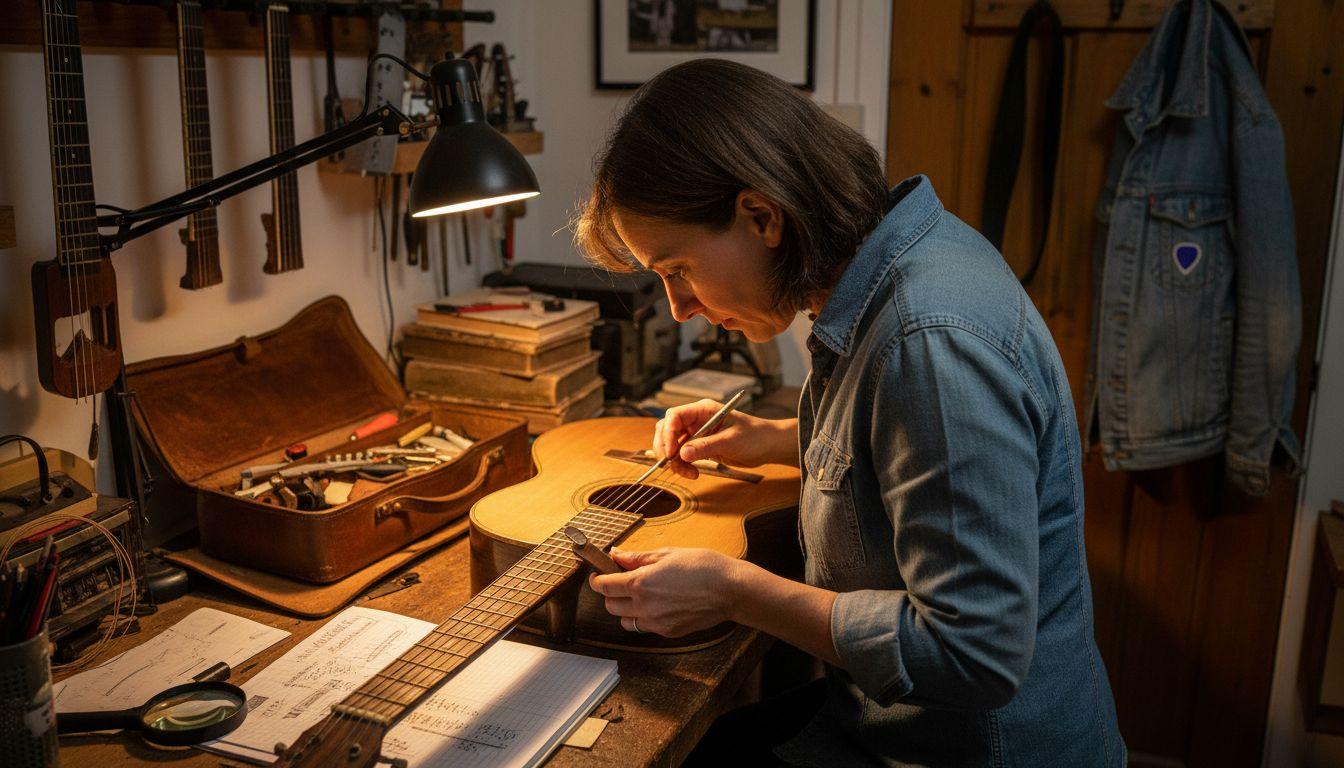
Authentication begins with meticulous visual examination under controlled lighting. Experts look for wear patterns, finish characteristics, and construction details that match the guitar’s claimed era and model.
Checking authenticity requires examining finish consistency, wear marks, and hardware patina. Genuine vintage instruments show natural aging in specific ways. A 1960s Fender won’t look the same as a newly refinished copy, no matter how skilled the refinisher.
Key areas of examination include:
- Finish thickness and composition analysis
- Hardware wear patterns and oxidation
- Fretboard conditioning and fret wear
- Wood grain and construction joinery
- Serial number placement and clarity
- Binding condition and separation patterns
Scientific Analysis Methods
Modern authentication relies heavily on scientific analysis methods including microscopy. Experts now use spectrometers, analytical chemistry, and radiography to verify materials objectively.
These tools reveal what the naked eye cannot. They identify original lacquer formulations, detect refinishes, confirm wood species authenticity, and reveal hidden repairs. The data doesn’t lie and cannot be faked with aging techniques.
Common scientific tests include:
- X-ray radiography to detect internal repairs
- Infrared spectroscopy to analyze finish composition
- Wood species identification through grain analysis
- Hardware metallurgy testing for period-correct materials
- Paint thickness measurement to detect layers
Scientific evidence removes subjectivity from authentication. Numbers and chemical data replace opinion.
Historical Documentation and Records
Experts cross-reference factory records, serial number databases, and historical documentation. A guitar’s serial number tells a story when matched against manufacturer records. Production dates, finish options, and hardware specifications all confirm legitimacy.
Many vintage guitar manufacturers kept meticulous records. These documents reveal exactly what guitars rolled off the line during specific production periods. Missing documentation doesn’t mean inauthenticity, but matching documentation strengthens the case significantly.
Sound and Functionality Testing
Authentic vintage guitars sound and play distinctly. Age affects tone development, wood resonance, and overall acoustic character. Experts assess playability, intonation accuracy, and tonal qualities against known examples of verified authentic instruments.
Sound can’t be faked convincingly across all frequencies and playing dynamics. Newer guitars simply don’t replicate the complex tonal characteristics developed over decades of wood settling and finish maturation.
Pro tip: Request a detailed authentication report that includes photographs, test results, and methodologies used. Walk away from any expert who cannot explain exactly how they reached their conclusion.
Main Types of Certification Documents
Not all certification documents carry equal weight. Understanding what each type offers helps you evaluate whether a certificate actually protects your investment. Different documents serve different purposes, and savvy collectors know the difference.
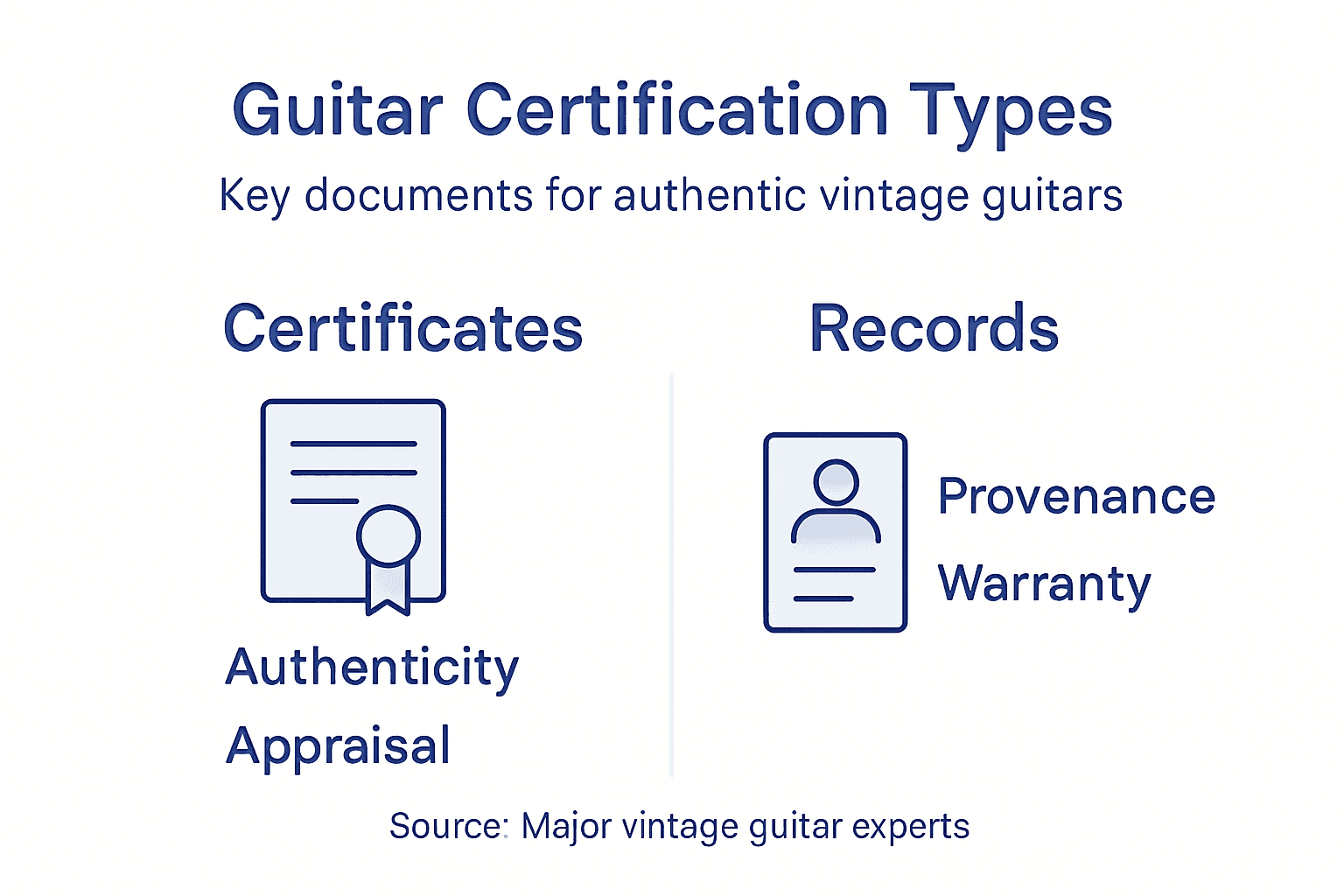
The strongest authentication packages combine multiple document types. A certificate of authenticity alone tells you one person believes the guitar is real. Add provenance documentation and a detailed appraisal, and you’ve got compelling evidence.
Certificates of Authenticity
A certificate of authenticity is the most common certification document you’ll encounter. This document states that an expert has examined the guitar and confirmed it’s genuine. The certificate should include the evaluator’s credentials, examination date, and specific identifying details about the instrument.
The credibility of a certificate depends entirely on who issued it. A certificate from a recognized manufacturer or established authentication expert carries more weight than one from an unknown dealer. Look for certificates that explain the authentication methodology, not just conclusions.
Quality certificates include:
- Evaluator credentials and experience level
- Detailed examination findings and observations
- Specific serial number and construction details
- Date of authentication and signature
- Unique certificate number for verification
Provenance Documentation
Provenance refers to the documented ownership history of an instrument. Letters of provenance outline ownership history and confirm the guitar’s journey through previous owners.
Provenance documentation tells the story of how a guitar traveled through time. Did it come from a famous musician’s estate? Was it part of a well-known collection? Strong provenance increases value dramatically and adds credibility to authenticity claims.
Proper provenance includes:
- Original sales receipts or invoices
- Previous owner names and dates of ownership
- Documentation of notable use or appearances
- Transfer of ownership records
- Photographs from different ownership periods
Detailed Appraisal Reports
Appraisal reports go beyond simple authentication. They assess condition, estimate market value, and document every aspect of the guitar’s physical state. A thorough appraisal includes measurements, photographs, tone analysis, and playability notes.
These reports serve multiple purposes. Insurance companies require them for coverage. Estate planners use them for valuation. Buyers rely on them to understand what they’re paying for. Professional appraisals follow standardized formats and include comparable sales data.
Comprehensive appraisals cover:
Here’s a concise overview comparing the main certification documents for vintage guitars:
| Document Type | Primary Purpose | Critical Contents | Ideal Use Case |
|---|---|---|---|
| Certificate of Authenticity | Confirms authenticity | Expert credentials, exam date | Proving the guitar is genuine |
| Provenance Documentation | Shows ownership history | Owner list, sales records | Demonstrating collectible value |
| Appraisal Report | Determines market value | Full condition, photos, comps | Insurance or resale valuation |
| Warranty/Guarantee | Provides financial backup | Terms, issuer, coverage scope | Protection against inauthenticity |
- Condition assessment with detailed photographs
- Construction and material analysis
- Market value estimate with comparable sales
- Tone and playability evaluation
- Repair history and restoration notes
- Insurance replacement value
Manufacturer Warranties and Guarantees
Some certification programs include warranties or lifetime guarantees. These documents promise that if the guitar is later proven inauthentic, the seller will refund your money or replace the instrument. Warranties provide financial protection beyond just documentation.
Warranties vary significantly in scope. Some cover only authenticity while others include condition guarantees. Review warranty terms carefully—they’re only valuable if the issuer remains in business and honors them.
Strong certification packages combine multiple documents. Authentication plus provenance plus appraisal equals real protection.
Building Your Documentation Package
When acquiring a vintage guitar, request complete documentation rather than single documents. Authentication certificates matter most, but provenance letters and appraisal reports strengthen your position significantly.
Keep all original documents in a safe location. Digital copies stored separately provide backup protection. These documents affect resale value, insurance coverage, and your confidence in the investment.
Pro tip: Before finalizing a purchase, verify any certificates with the issuing expert directly. Call them, email them, or visit their facility to confirm they actually performed the authentication and stand behind their work.
Why Certification Safeguards Market Value
Certification directly impacts what your vintage guitar is worth. An uncertified instrument sits in inventory longer, attracts cautious buyers, and commands lower prices. A certified guitar sells faster and commands premium prices because buyers trust what they’re purchasing.
The math is simple. Buyers assess risk when evaluating vintage guitars. Certification removes uncertainty and eliminates the biggest obstacle to sale: doubt about authenticity. When doubt disappears, prices rise.
The Depreciation Risk Problem
Uncertified guitars carry hidden depreciation risk. A buyer might pay $8,000 for an instrument, only to discover years later that authenticity questions reduce its value to $4,000. That’s not just a financial loss—it’s regret.
Certification from authoritative sources ensures originality and prevents depreciation from doubt or forgery. When you own a certified guitar, you own peace of mind alongside the instrument.
Certification protects against:
- Authenticity challenges from future buyers
- Insurance claim denials due to verification issues
- Reduced resale prices from buyer skepticism
- Hidden repair or restoration problems
- Loss of provenance documentation
Market Data Shows the Price Premium
Real numbers prove certification’s value. Certified vintage guitars command higher resale prices due to verified authenticity and reduced buyer risk. Market data consistently shows certified instruments appreciating while uncertified examples stagnate.
Auction house records reveal the pattern clearly. Certified guitars from recent years sell for 20-40% more than comparable uncertified instruments. The gap widens for rare models and high-value pieces where authenticity questions matter most.
Pricing advantages of certification:
- Faster sales cycles (days versus months)
- Reduced negotiation pressure from buyers
- Access to serious collectors with deep pockets
- Higher final selling prices across comparable instruments
- Better insurance valuations for appraisal purposes
Building Trust in Global Markets
Vintage guitar sales increasingly happen across borders and continents. International buyers cannot inspect instruments in person. Certification bridges that gap by providing objective documentation they can trust.
A collector in London considering a 1965 Stratocaster from California needs confidence that authenticity claims are credible. Certification from recognized experts provides that confidence. Without it, international buyers hesitate and offer lower prices.
Certification converts skepticism into confidence. Confidence converts browsers into buyers.
Investment Stability and Appreciation
Certified guitars function as more stable investments. The certification creates a verifiable audit trail that future owners value. This stability means your guitar maintains or appreciates in value rather than depreciating from doubt.
Savvy collectors understand that certification today protects investment tomorrow. They’re willing to pay more upfront knowing the guitar will hold its value or appreciate when they decide to sell.
Investment benefits include:
- Reduced volatility from authenticity questions
- Stronger appreciation potential over time
- Protection against market fluctuations
- Better estate planning documentation
- Enhanced liquidity when selling
Insurance and Estate Planning Value
Insurance companies require certification for valuable instruments. Your $15,000 guitar won’t be covered if authenticity can’t be proven. Certification eliminates that barrier and ensures full coverage.
Estate planners use certified guitars for accurate valuations. When passing instruments to heirs, certification documents their value and authenticity, preventing disputes and ensuring proper inheritance distribution.
Pro tip: Get certification before selling. The cost of certification typically pays for itself through the price premium you’ll receive, plus you avoid extended negotiations with skeptical buyers.
Risks of Buying Uncertified Guitars
Buying an uncertified vintage guitar is like purchasing a house without an inspection. You might get lucky. Or you might discover serious problems after you’ve already paid. The financial and emotional consequences can be devastating.
Uncertified guitars expose you to counterfeit instruments, hidden modifications, and undisclosed damage. Without proper authentication, you’re gambling with thousands of dollars based on hope and the seller’s word. That’s not an investment strategy—it’s reckless.
The Counterfeit Problem
Fake vintage guitars flood the market. Skilled craftspeople create convincing replicas using aged wood, artificially distressed finishes, and copied serial numbers. Buying uncertified guitars risks acquiring fakes and heavily modified instruments with significant financial loss.
Counterfeits range from obvious to nearly undetectable. The obvious ones fool casual buyers. The sophisticated ones fool experienced collectors who lack proper authentication tools. Without certification, you cannot distinguish between genuine and counterfeit until months or years after purchase.
Counterfeit risks include:
- Exact replicas with forged serial numbers
- Composite guitars assembled from mixed parts
- Legitimate bodies paired with non-original necks
- Complete fabrications with aging techniques
- Serial number alterations and filing
Hidden Modifications and Repairs
Many uncertified guitars have been modified extensively. Necks have been replaced. Bodies have been refinished. Electronics have been upgraded. Structural repairs hide cracks sealed and reinforced internally.
Sellers omit these details to maintain higher asking prices. A $12,000 asking price drops to $5,000 when buyers discover the neck was replaced in 1998. Without certification documenting original components, you won’t learn this truth until after purchase.
Common hidden modifications:
- Replaced necks and headstocks
- Complete refinishes covering original finishes
- Electronics upgrades and rewiring
- Structural repairs and internal reinforcement
- Tuning machine replacements
- Bridge and nut modifications
Unverified Provenance Issues
Provenance cannot be assumed without documentation. A seller’s story about a guitar’s history sounds compelling but lacks verification. That “belonged to a session musician in the 1970s” claim might be completely fabricated.
Without provenance documentation, you cannot prove ownership history. This creates problems when selling. Future buyers will question your claims just as you should question current sellers. The chain of ownership becomes murky and valueless.
Uncertified guitars carry invisible risk. Problems emerge after you’ve committed financially.
Financial Loss and Depreciation
Uncertified guitars depreciate aggressively when sold. You might pay $10,000 for an uncertified instrument thinking it’s a smart investment. When you attempt resale, serious buyers request certification. Without it, they offer $6,000 or walk away entirely.
That $4,000 loss represents real money leaving your pocket. Multiply this across multiple guitars in a collection and uncertified instruments become financial anchors rather than investments.
Compare the risks and benefits of buying certified versus uncertified vintage guitars:
| Factor | Certified Guitar | Uncertified Guitar |
|---|---|---|
| Resale Value | High, stable, quick selling | Lower, slow, often discounted |
| Investment Risk | Minimal, clearly documented | High, possible undisclosed issues |
| Buyer Confidence | Strong, due to documentation | Weak, skepticism common |
| Insurance Eligibility | Easily insurable | Frequently denied or contested |
| Counterfeit Exposure | Extremely low risk | High, difficult to detect fraud |
Insurance and Legal Exposure
Insurance companies deny claims on uncertified guitars if authenticity becomes questioned. Your $15,000 instrument becomes uninsured the moment doubt emerges. You’re also vulnerable to legal liability if you unknowingly sell a counterfeit guitar to another collector.
Difficulty with Future Sales
A 7-point checklist for buying vintage guitars helps identify issues before purchase. Serious buyers use similar checklists when evaluating your uncertified instruments. They’ll demand certification or offer significantly reduced prices.
Pro tip: Never purchase an uncertified vintage guitar over $3,000 without professional authentication first. The certification cost ($200-500) is trivial compared to the depreciation risk you’re accepting.
Protect Your Vintage Guitar Investment with Trusted Certification and Expertise
Authenticity and value matter most when purchasing a vintage guitar. The risk of counterfeit instruments and hidden modifications can cost you thousands and precious peace of mind. At Vintage Guitar World we understand your need for credible certification backed by expert evaluation and detailed documentation. Our carefully curated collection features rare and well-maintained guitars that meet the highest standards of quality and provenance.

Explore our expertly tested vintage guitars designed to provide assurance every step of the way. Benefit from comprehensive condition assessments, provenance records, and access to our valuation and certification services that align with the rigorous criteria outlined in the article. Take control of your investment today by browsing our exclusive inventory at Vintage Guitar World Shop and discover guitars that combine heritage with trusted certification. Act now to secure an instrument with verified authenticity and market confidence.
Frequently Asked Questions
What is vintage guitar certification?
Vintage guitar certification is a process that verifies the authenticity, condition, and fair market value of vintage guitars. It combines expert evaluations with scientific methods to provide confidence in the instrument’s value and legitimacy.
Why is certification important for vintage guitars?
Certification is crucial because it assures buyers of an instrument’s authenticity, reducing the risk of counterfeit purchases and ensuring that the guitar holds its value. Certified guitars typically sell faster and at higher prices compared to uncertified ones.
How do experts authenticate vintage guitars?
Experts authenticate vintage guitars through a systematic process that includes visual inspections, material analysis, historical documentation verification, and sound testing. They utilize advanced scientific methods and cross-reference manufacturer’s records to confirm authenticity.
What types of documents are included in a certification package?
A typical certification package may include a certificate of authenticity, provenance documentation outlining ownership history, and a detailed appraisal report assessing market value and condition. Combining these documents offers robust protection for your investment.