














Every rare guitar has a story waiting in its wood and wires, whether it once filled an American blues bar or graced a British stadium stage. For collectors and musicians, the appeal runs deeper than sound alone, blending artistic mastery with moments that shaped musical history. These instruments are more than just tools—they are living artifacts that capture cultural evolution and inspire passionate investment. Discover what makes rare guitar collecting both a personal journey and a celebration of craftsmanship and heritage.
Table of Contents
- Defining Rare Guitar Collecting And Its Appeal
- Major Types Of Rare Guitars And Their Distinctions
- Understanding Craftsmanship, Tone, And Historical Value
- Investment Potential: Value Appreciation And Market Trends
- Risks, Authentication, And Preserving Your Collection
- Common Mistakes And Smart Collecting Strategies
Key Takeaways
| Point | Details |
|---|---|
| Understanding Value | Rare guitars have historical significance and investment potential, making them valuable financial assets. |
| Authenticity Matters | Proper authentication and documentation are critical in maintaining a guitar’s value and ensuring collectibles are genuine. |
| Investment Strategies | Smart collectors evaluate market trends and avoid emotional purchasing to maximize their collection’s worth. |
| Preservation Techniques | Specialized care and preservation strategies are essential for maintaining the integrity and value of rare guitars. |
Defining Rare Guitar Collecting and Its Appeal
Rare guitar collecting represents far more than a hobby – it’s a passionate pursuit merging artistry, historical preservation, and personal connection. Musical instrument collecting transcends simple ownership, transforming guitars into living artifacts that capture cultural moments and artistic innovation.
Collectors are drawn to rare guitars for multiple compelling reasons:
- Historical Significance: Each instrument tells a unique story about musical evolution
- Investment Potential: Rare guitars often appreciate in value over time
- Artistic Craftsmanship: Exceptional build quality and design make them museum-worthy pieces
- Sonic Uniqueness: Many rare guitars produce distinctive sounds impossible to replicate
The world of rare guitar collecting is nuanced, requiring deep knowledge about provenance, condition, and cultural context. Serious collectors understand that a guitar’s value extends far beyond its physical components – it represents a moment in musical history, potentially linked to legendary performers or groundbreaking musical movements.
Rare guitars are not merely instruments, but time capsules capturing the essence of musical innovation and cultural transformation.
Authenticity and preservation play crucial roles in determining a guitar’s collectible status. Factors like original components, minimal modifications, and documented history dramatically influence an instrument’s desirability and market value.
Pro tip: Always research an instrument’s complete historical background and seek expert authentication before making significant investments in rare guitars.
Major Types of Rare Guitars and Their Distinctions
The world of rare guitars is as diverse as it is fascinating, with rare guitar classifications revealing intricate nuances that fascinate collectors worldwide. Each rare guitar represents a unique intersection of craftsmanship, historical significance, and musical innovation.
Rare guitar types can be broadly categorized into several compelling groups:
- Vintage Acoustic Guitars: Pre-war Martin models and rare handcrafted instruments
- Classic Electric Guitars: Iconic models from Fender, Gibson, and other legendary manufacturers
- Limited Production Guitars: Instruments created in extremely small numbers
- Historically Significant Guitars: Instruments owned or played by famous musicians
- Prototype and Experimental Models: Unique designs that never reached mass production
The rare guitar market is dominated by specific brands and models with extraordinary pedigrees. Rare guitar brands like Rickenbacker and Gretsch are particularly prized for their distinctive sound characteristics and limited production runs. Collectors seek these instruments not just as musical tools, but as tangible pieces of musical heritage.
Here’s a quick comparison of rare guitar types and what sets them apart:
| Guitar Type | Key Distinction | Example Brand or Model |
|---|---|---|
| Vintage Acoustic | Pre-war craftsmanship | Martin D-28 (1930s) |
| Classic Electric | Iconic electric sound | Fender Stratocaster (1950s) |
| Limited Production | Ultra low quantities | Gibson Modernistic Series |
| Historically Significant | Artist-owned or stage-used | Eric Clapton’s “Blackie” |
| Prototype/Experimental | Unreleased innovations | Rickenbacker 325 Prototype |
The true value of a rare guitar extends far beyond its monetary worth – it represents a moment frozen in musical time.
Authentication and provenance play crucial roles in determining a guitar’s collectible status. Factors such as original components, minimal modifications, and documented historical connections dramatically influence an instrument’s desirability and market value.
Pro tip: Always verify an instrument’s authenticity through multiple expert sources and carefully document its complete historical background before making significant investment decisions.
Understanding Craftsmanship, Tone, and Historical Value
Rare guitars transcend mere musical instruments, representing pinnacles of guitar craftsmanship and heritage. These extraordinary pieces combine intricate design, superior materials, and profound musical significance that elevate them from simple tools to cultural artifacts.
Key elements that define exceptional guitar craftsmanship include:
- Material Selection: Rare woods, premium tonewoods, and meticulously sourced components
- Construction Techniques: Advanced bracing methods, precise joinery, and expert assembly
- Acoustic Engineering: Innovative designs that enhance tonal complexity and resonance
- Finish and Aesthetics: Handcrafted details and preservation of original manufacturing techniques
- Sound Signature: Unique tonal characteristics that distinguish individual instruments
The nuanced world of rare guitars reveals how craftsmanship directly influences an instrument’s sonic personality. Legendary manufacturers like Martin and Gibson developed revolutionary techniques, such as the innovative ‘X’ bracing system, which dramatically transformed guitar sound and structural integrity.
A truly exceptional guitar is not just played – it is experienced, with each note carrying the legacy of its creators.
Historical value emerges from more than technical excellence. The most coveted guitars carry stories of musical revolutions, connections to iconic performers, and moments that shaped entire genres. Authentication, provenance, and documented heritage become as crucial as the instrument’s physical characteristics.
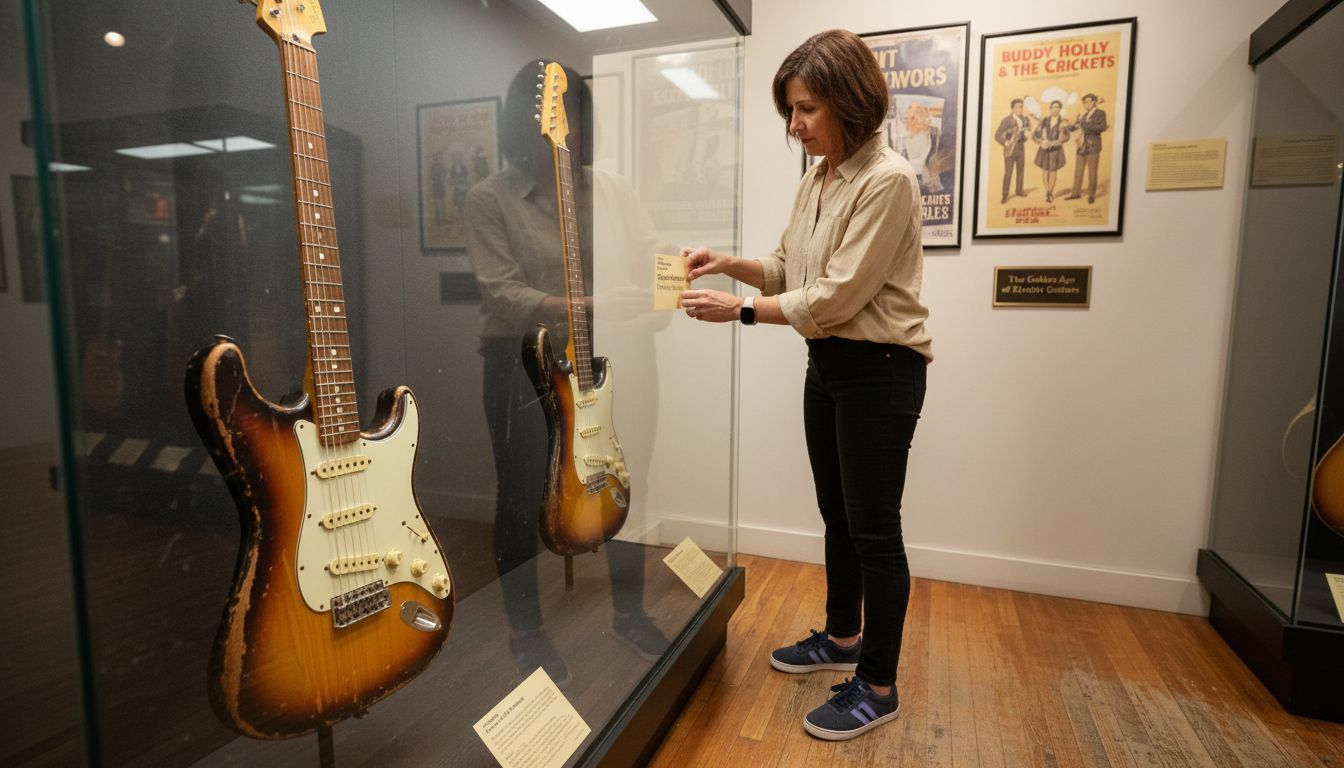
Pro tip: When evaluating a rare guitar’s craftsmanship, examine not just its sound and condition, but the specific historical context and manufacturing techniques that make it unique.
Investment Potential: Value Appreciation and Market Trends
Rare guitar collecting represents a sophisticated investment strategy that goes beyond traditional financial instruments, with guitar market trends demonstrating remarkable potential for value appreciation. These musical instruments are unique assets that blend cultural significance with financial opportunity.
Key factors influencing rare guitar investment potential include:
- Rarity: Limited production models and unique historical variants
- Condition: Preservation of original components and minimal wear
- Provenance: Documented history and connections to notable musicians
- Brand Reputation: Iconic manufacturers with established collector interest
- Historical Significance: Instruments representing pivotal musical moments
Successful guitar investment requires deep understanding of market dynamics. Collectors must carefully evaluate multiple variables, tracking how certain models appreciate over time and understanding the complex ecosystem of musical instrument valuation. Some vintage guitars have demonstrated extraordinary value growth, with certain models increasing exponentially compared to traditional investment vehicles.
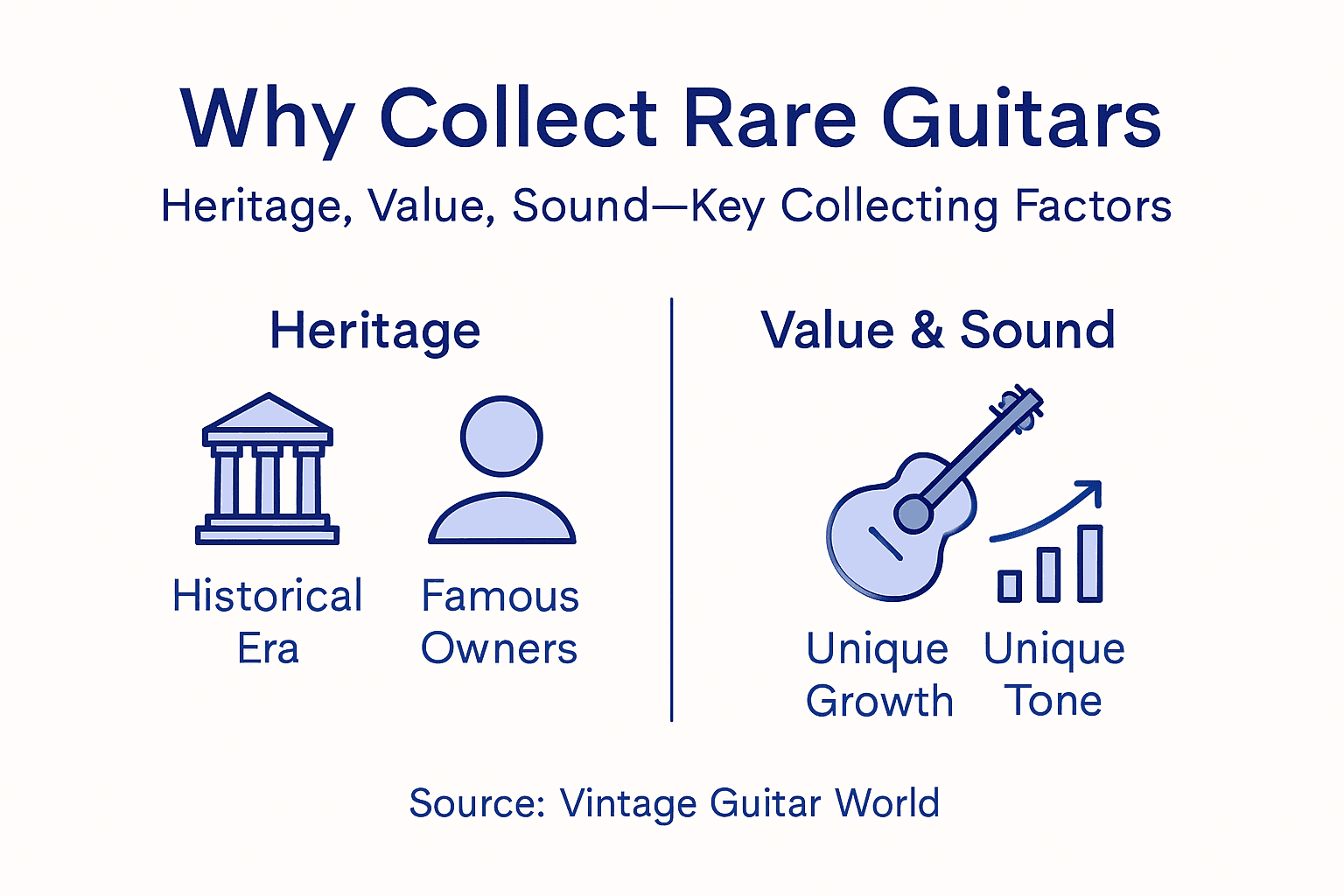
The following summarizes common investment factors and their impact on guitar value:
| Factor | Influence on Value | Reason It Matters |
|---|---|---|
| Rarity | Increases sharply | Scarcity heightens collector demand |
| Condition | Major positive or negative | Physical state affects playability |
| Provenance | Boosts market price | Celebrity or documented history |
| Brand Reputation | Stable long-term growth | Legendary makers drive collectibility |
| Historical Significance | Premium appreciation | Links to musical milestones |
A rare guitar is not just an instrument – it’s a financial asset with a heartbeat, capable of telling stories and generating value simultaneously.
Authenticity becomes paramount in guitar collecting. Potential investors must develop rigorous evaluation skills, understanding nuanced details that distinguish genuine collectible instruments from merely interesting pieces. Expert authentication, comprehensive documentation, and careful preservation are critical components of a successful guitar investment strategy.
Pro tip: Always consult multiple expert appraisers and maintain comprehensive documentation when considering rare guitar investments to protect your financial interests.
Risks, Authentication, and Preserving Your Collection
Collecting rare guitars demands sophisticated expertise and strategic risk management. Guitar collectors must navigate a complex landscape of potential challenges that extend far beyond simple monetary investment.
Critical risks in rare guitar collecting include:
- Forgery Threats: Sophisticated counterfeit instruments flooding the market
- Condition Deterioration: Environmental factors causing irreversible damage
- Market Volatility: Unpredictable shifts in collector interests and valuation
- Maintenance Complexity: Specialized care requirements for vintage instruments
- Authentication Challenges: Distinguishing genuine artifacts from sophisticated replicas
Authentication represents the cornerstone of responsible guitar collecting. Experienced collectors develop rigorous verification processes, engaging multiple expert appraisers, utilizing advanced technological analysis, and maintaining comprehensive documentation. The most successful collectors treat each instrument as a complex historical artifact requiring meticulous examination.
A single overlooked detail can transform a potential treasure into a worthless imitation.
Preservation techniques are equally critical in maintaining a guitar’s value and integrity. Specialized storage conditions, carefully controlled environmental parameters, and minimal interventionist restoration approaches become essential strategies. Collectors must understand that preservation is an ongoing commitment requiring continuous learning and adaptation.
Pro tip: Invest in professional conservation consultations and maintain detailed preservation records to protect the long-term value of your rare guitar collection.
Common Mistakes and Smart Collecting Strategies
Successful rare guitar collecting requires more than passionate enthusiasm – it demands strategic knowledge and disciplined approach. Novice collectors frequently fall into predictable traps that can significantly diminish their investment potential and collection quality.
Common mistakes collectors must avoid include:
- Emotional Purchasing: Buying without thorough research or authentication
- Neglecting Preservation: Improper storage and maintenance techniques
- Overestimating Value: Assuming all vintage guitars appreciate equally
- Ignoring Market Trends: Failing to understand shifting collector preferences
- Inadequate Documentation: Poor record-keeping of provenance and condition
Smart collecting strategies transform potential pitfalls into opportunities for building a meaningful and valuable guitar collection. Experienced collectors develop nuanced approaches that blend financial acumen with deep musical appreciation. They understand that each instrument represents not just a potential investment, but a piece of musical history.
True guitar collecting mastery lies in patience, knowledge, and disciplined decision-making.
Education becomes the most critical investment for serious collectors. This means continuously expanding knowledge about guitar history, understanding subtle differences between models, and developing networks with expert appraisers and fellow enthusiasts. The most successful collectors treat their pursuit as an ongoing learning journey, constantly refining their expertise.
Pro tip: Develop a systematic approach to collecting by creating a detailed acquisition strategy, setting clear criteria for each potential purchase, and maintaining comprehensive documentation for every instrument in your collection.
Discover Your Next Treasure Among Rare Guitars at Vintage Guitar World
Collecting rare guitars is a journey filled with passion, craftsmanship, and historical significance. We understand the challenge of finding authentic, well-preserved instruments that carry unique stories and unparalleled sound. Whether you are seeking a vintage acoustic, a classic electric, or a limited edition guitar, Vintage Guitar World offers expertly authenticated and meticulously restored guitars that meet your high standards.

Start exploring our curated selection today and connect with guitars that are more than instruments – they are pieces of musical heritage. Visit Vintage Guitar World shop for a premium buying experience, detailed historical context, and expert guidance. Elevate your collection now by choosing the perfect rare guitar that resonates with both your passion and investment goals.
Frequently Asked Questions
What makes rare guitars a good investment?
Rare guitars often appreciate in value over time due to their limited production, historical significance, and demand among collectors, making them unique financial assets.
How do I determine the value of a rare guitar?
The value of a rare guitar is influenced by factors such as rarity, condition, provenance, brand reputation, and historical significance. Engaging expert appraisers can help assess these elements.
What are the main types of rare guitars?
Rare guitars can be categorized into vintage acoustic guitars, classic electric guitars, limited production guitars, historically significant guitars, and prototype or experimental models, each offering unique traits for collectors.
Why is authentication important in rare guitar collecting?
Authentication ensures that a guitar is genuine and can significantly affect its collectible status and market value. Collectors should rely on expert appraisers and thorough documentation to verify authenticity.