














Every serious collector knows the thrill of discovering a vintage classical guitar that captures both the ear and the imagination. For those seeking instruments that stand apart, the line between artistry and history becomes clear in the details. From the warm tones of quality spruce or cedar tops to the influence of legendary Spanish luthiers like Antonio de Torres, understanding what makes a classical guitar genuinely collectible means recognizing craftsmanship, provenance, and the unique story behind each piece.
Table of Contents
- What Makes A Guitar Classical And Collectible
- Historical Evolution And Renowned Luthiers
- Hallmarks Of Quality, Rarity, And Condition
- Evaluating Investment And Emotional Value
- Common Pitfalls And Smart Collecting Practices
Key Takeaways
| Point | Details |
|---|---|
| Defining Characteristics | Classical guitars feature nylon strings, a wide neck, and premium woods, making them musically unique and collectible. |
| Historical Significance | The evolution of classical guitars is shaped by notable luthiers who advanced design and acoustic properties, enhancing their appeal. |
| Assessment Factors | Collectors should evaluate the construction quality, historical provenance, and emotional connections when determining a guitar’s value. |
| Smart Collecting Practices | Avoid pitfalls by securing professional authentication and focusing on both emotional and financial value in your collection. |
What Makes a Guitar Classical and Collectible
A classical guitar represents far more than a musical instrument – it’s a carefully crafted artifact with profound historical and artistic significance. Traditional craftsmanship defines these unique instruments, distinguishing them from other guitar types through distinctive design and construction elements.
Classical guitars possess several defining characteristics that make them both musically exceptional and collectible:
- Nylon strings producing a mellow, warm tone
- Wide, flat neck designed for fingerstyle playing
- Symmetrical body shape with proportional dimensions
- Construction using premium woods like spruce, cedar, mahogany, and rosewood
- Smaller body size compared to steel-string acoustic guitars
- Emphasis on intricate handcrafted construction techniques
The rarity and craftsmanship of classical guitars elevate them beyond mere instruments. Collectors value these guitars for their meticulous construction, historical significance, and the skill required to produce each unique piece. Professional luthiers often spend hundreds of hours carefully selecting woods, shaping components, and ensuring perfect acoustic properties.
Collectors specifically seek classical guitars that demonstrate exceptional woodworking, unusual tonewoods, limited production runs, or connections to renowned musicians and makers. The combination of acoustic performance, visual beauty, and historical provenance determines a classical guitar’s collectible status.

Pro tip: When evaluating a classical guitar’s collectibility, examine its construction details, wood quality, and historical documentation carefully.
Historical Evolution and Renowned Luthiers
The classical guitar’s journey represents a fascinating narrative of musical innovation and artistic craftsmanship. The modern classical guitar emerged through pivotal transformations driven by visionary luthiers who continuously refined the instrument’s design and sonic capabilities.
Key milestones in the classical guitar’s historical development include:
- 19th-century standardization by Antonio de Torres Jurado
- Introduction of more sophisticated soundboard designs
- Refined construction techniques improving tonal qualities
- Expansion of wood selection for enhanced acoustic properties
- Development of specialized playing techniques
Renowned luthiers have played a crucial role in shaping the classical guitar’s evolution. The International Guitar Research Archives preserves the legacy of master craftsmen who transformed the instrument through generations of meticulous innovation.
The most celebrated luthiers understood that a great classical guitar represents more than a musical instrument – it’s a complex acoustic system requiring profound understanding of materials, sound transmission, and ergonomic design. Builders like Antonio de Torres, Hermann Hauser, and Ignacio Fleta didn’t just construct guitars; they engineered sonic masterpieces that expanded the instrument’s expressive potential.
Here’s a comparison of key classical guitar luthiers and their signature contributions:
| Luthier | Era | Notable Innovation | Lasting Influence |
|---|---|---|---|
| Antonio de Torres | 19th century | Modern guitar design standard | Broadened tonal range |
| Hermann Hauser | 20th century | Refined bracing for stability | Preferred by top soloists |
| Ignacio Fleta | 20th century | Enhanced projection and sustain | Popular among concert artists |
Pro tip: When studying a classical guitar’s heritage, examine its construction details, wood selection, and the specific techniques used by its original luthier.
Hallmarks of Quality, Rarity, and Condition
Collectible classical guitars represent extraordinary artifacts where craftsmanship meets musical artistry. Exceptional guitars transcend mere instruments through their distinctive qualities, embodying a complex interplay of sound, history, and aesthetic excellence.
Key hallmarks that define a classical guitar’s collectible status include:
- Original, unaltered structural integrity
- Exceptional sound quality and resonance
- Fine, intricate handcrafted details
- Minimal wear and pristine finish
- Documented historical provenance
- Limited production runs
- Superior wood selection and construction
The most prized classical guitars demonstrate remarkable craftsmanship that goes beyond standard manufacturing. Large-bodied instruments with elaborate inlays, unique wood selections, and connections to renowned luthiers represent the pinnacle of collectibility. Collectors meticulously assess each instrument’s structural authenticity, examining everything from neck alignment to original finishing techniques.
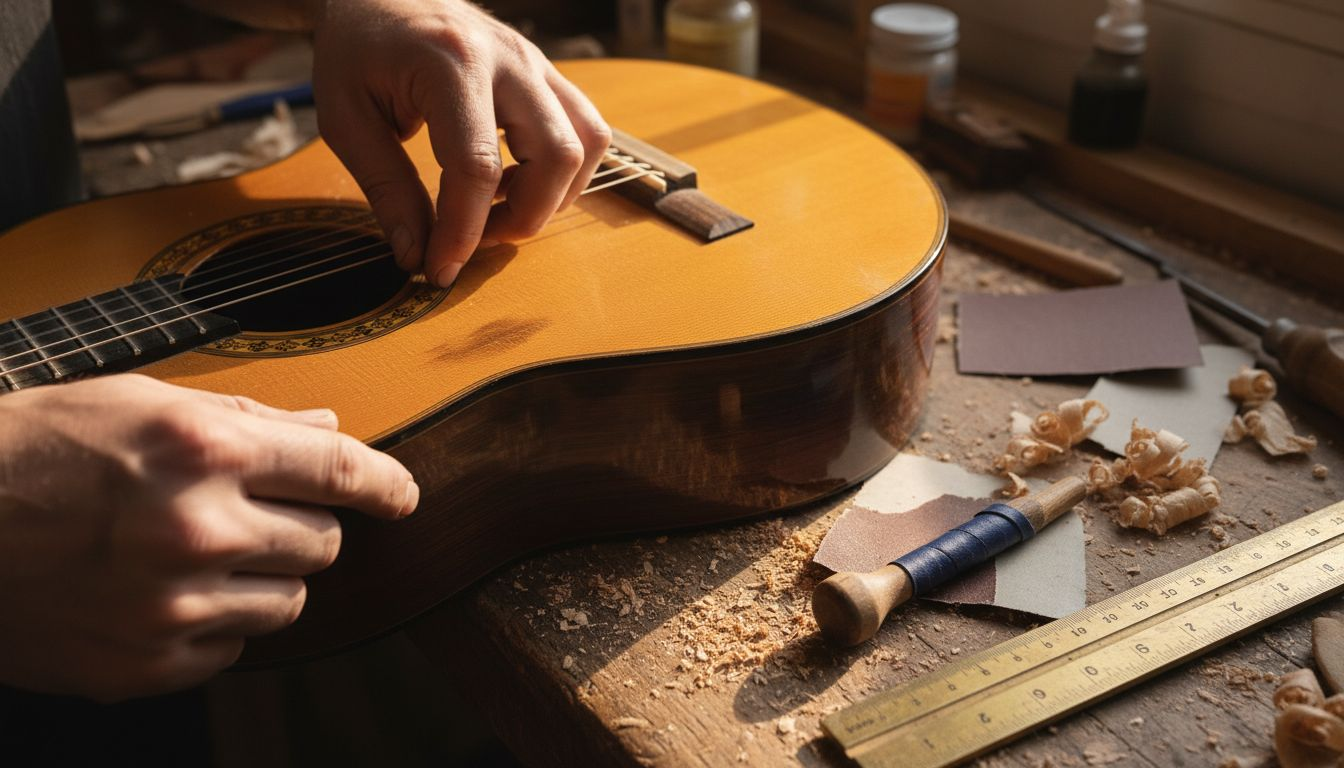
Rarity emerges not just from age, but from an instrument’s unique characteristics. Guitars with extraordinary sound qualities, unusual construction methods, or connections to significant musical movements become true collector’s treasures. Professional collectors understand that a guitar’s value extends far beyond its physical form – it represents a moment of musical innovation frozen in time.
Pro tip: Always request comprehensive documentation and professional authentication when considering a high-value classical guitar for your collection.
Evaluating Investment and Emotional Value
Collecting classical guitars transcends mere financial speculation, representing a profound intersection of personal passion and potential investment strategy. The emotional value of a classical guitar often outweighs its monetary worth, connecting collectors to rich musical traditions and individual artistic expressions.
Key considerations for evaluating a classical guitar’s comprehensive value include:
- Potential appreciation in market value
- Historical significance
- Personal musical connection
- Craftsmanship quality
- Unique design elements
- Condition and preservation status
- Potential for future collector interest
Financial experts recognize classical guitars as alternative investment assets with nuanced valuation metrics. Unlike traditional investments, these instruments appreciate through a complex blend of objective factors like condition and provenance, and subjective elements such as musical heritage and aesthetic appeal. Serious collectors understand that the most valuable guitars are those that balance mechanical perfection with profound emotional resonance.
Emotional investment goes beyond monetary metrics. A classical guitar might represent a musician’s lifelong dream, a connection to cultural heritage, or a tangible link to musical legends. Each instrument tells a unique story – some carry the subtle marks of legendary performances, while others embody the pinnacle of a master luthier’s craftsmanship. The true value emerges from this intricate narrative that transforms a wooden instrument into a living piece of musical history.
Use this table to distinguish emotional and financial value in classical guitar collecting:
| Value Type | Description | Key Influence on Collecting |
|---|---|---|
| Emotional Value | Personal or cultural significance | Connection to musical heritage |
| Financial Value | Potential for market price appreciation | Investment strategy and resale |
Pro tip: Always balance financial assessment with personal passion when collecting classical guitars, recognizing that the most meaningful investments transcend pure monetary value.
Common Pitfalls and Smart Collecting Practices
Navigating the world of classical guitar collecting requires more than passion – it demands strategic knowledge and careful consideration. Informed collecting involves understanding the nuanced landscape of potential risks and opportunities that can dramatically impact an instrument’s long-term value and personal satisfaction.
Common pitfalls for classical guitar collectors include:
- Purchasing without professional authentication
- Overlooking structural damage or repair history
- Neglecting proper storage and maintenance conditions
- Buying solely based on aesthetic appeal
- Failing to research an instrument’s provenance
- Underestimating restoration costs
- Ignoring market trends and valuation dynamics
Smart collectors develop a disciplined approach that balances emotional connection with objective assessment. They recognize that each classical guitar represents a complex asset requiring thorough due diligence. Understanding an instrument’s mechanical condition, historical significance, and potential future value demands specialized knowledge and patient research.
Professional collectors distinguish themselves by developing comprehensive evaluation strategies. This means consulting expert appraisers, understanding detailed restoration techniques, and maintaining meticulous documentation. The most successful collectors view their instruments as living historical artifacts – each with a unique narrative that extends far beyond monetary worth. They invest time in understanding subtle nuances of craftsmanship, wood selection, and acoustic engineering that transform a simple wooden instrument into a treasured musical masterpiece.
Pro tip: Always have potential acquisitions professionally authenticated and assessed by multiple independent experts before making a significant investment.
Discover and Own Rare Classical Guitars that Tell a Story
The challenge every classical guitar enthusiast faces is finding instruments that combine exceptional craftsmanship, authentic heritage, and lasting value without compromise. This article highlights the importance of rarity, condition, and provenance when collecting classical guitars. At Vintage Guitar World, we understand these exact pain points. Our expertly curated collection offers you access to rare, restored, and meticulously evaluated classical guitars that resonate with both emotional and investment value.
Why settle for ordinary when you can own a piece of musical history crafted by legendary luthiers? Whether you seek instruments with fine woods, original finishes, or a documented legacy, Vintage Guitar World ensures quality and trust every step of the way.
Explore prime selections and deepen your knowledge through detailed product descriptions and expert insights.
Elevate your collection today and secure a timeless treasure that balances sound, beauty, and historical significance.

Begin your journey with confidence at Vintage Guitar World Explore unique guitars backed by professional authentication, expert evaluation services, and supportive resources designed for collectors like you. Visit Vintage Guitar World now and discover how to invest wisely in guitars that build legacy and passion.
Frequently Asked Questions
What defines a classical guitar and makes it different from other types?
Classical guitars are characterized by nylon strings, a wide flat neck for fingerstyle playing, a symmetrical body shape, and use of premium woods. Their construction emphasizes traditional craftsmanship, leading to a unique tonal quality that differs from steel-string acoustic guitars.
Why are classical guitars considered collectible?
Classical guitars are collectible due to their rarity, exceptional craftsmanship, historical significance, and connections to famous luthiers or musicians. Collectors seek instruments that demonstrate fine woodworking, unique tonewoods, and a strong provenance, making them valuable beyond just their musical function.
What factors contribute to the value of a classical guitar?
The value of a classical guitar is influenced by its craftsmanship quality, historical significance, condition, documented provenance, and rarity. Instruments with exceptional sound quality and intricate details tend to appreciate in market value, alongside those with unique construction or noteworthy backgrounds.
How should one evaluate a classical guitar for potential investment?
When evaluating a classical guitar, consider its structural integrity, sound quality, craftsmanship, documentation, and condition. Always seek professional authentication and meticulous research to understand the instrument’s history and potential market trends, balancing emotional value with financial considerations.