












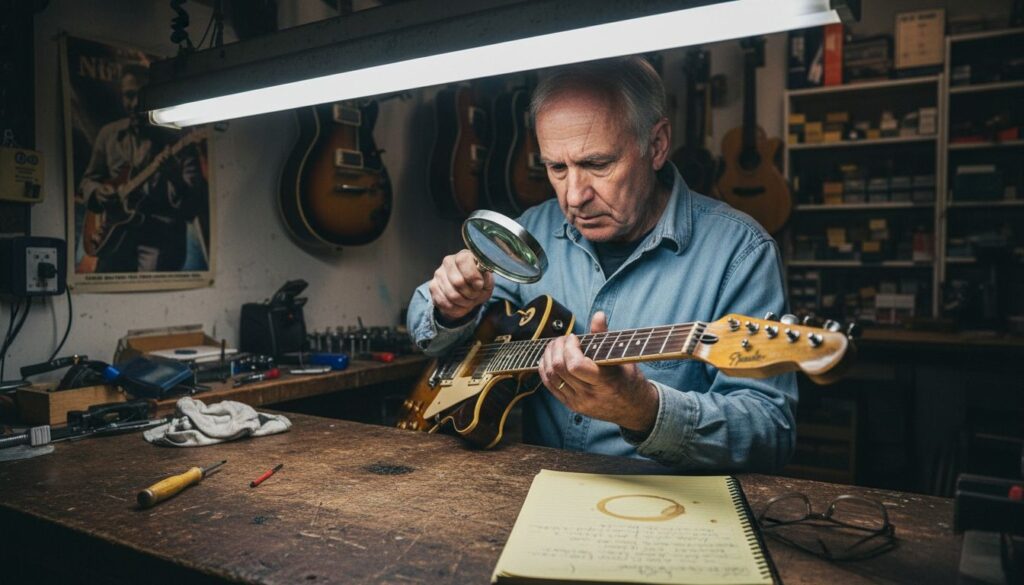

Every serious collector knows the thrill of uncovering a rare guitar with a story to tell, but without the right research tools, that excitement can quickly turn to uncertainty. For those who seek vintage treasures from American classics to iconic British models, building a comprehensive toolkit sets the foundation for informed decisions. Access to vintage guitar catalogs, detailed documentation, and expert authentication guides empowers you to confirm authenticity, spot exceptional craftsmanship, and protect your investments.
Table of Contents
- Step 1: Prepare Research Tools And References
- Step 2: Inspect Materials And Craftsmanship Details
- Step 3: Analyze Unique Model Features And Markings
- Step 4: Authenticate Provenance And Ownership History
- Step 5: Verify Rarity And Market Value
Quick Summary
| Key Point | Explanation |
|---|---|
| 1. Build a Reference Toolkit | Assemble vintage catalogs, historical documentation, and authentication guides to enhance guitar assessment skills. |
| 2. Examine Materials Thoroughly | Inspect wood types and craftsmanship details that indicate authenticity and value, focusing on construction techniques and material aging. |
| 3. Analyze Unique Features | Investigate serial numbers, model markings, and engraving styles to distinguish genuine instruments from counterfeits. |
| 4. Document Provenance | Collect original sales receipts, ownership histories, and repairs to validate the guitar’s authenticity and significance. |
| 5. Assess Rarity and Value | Evaluate production numbers, historical importance, and market conditions to accurately determine the guitar’s market value. |
Step 1: Prepare research tools and references
When identifying rare guitars, having the right research tools and references can make the difference between a wild guess and an expert assessment. Your goal is to build a comprehensive toolkit that helps you authenticate and value vintage instruments with confidence.
Start by assembling a collection of critical reference materials that will serve as your go-to resources. These should include vintage guitar catalogs, detailed historical documentation, and specialized guitar authentication guides. Your toolkit will ideally incorporate multiple types of references:
- Manufacturer archives and original production records
- Professional guitar historian publications
- Comprehensive serial number databases
- High-resolution reference images of original instruments
- Technical specification archives
Professional guitar collectors invest significant time in developing their reference libraries, understanding that knowledge is the most valuable tool in identifying rare instruments.
Digital resources have transformed guitar research. Take advantage of online platforms that offer detailed archival information, but always cross-reference multiple sources to verify authenticity. Consider creating a systematic approach to organizing your research materials, such as digital folders categorized by manufacturer, era, or guitar type.
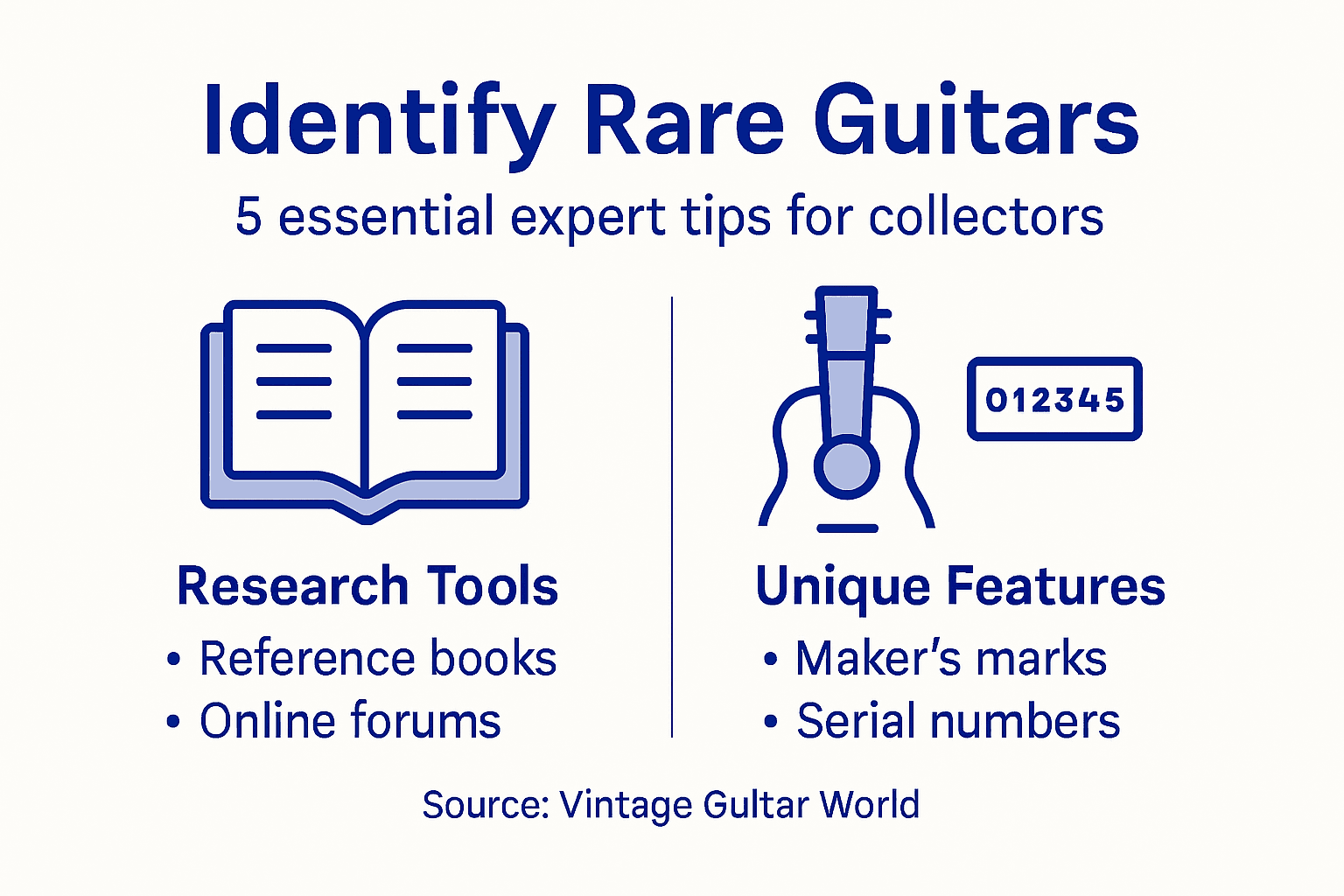
Pro tip: Invest in both physical and digital reference materials to create a comprehensive research ecosystem that allows for quick and thorough verification of vintage guitar details.
Here’s a summary of essential research tools and their benefits for vintage guitar identification:
| Tool Type | What It Provides | Impact on Accuracy |
|---|---|---|
| Manufacturer archives | Original specs and model data | Enables authenticated dating |
| Historian publications | Context on rare instruments | Reveals production nuances |
| Serial number databases | Serial patterns by year | Prevents misidentification |
| High-res instrument images | Visual comparison for validation | Detects subtle authentic traits |
Step 2: Inspect materials and craftsmanship details
Authentic vintage guitars reveal their true value through meticulous examination of materials and construction techniques. Your objective is to develop a keen eye for identifying the subtle details that distinguish a genuinely rare instrument from an ordinary guitar.
Begin your inspection by carefully examining the guitar’s fundamental components. Materials like mahogany and rosewood play a critical role in determining authenticity and value. Look for specific craftsmanship indicators that suggest high-quality construction:
- Wood grain consistency and natural aging patterns
- Hand-carved neck characteristics
- Precision of joinery techniques
- Original hardware and mounting details
- Consistent paint finish and patina
Expert collectors understand that every microscopic detail tells a story about the instrument’s origin and historical significance.
Pay special attention to construction methods like dovetail joints and hand-finished surfaces. These techniques require significant skill and are hallmarks of superior craftsmanship. Use both visual and tactile examination – run your fingers along the neck, inspect the wood’s natural grain, and look for signs of authentic aging that cannot be easily replicated.
Pro tip: Invest in a high-quality magnifying glass or jeweler’s loupe to reveal intricate details that might escape the naked eye during your vintage guitar inspection.
Step 3: Analyze unique model features and markings
Identifying rare guitars requires a detective-like approach to examining unique model features and markings. Your mission is to uncover the distinctive characteristics that distinguish an exceptional vintage instrument from an ordinary one.
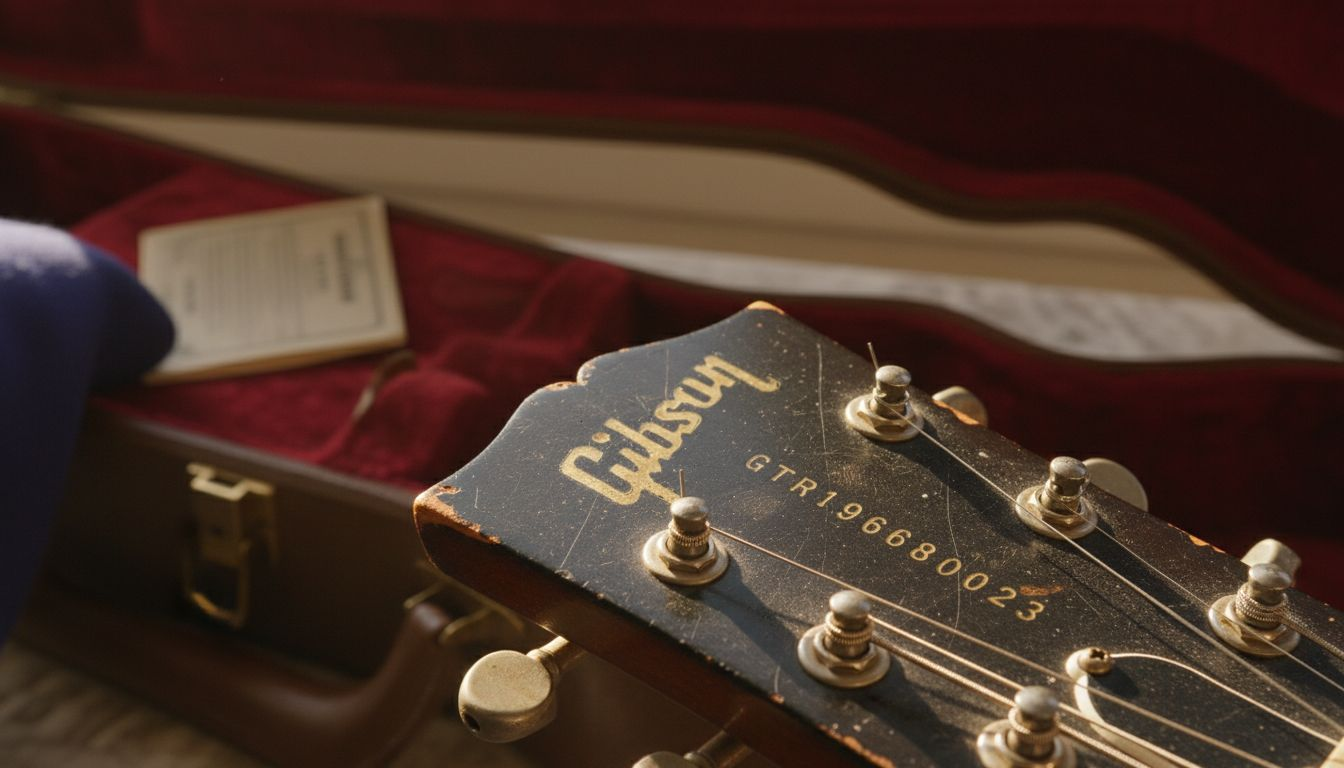
Begin by meticulously examining serial numbers and manufacturer markings. Each guitar has a unique identity that tells its story, so look for:
- Precise location of manufacturer stamps
- Consistency and style of serial number engraving
- Distinctive model identification marks
- Original factory labels or stickers
- Unique inlay or branding patterns
Authentic vintage guitars are like historical artifacts – every mark tells a part of their remarkable journey.
Pay special attention to subtle details that counterfeiters often overlook. Routing patterns, wood grain alignment, and hardware mounting points can reveal crucial information about the instrument’s origins. Some manufacturers used specific techniques or design elements that changed subtly over different production years, making these nuanced details critical to your authentication process.
Pro tip: Create a detailed photographic documentation of all unique markings, using high-resolution images that capture even the smallest distinguishing features for future reference.
Step 4: Authenticate provenance and ownership history
Tracing a vintage guitar’s ownership history is like reconstructing a musical detective story. Your goal is to compile a comprehensive narrative that validates the instrument’s authenticity and historical significance.
Professional authentication requires systematic documentation of the guitar’s journey. Gather and scrutinize critical pieces of evidence that establish its provenance:
- Original sales receipts
- Repair and maintenance logs
- Previous ownership transfer documents
- Manufacturer correspondence
- Photographic documentation of historical ownership
The most valuable guitars are not just instruments – they are living historical artifacts with stories etched into their very fabric.
Reach out to guitar communities, previous owners, and specialized authentication experts to fill potential gaps in the instrument’s history. Pay close attention to subtle indicators of refinishing, replaced components, and undocumented repairs that might compromise the guitar’s original authenticity. Each piece of documentation adds another layer of credibility to the instrument’s provenance.
Pro tip: Create a dedicated digital and physical archive for all provenance documents, organizing them chronologically to build a comprehensive ownership timeline.
Step 5: Verify rarity and market value
Determining a vintage guitar’s true value requires more than a casual glance – it demands a strategic and analytical approach. Your objective is to transform raw information into a precise market valuation that reflects the instrument’s unique characteristics.
Understanding collectible guitar market dynamics involves examining multiple critical factors that influence pricing. Assess the guitar’s rarity and value through these essential considerations:
- Production quantity of the specific model
- Historical significance of the instrument
- Condition and originality of components
- Manufacturer reputation and brand legacy
- Documented provenance and ownership history
Rare guitars are not just musical instruments – they are investment-grade assets with complex valuation metrics.
Consult multiple sources to triangulate an accurate market value, including specialized vintage guitar price guides, auction records, and expert appraisals. Comparative analysis is key – examine recent sales of similar instruments, paying close attention to variations in condition, originality, and historical context that might impact pricing.
Compare how different factors influence a rare guitar’s market value:
| Factor | Importance Level | How It Affects Value |
|---|---|---|
| Provenance | Extremely High | Boosts credibility |
| Component Originality | High | Raises overall price |
| Model Production Number | Very High | Scarcer means more value |
| Brand Reputation | High | Premium pricing possible |
Pro tip: Maintain a detailed digital portfolio of your guitar’s documentation, including high-resolution photographs and authentication records, which can significantly enhance its verifiable market value.
Discover Authentic Rare Guitars with Expert Confidence
Identifying rare guitars demands a sharp eye for details like unique serial numbers, precise craftsmanship, and verified provenance. At Vintage Guitar World, we understand the challenge collectors and enthusiasts face in navigating production nuances and market valuation. Our curated online store not only offers a premium selection of vintage, restored, and handcrafted guitars but also supports your journey with expert evaluations and rich historical context.

Explore our handpicked collection at Vintage Guitar World Shop and gain immediate access to instruments that meet the highest standards of authenticity and rarity. Whether you seek guidance on material quality, model verification, or want to deepen your understanding of provenance, our resources and personalized services are designed to elevate your vintage guitar experience. Start your search today to find a truly exceptional guitar backed by expert knowledge and trusted documentation.
Frequently Asked Questions
What tools are essential for identifying rare guitars?
To identify rare guitars, gather essential research tools such as vintage guitar catalogs, historical documentation, and specialized authentication guides. Assemble a reference library that includes manufacturer archives and high-resolution images of original instruments to enhance your research process.
How can I inspect the materials and craftsmanship of a vintage guitar?
Examine the fundamental components of a vintage guitar, focusing on materials like mahogany and rosewood, as well as craftsmanship details such as wood grain and joinery techniques. Use a high-quality magnifying glass to inspect fine details that might indicate authenticity and quality.
What unique markings should I look for on rare guitars?
Look for specific features such as serial numbers, manufacturer stamps, and model identification marks. Pay special attention to the consistency of these markings, as counterfeiters often overlook subtle details that can reveal the instrument’s true origins.
How do I authenticate a vintage guitar’s provenance?
Authenticate a vintage guitar’s provenance by gathering original sales receipts, previous ownership documents, and any repair logs. Create a dedicated archive for all provenance materials to organize your findings chronologically and build a comprehensive ownership timeline.
What factors should I consider when verifying a rare guitar’s market value?
Assess the market value of a rare guitar by considering its production quantity, historical significance, condition, and original components. Consult multiple sources for pricing, and maintain records of similar instruments to support your valuation process.