














Some guitars do more than play music—they tell a story of artistry, technical brilliance, and cultural influence. For serious collectors and seasoned musicians, understanding what separates an ordinary instrument from a truly collectible guitar is vital. With recognized makers like Martin, Gibson, and Fender commanding devotion and attention, the quest for historical significance and exceptional craftsmanship shapes the heart of the vintage guitar market. Discover how these elements drive value, investment potential, and lasting appeal.
Table of Contents
- What Makes Guitars Collectible and Valuable
- Major Types of Collectible Guitars Explained
- Key Drivers of Guitar Value Appreciation
- Risks, Costs, and Common Investor Pitfalls
- How to Start or Grow Your Guitar Collection
Key Takeaways
| Point | Details |
|---|---|
| Collectibility Factors | Historical significance, maker’s reputation, and rarity significantly enhance a guitar’s value. |
| Investment Strategies | Authenticity, provenance, and detailed documentation are essential for preserving a guitar’s investment potential. |
| Market Dynamics | Understanding market trends and risks, such as transaction costs and market liquidity, is crucial for successful investing. |
| Collection Development | A focused theme, realistic budget, and thorough research are key to building a valuable guitar collection. |
What Makes Guitars Collectible and Valuable
Collectible guitars represent far more than mere musical instruments – they are intricate artifacts of musical heritage, craftsmanship, and artistic expression. These extraordinary pieces transcend functional performance, becoming valuable investments that appreciate over time.
Several critical factors determine a guitar’s collectibility and potential investment value. Renowned collectors and experts recognize specific elements that elevate certain guitars from standard instruments to prized collectibles:
- Historical Significance: Guitars associated with legendary musicians or pivotal musical movements
- Maker’s Reputation: Instruments from prestigious manufacturers like Martin, Gibson, and Fender
- Original Condition: Preservation of original components and minimal modifications
- Mechanical Innovation: Unique design features that transformed musical technology
- Rarity: Limited production runs or prototype models
The intrinsic value of collectible guitars stems from their complex blend of sonic quality, mechanical design, and cultural context. Specific guitar models like pre-war Martin D-45 or classic Gibson Les Paul carry exceptional prestige in the collector’s market, often commanding prices exponentially higher than standard instruments.
Understanding guitar collectibility requires deep appreciation for nuanced characteristics. Factors like original finish, unmodified hardware, provenance documentation, and mechanical integrity dramatically influence an instrument’s market value. Professional collectors meticulously evaluate each guitar’s unique narrative and historical context.
Pro tip: Always authenticate vintage guitars through professional appraisal and maintain comprehensive documentation to preserve their investment potential.
Major Types of Collectible Guitars Explained
The world of collectible guitars is rich and diverse, featuring multiple categories that appeal to different collector preferences and musical aesthetics. Guitar collectors recognize several primary categories that distinguish exceptional instruments from standard models.
The most prominent collectible guitar categories include:
- Vintage Electric Guitars: Iconic models from Fender and Gibson
- Pre-War Acoustic Guitars: Rare Martin and Gibson instruments
- Hollow Body Guitars: Jazz and blues specialized instruments
- 12-String Guitars: Unique sound profile and design complexity
- Limited Edition Models: Boutique and rare production runs
Electric Guitars represent a significant segment of the collectible market. Legendary models like the Fender Stratocaster and Gibson Les Paul have become benchmarks of musical innovation and design excellence. These instruments are prized not just for their sound, but for their historical significance and mechanical engineering.
Acoustic Guitars, particularly pre-war models, hold extraordinary value among serious collectors. Instruments from manufacturers like Martin and Gibson from the 1930s and early 1940s are considered museum-quality pieces, representing pinnacles of craftsmanship and musical heritage.
Here is a comparison of collectible guitar types and what sets each apart:
| Guitar Type | Signature Traits | Examples |
|---|---|---|
| Vintage Electric | Iconic designs, innovative tech | Fender Stratocaster, Gibson Les Paul |
| Pre-War Acoustic | Historical craftsmanship | Martin D-45, Gibson J-35 |
| Hollow Body | Warm tone, jazz/blues focus | Gibson ES-175, Gretsch 6120 |
| 12-String | Rich, chorus-like sound | Rickenbacker 360/12, Gibson B-45-12 |
| Limited Edition | Scarce, boutique features | Fender Custom Shop, Gibson Collector’s |
Pro tip: Research the specific provenance and condition of vintage guitars before making significant investment decisions.
Key Drivers of Guitar Value Appreciation
Understanding the complex mechanisms behind guitar value appreciation requires deep insight into multiple interconnected factors. Guitar investment benefits emerge from strategic considerations that extend far beyond simple monetary transactions.
The primary drivers of guitar value appreciation include:
- Historical Significance: Instruments connected to legendary musicians
- Rarity: Limited production runs and unique manufacturing periods
- Cultural Impact: Guitars representing pivotal musical movements
- Brand Reputation: Consistent quality from manufacturers like Gibson and Fender
- Preservation State: Original condition and minimal modifications
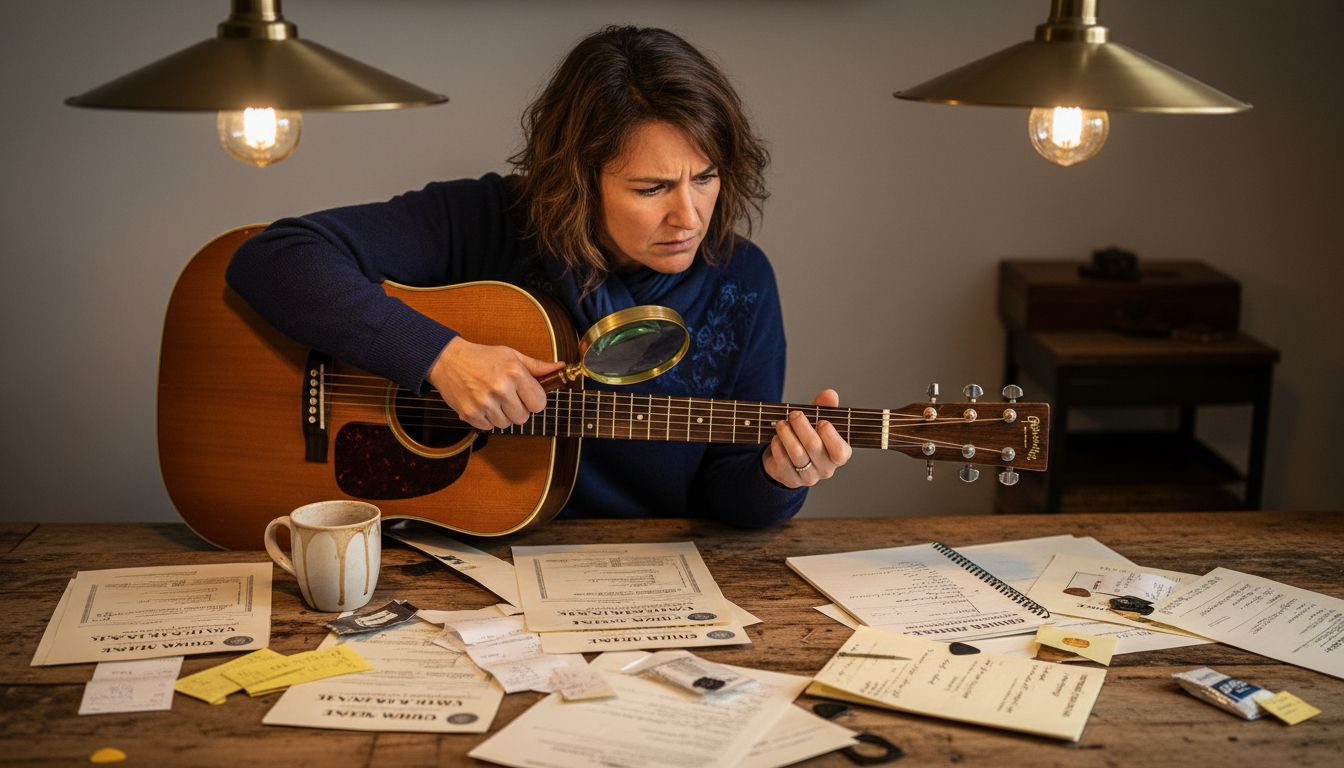
Authenticity and Provenance play critical roles in determining an instrument’s long-term value. Collectors and investors must prioritize documented history, expert appraisals, and verifiable ownership records. The more comprehensive the guitar’s backstory, the more attractive it becomes to serious collectors.
Market demand fluctuates based on several nuanced factors. Vintage guitars from iconic manufacturers appreciate most consistently when they represent technological innovations, cultural milestones, or connections to significant musical moments. Craftsmanship, mechanical complexity, and sound quality contribute substantially to an instrument’s potential investment trajectory.
Pro tip: Invest in professional authentication and maintain meticulous documentation to maximize your guitar’s long-term value potential.
Risks, Costs, and Common Investor Pitfalls
Investing in collectible guitars requires a sophisticated understanding of potential financial risks and complex market dynamics. Collectible investments demand careful risk assessment that extends beyond traditional investment strategies.
Key financial risks for guitar investors include:
- Transaction Costs: High fees for buying and selling specialized instruments
- Insurance Expenses: Protecting valuable guitars against damage or theft
- Storage Requirements: Specialized climate-controlled environments
- Authentication Challenges: Verifying genuine instruments
- Market Liquidity: Potentially slow selling processes
Emotional Investment represents a significant hidden risk in guitar collecting. Many investors become attached to instruments, which can cloud rational financial decision-making. Professional collectors must maintain a disciplined approach, evaluating guitars as financial assets rather than purely sentimental objects.
Tax implications and opportunity costs further complicate guitar investments. Potential gains are offset by significant overhead expenses, including professional appraisals, secure storage, transportation, and potential restoration costs. Sophisticated investors understand that guitar collecting requires substantial financial expertise and patience.
This summary highlights potential risks and costs to consider before investing:
| Risk/Cost | Description | Financial Impact |
|---|---|---|
| Transaction Fees | Specialized dealer or auction commissions | Reduces overall return |
| Insurance Premiums | Protection against theft or damage | Ongoing annual expense |
| Storage Requirements | Climate control, secure facilities needed | Adds to maintenance cost |
| Authentication Issues | Risk of counterfeit or misrepresented items | Potential for investment loss |
| Market Liquidity | Slow sales, limited buyers for rare pieces | Difficulty in quick resale |
Pro tip: Develop a strict, unemotional evaluation framework that separates financial potential from personal attachment when assessing guitar investments.
How to Start or Grow Your Guitar Collection
Building a meaningful guitar collection requires strategic planning, deep research, and passionate commitment. Developing an effective collecting strategy involves understanding both personal interests and market dynamics.
Key steps for aspiring guitar collectors include:
- Define Your Collection Theme: Select a specific focus like vintage era, genre, or manufacturer
- Set a Realistic Budget: Establish financial boundaries early
- Research Thoroughly: Study guitar histories, market trends, and authenticity markers
- Network with Experts: Connect with experienced collectors and dealers
- Prioritize Authenticity: Verify provenance and instrument condition
Acquisition Strategies are fundamental to successful guitar collecting. Professional collectors recommend diversifying acquisition channels, including local vintage shops, specialized shows, online marketplaces, and trusted dealer networks. Understanding each guitar’s unique historical context transforms collecting from a hobby into a sophisticated investment approach.
Preservation represents another critical aspect of guitar collecting. Climate-controlled storage, professional maintenance, and comprehensive insurance protect your investment’s long-term value. Serious collectors treat each instrument as both an artistic treasure and a potential financial asset.
Pro tip: Create a detailed documentation system tracking each guitar’s origin, condition, and potential appreciation value.
Discover Exceptional Vintage Guitars That Blend Value and Legacy
Investing in collectible guitars requires access to instruments that combine historical significance, rarity, and expert authentication. If you are seeking to build a meaningful collection or find a guitar that truly appreciates in value over time Vintage Guitar World offers a carefully curated selection that aligns with your passion and investment goals. Our expert evaluation and documentation services help you secure guitars with proven provenance original condition and unmatched craftsmanship.

Explore our premium vintage guitar collection and experience guitars that tell a story of musical heritage and innovation. Act now to access rare finds and benefit from personalized service that guides you through acquisition and preservation strategies. Begin your journey with Vintage Guitar World to own instruments that are not only beautiful but also wise investments in your future.
Frequently Asked Questions
What factors make a guitar collectible and valuable?
Guitars become collectible and valuable based on factors such as historical significance, the reputation of the maker, original condition, mechanical innovation, and rarity.
How do acoustic guitars differ from electric guitars when collecting?
Acoustic guitars, especially pre-war models, are known for their historical craftsmanship and are often considered museum-quality pieces, while electric guitars like Fender and Gibson models are valued for their iconic designs and technological innovations.
What should I consider before investing in collectible guitars?
Before investing, consider factors like the historical significance of the instrument, its rarity, brand reputation, preservation state, and ensure you have verified documentation of its authenticity and provenance.
What are the risks associated with investing in collectible guitars?
Risks include transaction costs, insurance expenses, storage requirements, authentication challenges, and potential market liquidity issues, which can affect your ability to sell the guitar when desired.