












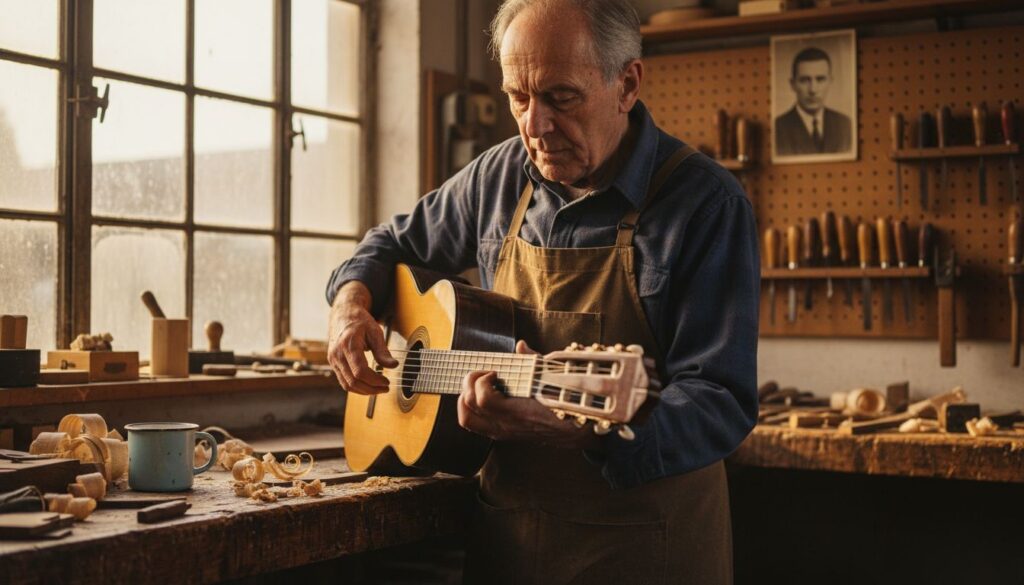

Every collector knows that a classical guitar is more than wood and strings—it is a living piece of history shaped by centuries of artistry from Spain to the Americas. The instrument’s identity emerged through a blend of evolving designs, regional innovations, and the influence of legendary recording artists who brought its expressive power to the world. For those passionate about vintage guitars and their heritage, exploring the evolution of the classical guitar’s unique identity reveals hidden layers of craftsmanship, tradition, and musical legacy.
Table of Contents
- Defining The Classical Guitar’s Identity
- From Ancient Lutes To Spanish Vihuela
- Major Innovations And Guitar Evolution
- Legendary Makers And Iconic Instruments
- Classical Guitars In Vintage Collecting Today
Key Takeaways
| Point | Details |
|---|---|
| Cultural Identity | The classical guitar is rooted in European and Latin American traditions, emphasizing emotional expression and intricate musical storytelling. |
| Historical Evolution | Its development spans centuries, influenced by various stringed instruments and innovative makers, shaping its form and function today. |
| Innovation in Design | Notable advancements in construction, such as body size standardization and bracing techniques, have significantly enhanced its acoustic capabilities. |
| Vintage Collecting | Collecting vintage classical guitars combines a passion for music with historical preservation, focusing on authenticity, condition, and the significance of the instruments. |
Defining the Classical Guitar’s Identity
The classical guitar represents far more than a musical instrument – it embodies a profound cultural narrative woven through centuries of artistic expression. Unlike its electric or acoustic counterparts, the classical guitar carries a distinct musical identity rooted in complex traditions of European and Latin American musical heritage.
This unique identity emerges from several critical characteristics that distinguish classical guitars from other stringed instruments:
- Nylon strings that produce a softer, more resonant tone
- Wider neck allowing intricate fingerpicking techniques
- Traditional construction emphasizing acoustic purity
- Deep connections to classical and folkloric music traditions
The instrument’s identity has been significantly shaped by recording artists and performance traditions, which transformed how musicians and audiences perceived its musical potential. Throughout the 20th century, prominent performers expanded the classical guitar’s expressive range, challenging previous limitations and establishing new technical standards.
Musicians who dedicate themselves to classical guitar demonstrate an extraordinary commitment, often developing a profound emotional connection to the instrument. This emotional landscape involves not just technical mastery, but a deep understanding of musical storytelling and cultural nuance.

Pro Tip: Practice listening to diverse classical guitar recordings to understand the instrument’s rich emotional vocabulary and technical versatility.
From Ancient Lutes to Spanish Vihuela
The classical guitar’s origins are deeply rooted in a rich tapestry of musical evolution, tracing its lineage through multiple cultures and centuries. Ancient Mediterranean stringed instruments laid the groundwork for what would eventually become the modern classical guitar, with each transformation reflecting the cultural and musical contexts of its time.
Key evolutionary stages in the guitar’s development include:
- Mesopotamian lutes with curved bodies and gut strings
- Greek kitharas used in classical musical performances
- Medieval guitarra latina and guitarra morisca
- Renaissance Spanish vihuela with six courses of strings
The Spanish vihuela played a particularly pivotal role in this musical journey. Emerging during the Renaissance, this instrument featured a design remarkably similar to the modern guitar, with six courses of strings that would profoundly influence future guitar construction. Its refined playing techniques and sophisticated musical repertoire set important precedents for classical guitar development.
Musicians and instrument makers gradually refined these early designs, experimenting with string materials, neck width, and tonal characteristics. By systematically adapting instruments from different cultural traditions, they created an increasingly sophisticated musical tool that could express complex emotional landscapes.
Pro Tip: Study historical recordings and illustrations to understand how early stringed instruments influenced modern classical guitar design.
Major Innovations and Guitar Evolution
The classical guitar’s evolution represents a fascinating journey of continuous innovation and artistic refinement. Luthiers transformed guitar design through meticulous experimentation, pushing the boundaries of acoustic engineering and musical expression.
Key innovations that shaped the classical guitar’s development include:
- Body size standardization for improved acoustic projection
- Introduction of symmetrical and asymmetrical bracing techniques
- Expansion from four to six-string configurations
- Refined soundboard construction methods
- Enhanced string material and tension engineering
Antonio de Torres emerged as a pivotal figure in the 19th century, revolutionizing guitar construction through groundbreaking design principles. His approach to body size, bracing patterns, and soundboard architecture established fundamental standards that would influence generations of instrument makers.
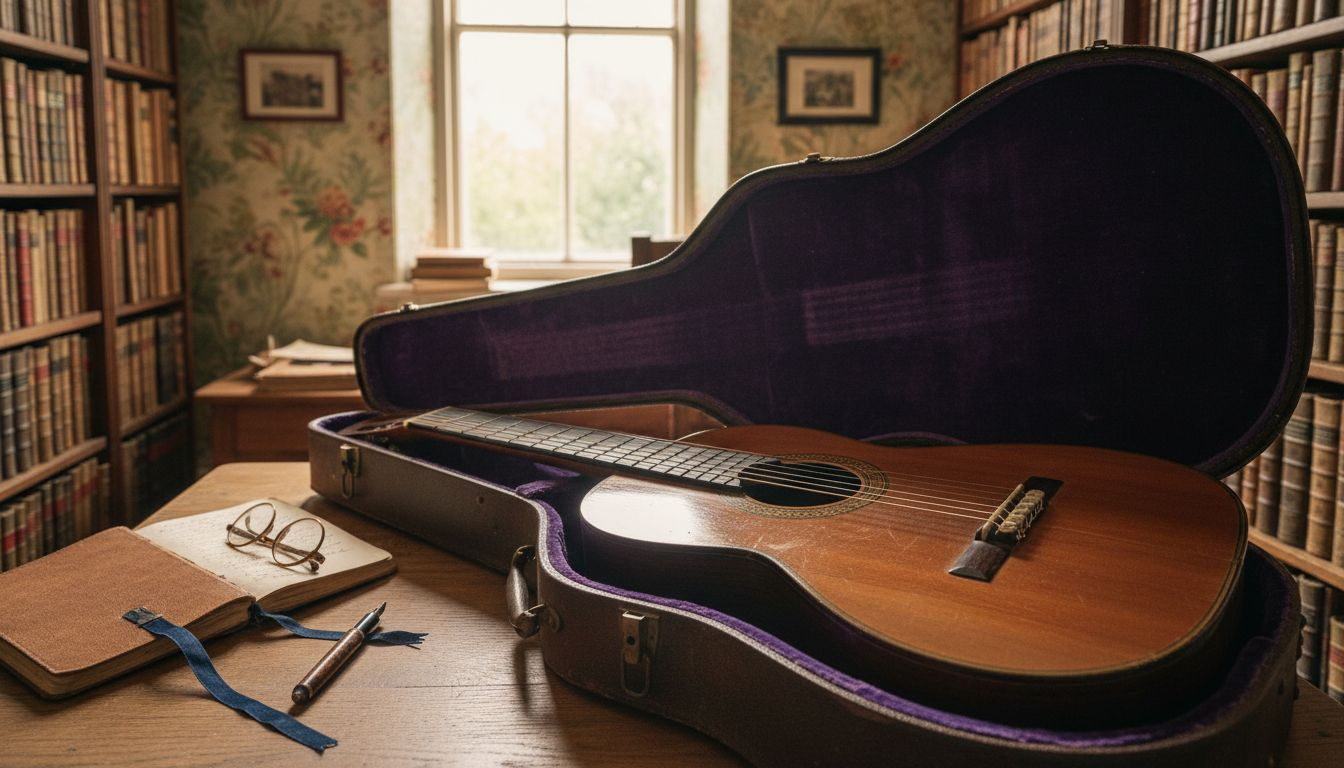
The evolutionary process was not linear but a complex interplay of regional musical traditions, technological advancements, and individual craftsmen’s innovations. Musicians and luthiers collaborated to create instruments capable of increasingly sophisticated tonal range and emotional expression, transforming the classical guitar from a simple stringed instrument to a nuanced concert-level musical tool.
Pro Tip: Examine vintage guitars from different eras to appreciate the subtle design transformations that shaped modern classical guitar construction.
Legendary Makers and Iconic Instruments
The world of classical guitar craftsmanship is defined by remarkable artisans whose extraordinary skills transformed musical instrument design. Iconic guitar makers pioneered revolutionary techniques that would resonate through generations of musical innovation.
Some of the most influential classical guitar makers include:
- Antonio de Torres – considered the most important luthier in guitar history
- Hermann Hauser – renowned for precision and tonal excellence
- Robert Bouchet – celebrated French guitar maker
- Manuel Rodriguez – Spanish luthier with generational craftsmanship
- José Ramírez – creator of world-renowned Spanish guitars
The 1937 Hauser guitar made for Andrés Segovia represents a pinnacle of craftsmanship, embodying the perfect intersection of artistic vision and technical mastery. This instrument became a benchmark for quality, demonstrating how a single masterpiece could establish new standards in guitar construction.
Each legendary maker contributed unique innovations, from wood selection and bracing techniques to revolutionary design principles that expanded the classical guitar’s sonic capabilities. Their commitment to excellence transformed the instrument from a folk music staple to a sophisticated concert-level tool capable of profound musical expression.
Here’s a summary of the most influential classical guitar makers and their signature innovations:
| Maker | Country | Signature Innovation | Notable Legacy |
|---|---|---|---|
| Antonio de Torres | Spain | Modern body and bracing standards | Set modern guitar blueprint |
| Hermann Hauser | Germany | Voicing for tonal balance | Segovia’s legendary guitar |
| Robert Bouchet | France | Artisanal detail and aesthetics | Refined French sound |
| Manuel Rodriguez | Spain | Generational craftsmanship | Family tradition makers |
| José Ramírez | Spain | Expanded scale and tonal range | Iconic concert instruments |
Pro Tip: Collect detailed photographs and measurements of historic instruments to understand the subtle design nuances that distinguish master luthiers.
Classical Guitars in Vintage Collecting Today
Vintage classical guitar collecting represents a sophisticated pursuit that blends musical passion with historical preservation. Specialized guitar archives worldwide serve as critical repositories documenting the rich evolution of these extraordinary instruments.
Key considerations for serious classical guitar collectors include:
- Provenance documentation verifying instrument authenticity
- Condition assessment from professional luthiers
- Historical significance of specific maker and model
- Original construction techniques and materials
- Rarity and production year of the instrument
Collectors today seek more than just musical instruments; they pursue living historical artifacts that represent pinnacle moments in craftsmanship. Each vintage classical guitar tells a complex story of musical innovation, regional artistic traditions, and individual maker’s extraordinary skills.
To understand vintage collecting, compare these key factors for evaluating classical guitars:
| Factor | Impact on Value | Why It Matters |
|---|---|---|
| Provenance | Significantly increases | Confirms authenticity and history |
| Condition | Directly affects price | Affects playability and restoration |
| Rarity | Drives collector demand | Fewer examples are highly sought |
| Maker/model significance | Defines collector interest | Historical makers boost desirability |
| Original materials | Preserves integrity | Authentic construction enhances worth |
The market for vintage classical guitars continues to appreciate, driven by passionate musicians, collectors, and historians who recognize these instruments as more than simple objects. Their value extends beyond monetary worth, encompassing cultural significance and artistic legacy that connects contemporary musicians with generations of musical tradition.
Pro Tip: Always request detailed condition reports and professional authentication before investing in vintage classical guitars.
Discover Your Own Masterpiece Inspired by History and Craftsmanship
Are you captivated by the rich legacy of classical guitars and their intricate craftsmanship? Many enthusiasts share the challenge of finding a vintage instrument that embodies the refined tonal balance, authentic materials, and historical significance highlighted through centuries of evolution. At Vintage Guitar World, we understand these passionate goals: owning a guitar that connects you emotionally to the timeless artistry of legendary makers like Antonio de Torres and Hermann Hauser.

Explore our curated selection of rare and expertly restored classical guitars that honor the traditions and innovations described in the history of classical guitars. Each instrument we offer reflects meticulous evaluation and preservation, ensuring you experience the depth of sound and cultural heritage that define these remarkable guitars. Don’t wait to enrich your musical journey with an authentic piece of history accessible today at Vintage Guitar World. Browse our collection and take the next step toward owning a truly exceptional vintage classical guitar.
Frequently Asked Questions
What distinguishes a classical guitar from other types of guitars?
A classical guitar is characterized by its nylon strings, wider neck, traditional construction focused on acoustic purity, and deep ties to classical and folkloric music traditions. These features contribute to its softer, more resonant tone and unique playing techniques.
How did the classical guitar evolve over time?
The classical guitar evolved from ancient stringed instruments through various stages, including the Mesopotamian lute, Greek kithara, medieval guitarra, and the Renaissance Spanish vihuela. Each stage reflects cultural influences and innovations in design and playing techniques that shaped the modern classical guitar.
Who are some of the most influential classical guitar makers?
Some legendary guitar makers include Antonio de Torres, known for modernizing guitar design; Hermann Hauser, recognized for precision; Robert Bouchet, celebrated for artisanal quality; Manuel Rodriguez, noted for generational craftsmanship; and José Ramírez, who expanded tonal range in concert instruments.
What should collectors consider when acquiring vintage classical guitars?
Collectors should evaluate the provenance, condition, historical significance, original construction techniques, and rarity of vintage classical guitars. These factors significantly influence the instrument’s authenticity, playability, and overall value.
Recommended
- What Is a Classical Guitar and Why It Matters
- Brief history of the guitar from Vintage Guitar World
- The top 10 classical guitarists of all time
- The history of the electric guitar
- The Role of Timeless Art: A Comprehensive Guide – Curiocanvas
- Pourquoi une carte vintage fascine les collectionneurs – JM Cards