












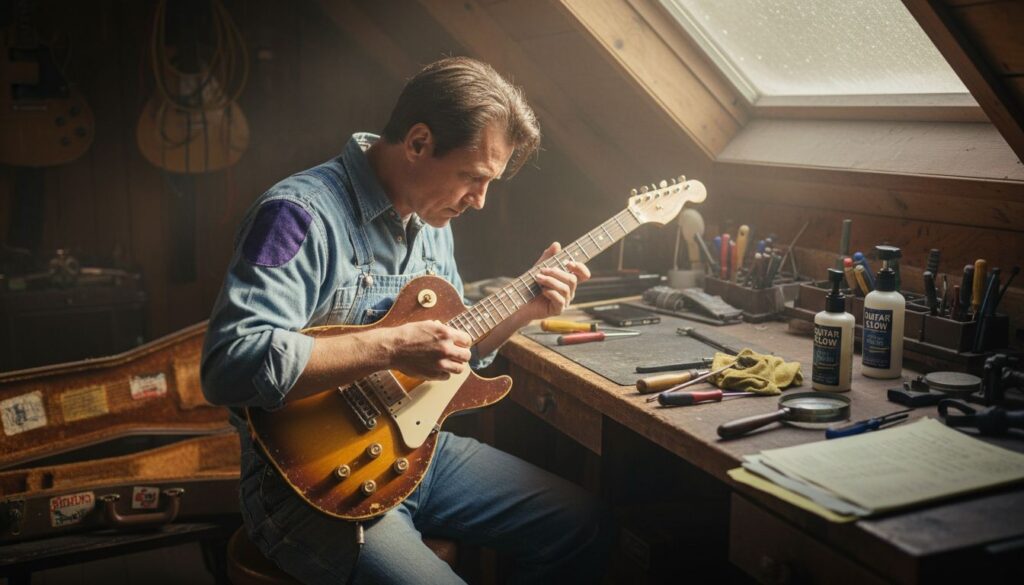

Every seasoned guitar collector knows that missing a single detail can mean the difference between a prized investment and a forgotten relic. Accurate valuation starts with gathering the right information and understanding how documentation, market trends, and expert opinions shape an instrument’s true worth. This guide uncovers key strategies for authenticating, documenting, and evaluating rare, handcrafted guitars so your collection reflects both passion and informed investment.
Table of Contents
- Step 1: Gather Key Information About Your Guitar
- Step 2: Research Market Trends And Recent Sales
- Step 3: Evaluate Condition And Originality
- Step 4: Consult Expert Opinions And Resources
- Step 5: Verify Value With Authentication And Documentation
Quick Summary
| Key Insight | Explanation |
|---|---|
| 1. Gather Comprehensive Documentation | Collect details like model, manufacturing year, and condition to understand market value. |
| 2. Research Market Trends | Track sales data and trends to compare your guitar’s potential worth against recent sales. |
| 3. Assess Condition and Originality | Examine your guitar thoroughly, as condition and authenticity directly influence its value. |
| 4. Seek Expert Opinions | Consult professional appraisers for validated insights on your guitar’s market potential. |
| 5. Authenticate and Verify Value | Ensure all documents and assessments confirm your guitar’s legitimacy for higher collectible value. |
Step 1: Gather key information about your guitar
Starting your guitar valuation journey requires collecting precise details about your instrument. Accurate documentation serves as the foundation for understanding its potential market value and historical significance.
To begin, you’ll want to compile comprehensive information about your guitar. This includes identifying specific details such as:
-
Manufacturer and exact model
-
Year of production
-
Serial number location and digits
-
Original country of manufacture
-
Current condition and any modifications
-
Provenance or ownership history
Carefully inspect your guitar and photograph each critical area, focusing on maker’s marks, serial number tags, and any unique identifying characteristics. Vintage guitar identification techniques can help you uncover nuanced details that significantly impact valuation.
Professional guitar appraisers will want comprehensive documentation. Gather original purchase receipts, maintenance records, photographs from different eras, and any certificates of authenticity. These supporting materials can substantially enhance your guitar’s documented history and potential market value.
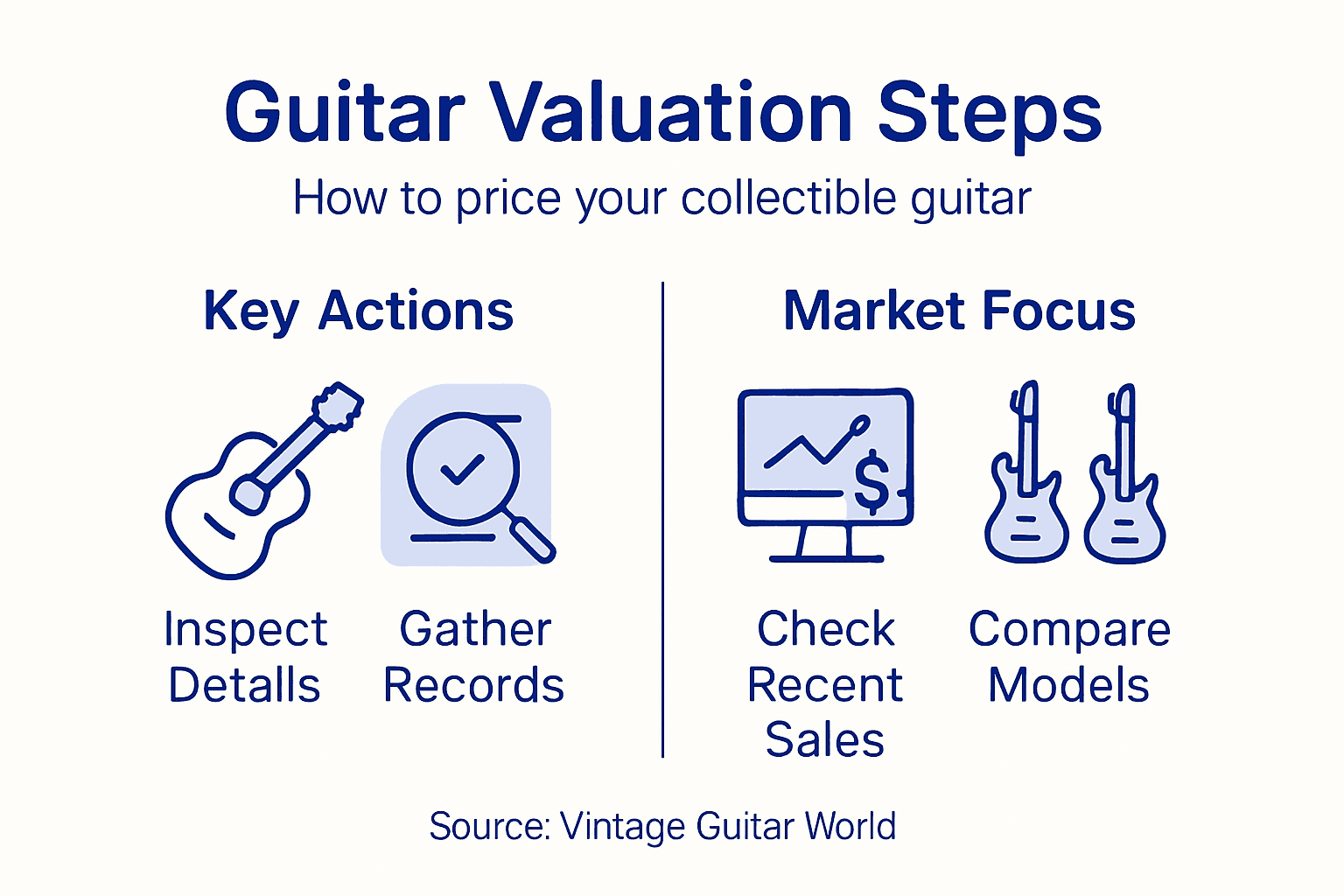
Here is a summary of documentation types and their impact on guitar valuation:
| Documentation Type | Adds Market Value | Purpose |
|---|---|---|
| Original receipts | Often significant | Proven purchase history |
| Certificates of authenticity | High | Confirms originality and legitimacy |
| Maintenance records | Moderate | Shows condition has been well-maintained |
| Historical photographs | Moderate | Highlights provenance and past ownership |
| Appraisal documents | High | Provides expert-verified value estimate |
Original documentation transforms a good guitar into a potentially extraordinary collectible investment.
Pro tip: Use consistent, high-resolution digital photography from multiple angles to create a comprehensive visual record of your instrument’s condition and unique characteristics.
Step 2: Research market trends and recent sales
Valuing a collectible guitar requires more than just examining the instrument itself. Understanding current market dynamics and recent sales data provides critical insights into your guitar’s potential worth.
To effectively research market trends, you’ll need to explore multiple information sources. Key research strategies include:
- Tracking recent auction results
- Monitoring specialized guitar collector websites
- Reviewing price guides and sales databases
- Examining historical sales records
Market value research techniques reveal that understanding the difference between theoretical market value and actual market price is crucial. Market value represents an ideal scenario, while market price reflects what buyers are genuinely willing to spend.

Consider consulting multiple resources like specialized guitar price guides, online auction platforms, and collector forums. Pay special attention to guitars similar to yours in make, model, year, and condition. Some collectors maintain detailed spreadsheets tracking sales prices, which can provide valuable comparative data for your valuation.
This comparison outlines key differences between market value and market price when valuing collectible guitars:
| Aspect | Market Value | Market Price |
|---|---|---|
| Definition | Ideal estimated worth | Actual sale amount |
| Influenced by | Rarity, condition, demand | Negotiations, buyer’s willingness |
| Usefulness | Guides appraisals and insurance | Determines real transaction outcomes |
Recent sales data offers the most accurate snapshot of current market expectations for vintage guitars.
Pro tip: Create a spreadsheet tracking comparable guitar sales, including details like condition, sale price, and date to build your own comprehensive market research database.
Step 3: Evaluate condition and originality
Assessing the condition and authenticity of a collectible guitar is a critical step in determining its true market value. Your detailed examination will reveal nuanced details that can significantly impact pricing.
When evaluating your guitar, focus on comprehensive condition assessment, which includes examining:
- Body structural integrity
- Neck alignment and wear
- Fretboard condition
- Original hardware and components
- Finish quality and original paint
- Electronic system functionality
Antique guitar appraisal techniques emphasize the importance of verifying originality. Even minor modifications can dramatically reduce a guitar’s collector value. Look closely for signs of repair, replacement parts, or non-original modifications that might compromise the instrument’s authenticity.
Careful documentation becomes crucial during this evaluation. Photograph every detail, noting any wear, repairs, or alterations. Pay special attention to serial numbers, maker’s marks, and unique identifying characteristics. Professional appraisers will scrutinize these elements to determine the guitar’s historical integrity and potential value.
Originality is the silent language of collectible guitar valuation.
Pro tip: Use bright, consistent lighting and a high-resolution camera to capture detailed close-up images that reveal subtle condition nuances.
Step 4: Consult expert opinions and resources
Navigating the complex world of guitar valuation requires insights from seasoned professionals who understand the nuanced market dynamics of collectible instruments. Seeking expert opinions can transform your understanding and provide authoritative validation of your guitar’s potential value.
Key expert consultation strategies include:
- Contacting professional guitar appraisers
- Attending vintage guitar conventions
- Joining specialized collector forums
- Consulting music instrument authentication services
- Reaching out to manufacturer archives
Vintage guitar appraisal techniques emphasize the importance of professional assessment. These experts can provide comprehensive insights into your instrument’s historical context, market positioning, and potential investment value.
When seeking professional opinions, prepare detailed documentation of your guitar. This includes high-resolution photographs, serial number information, and any historical provenance you’ve discovered. Professional appraisers will appreciate a thorough presentation that helps them conduct a precise evaluation.
Expert validation transforms speculation into market-backed certainty.
Pro tip: Schedule consultations with multiple experts to cross-reference valuations and gain a more comprehensive understanding of your guitar’s true market potential.
Step 5: Verify value with authentication and documentation
Authentication transforms a potentially valuable guitar into a confirmed collectible asset. Establishing your instrument’s legitimacy requires meticulous documentation and professional verification to protect its market value.
Critical documentation elements include:
- Original purchase receipts
- Manufacturer certificates
- Detailed condition reports
- Professional appraisal documents
- Maintenance and repair records
- Photographic evidence of originality
Guitar documentation strategies emphasize comprehensive record-keeping. Professional appraisers require thorough documentation that establishes your guitar’s provenance, condition history, and authentic characteristics.
Systematic record management becomes crucial in maintaining and potentially increasing your guitar’s value. Organize all documents chronologically, create digital backups, and consider using specialized tracking systems that allow you to compile a comprehensive history of your instrument.
Authentication transforms uncertainty into verified collectible value.
Pro tip: Create a dedicated digital and physical file system for your guitar’s documentation, ensuring all important records are easily accessible and professionally preserved.
Unlock the True Worth of Your Vintage Guitar with Expert Support
Valuing collectible guitars accurately can be a daunting task that demands careful documentation, market insight, and expert authentication. If you have struggled with identifying originality, assessing condition, or navigating complex market trends, you are not alone. Vintage Guitar World understands the challenges of turning your passion into informed decisions by offering a trusted platform that goes beyond just sales. Our commitment to quality and expert evaluation ensures you receive the guidance and validation needed to secure your guitar’s rightful value.
Discover our curated collection of rare and well-maintained guitars that reflect the very standards discussed in the article such as authenticity, provenance, and condition. Explore our shop to access not only premium instruments but also personalized valuation and certification services designed to help you make confident buying or selling decisions.

Enhance your collectible guitar journey with Vintage Guitar World. Visit Vintage Guitar World now to benefit from expert appraisals, comprehensive documentation support, and access to a historic selection of guitars that live the value principles you have learned. Act today and transform uncertainty into a confident investment in your musical legacy.
Frequently Asked Questions
How do I gather key information about my collectible guitar for valuation?
To value your collectible guitar accurately, start by collecting essential details like the manufacturer, model, production year, and serial number. Ensure to document the instrument’s current condition and any modifications it has undergone.
What recent sales data should I research for my guitar’s market valuation?
To determine your guitar’s value, track recent auction results and review sales databases specifically for similar guitars. Focus on comparing make, model, year, and condition within the last 6 to 12 months to get accurate market pricing insights.
How can I assess the condition and originality of my guitar?
Evaluate your guitar by examining its structural integrity, neck alignment, hardware, and finish quality. Photograph detailed aspects and document any repairs or changes, as originality significantly impacts value.
Why is consulting an expert important in the guitar valuation process?
Consulting experts can provide you with insights into your guitar’s historical context and potential market value. Schedule consultations with multiple professionals to gather diverse opinions and ensure a comprehensive understanding of your instrument’s worth.
What documentation is essential for verifying my guitar’s authenticity?
Essential documentation includes original purchase receipts, certificates of authenticity, and detailed condition reports. Organize these records chronologically and back them up digitally to maintain your guitar’s documented history and market value.