












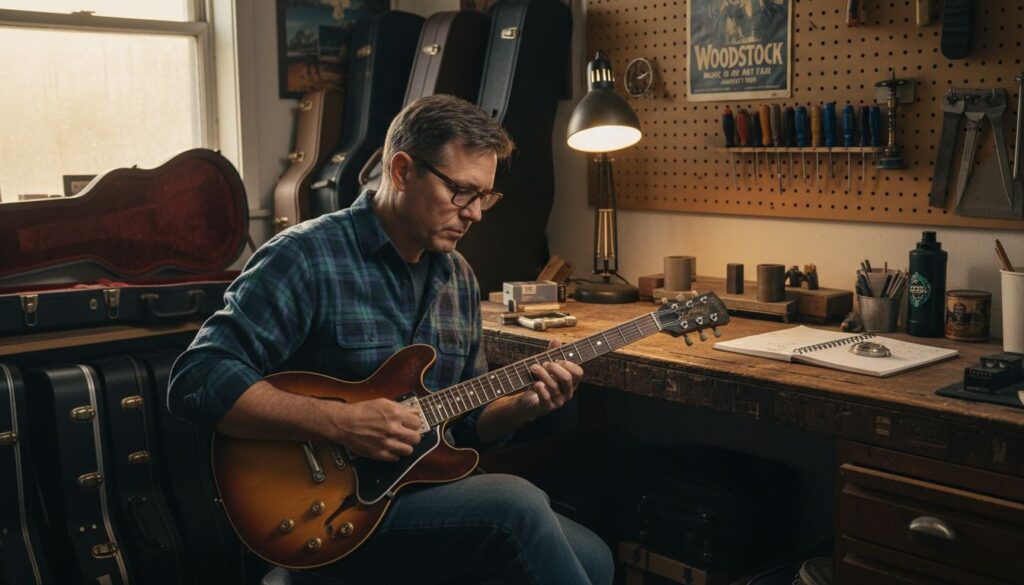
Sorting fact from fiction is a daily challenge for serious vintage guitar collectors and seasoned musicians. Sorting the nuances of value goes far beyond popular myths about age or brand prestige. Expert resources like The Blue Book of Guitar Values and The Association of Stringed Instrument Appraisers stress that guitar valuation relies on a precise blend of condition, originality, provenance, and current market demand. This guide offers collectors the expert clarity needed to confidently assess prized instruments for optimal investment or personal enjoyment.
Table of Contents
- Defining Guitar Valuation and Misconceptions
- Distinguishing Types of Vintage Guitars
- Condition, Originality, and Rarity Factors
- Expert Valuation Methods and Resources
- Market Trends and Real-World Pricing
- Common Pitfalls and What to Avoid
Key Takeaways
| Point | Details |
|---|---|
| Understanding Guitar Valuation | Guitar value is influenced by condition, originality, and rarity, rather than just age. Consult professional appraisers for a comprehensive assessment. |
| Types of Vintage Guitars | Vintage guitars include acoustic, electric, and archtop categories, each with unique features affecting their collectible value. Knowledge of these distinctions is crucial for collectors. |
| Condition, Originality, and Rarity | The condition of a guitar, the originality of its parts, and its rarity are key factors that determine its market value. Documentation of provenance is essential for maintaining value. |
| Avoiding Common Pitfalls | Focus on structural integrity and provenance verification when purchasing vintage guitars to prevent costly mistakes. Always seek comprehensive condition documentation and consider expert inspections. |
Defining Guitar Valuation and Misconceptions
Understanding guitar valuation requires moving beyond simplistic assumptions about an instrument’s worth. Contrary to popular belief, a guitar’s value isn’t determined solely by its age or rarity. Complex market dynamics reveal that true valuation involves a sophisticated interplay of multiple factors, each contributing to the instrument’s overall monetary and historical significance.
The primary misconception among collectors is that older automatically means more valuable. Professional appraisers emphasize that condition, provenance, originality, and market trends play significantly more critical roles in determining an instrument’s actual worth. A well-maintained guitar from a respected manufacturer with documented history can be far more valuable than an older instrument that has been poorly preserved or extensively modified.
Key factors influencing guitar valuation include mechanical integrity, original components, historical significance, and current market demand. Collectors and musicians should understand that guitar valuation is a nuanced process involving expert assessment across multiple dimensions. Specific elements like original hardware, minimal modifications, complete documentation, and pristine cosmetic condition can dramatically impact an instrument’s market value.
Pro tip: Always consult multiple professional appraisers and document comprehensive condition reports before making significant investments in vintage guitars.
Distinguishing Types of Vintage Guitars
Vintage guitars represent more than mere musical instruments; they are historical artifacts that embody craftsmanship, cultural evolution, and artistic innovation. Vintage guitar classifications reveal intricate distinctions among different types, each with unique characteristics that significantly impact their collectible value and historical significance.
Primary vintage guitar categories include acoustic, electric, and archtop instruments, each with distinctive construction techniques and historical contexts. Acoustic vintage guitars typically range from early parlor models to pre-war Martin and Gibson designs, characterized by handcrafted wooden construction and intricate tonal qualities. Electric vintage guitars emerge from mid-20th century innovations, with iconic models from manufacturers like Fender and Gibson representing pivotal moments in musical instrument development.
The nuanced world of vintage guitars extends beyond simple categorization. Collector value depends on multiple factors including original hardware, manufacturing period, wood quality, and preservation condition. Rare models from specific production years or with unique design elements can command extraordinary prices, reflecting not just musical utility but also their status as historical artifacts. Serious collectors assess each instrument’s provenance, seeking instruments that tell a compelling story of musical and technological evolution.
Here’s a quick comparison of primary vintage guitar categories and what makes each type unique:
| Category | Typical Era | Notable Features | Collector Focus |
|---|---|---|---|
| Acoustic | Pre-World War II | Handcrafted wood, natural finish | Sound quality, craftsmanship |
| Electric | 1950s-1970s | Magnetic pickups, solid bodies | Player associations, innovation |
| Archtop | 1930s-1960s | Curved top/back, F-holes | Jazz history, build complexity |
Pro tip: Always examine vintage guitars under professional lighting and use specialized magnification to detect authentic period-specific details that dramatically influence collectible worth.
Condition, Originality, and Rarity Factors
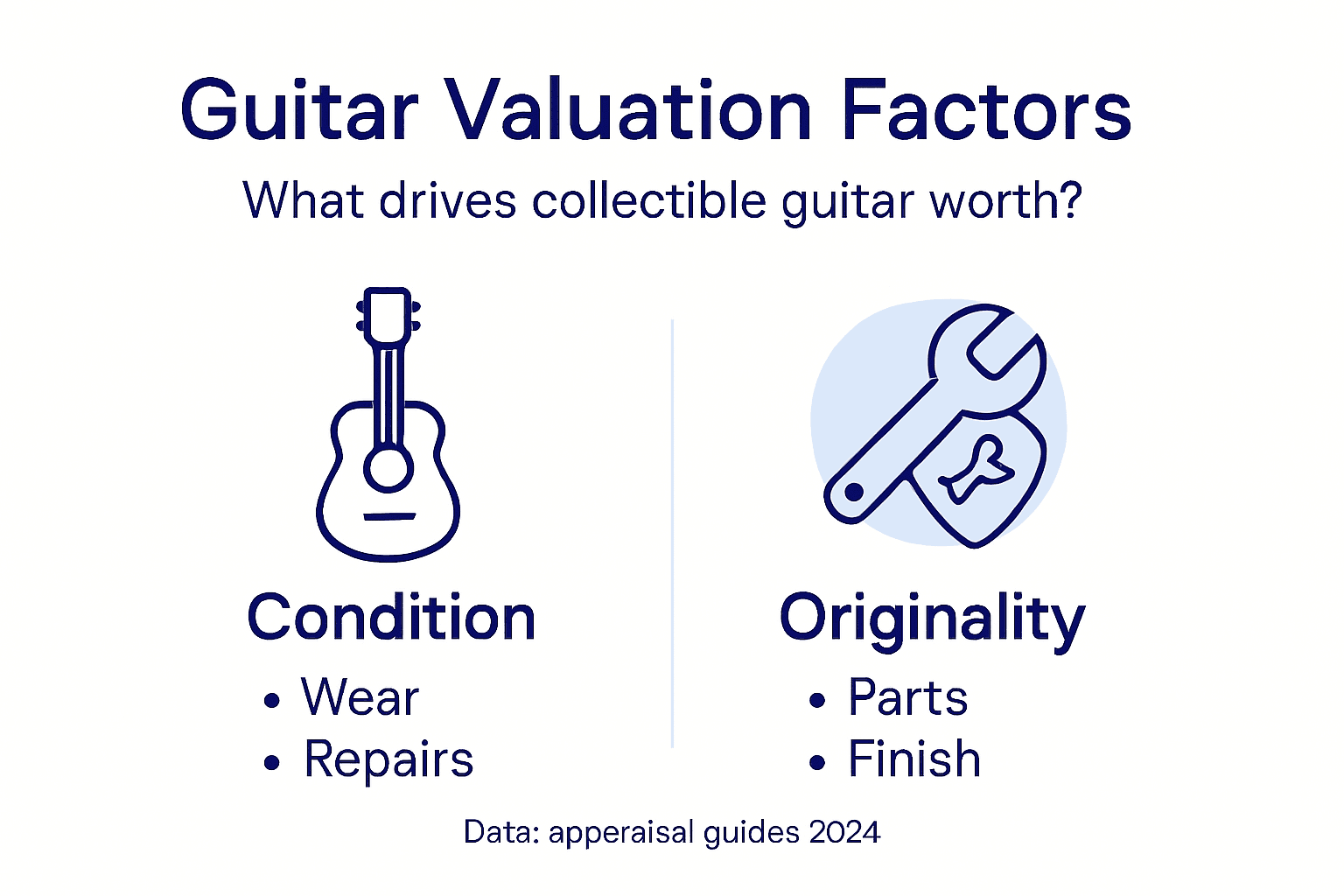
Vintage guitar valuation hinges critically on three fundamental elements: condition, originality, and rarity. Guitar value determinants reveal a complex ecosystem where every scratch, replacement part, and manufacturing detail significantly impacts an instrument’s collectible worth. Understanding these factors requires deep knowledge and meticulous assessment beyond surface-level observations.
Condition represents the most immediate and visible factor in guitar valuation. Professional collectors scrutinize every aspect of an instrument’s physical state, from structural integrity to cosmetic preservation. Minor wear can be acceptable and even desirable, demonstrating the guitar’s authenticity and history. However, significant damage, amateur repairs, or non-original modifications can dramatically reduce an instrument’s market value. Original finish, untouched hardware, and minimal structural alterations become critical benchmarks for serious collectors seeking pristine vintage specimens.
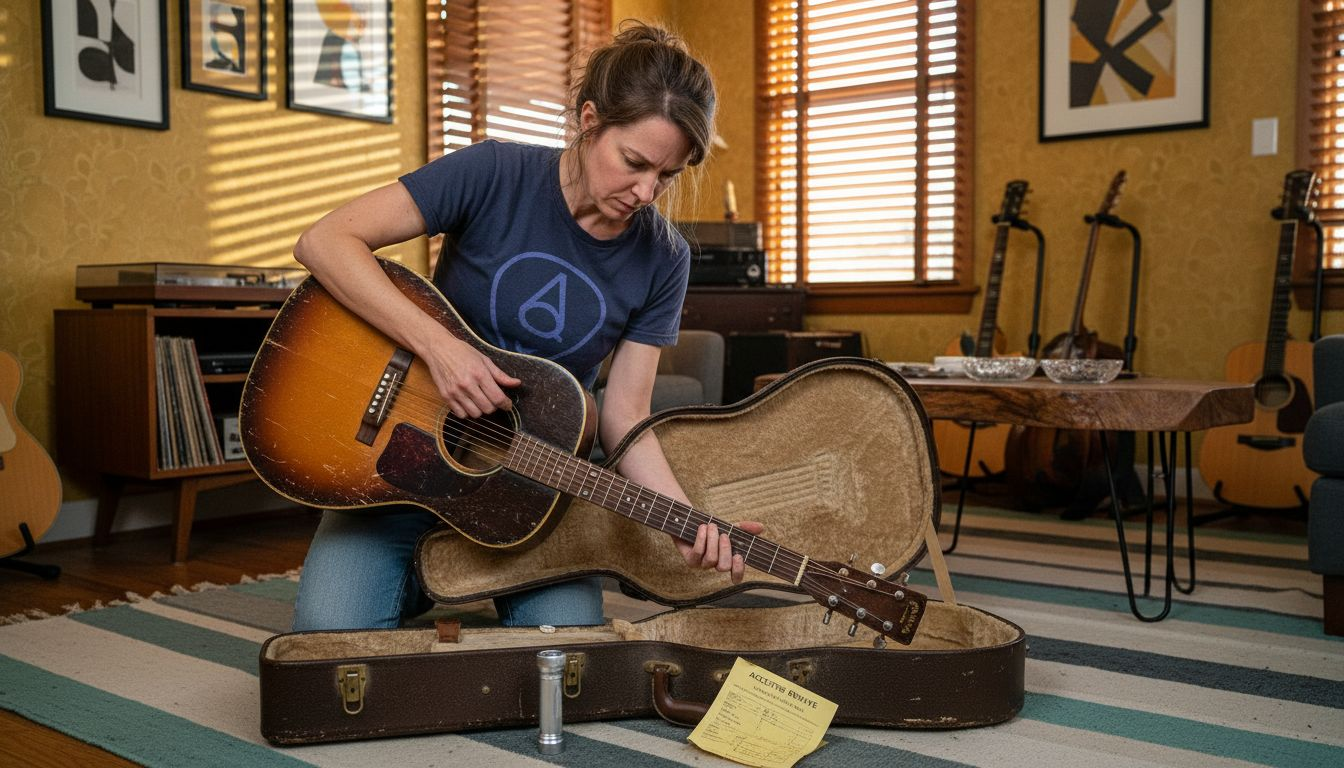
Rarity transforms a vintage guitar from a musical instrument into a potentially priceless artifact. Production volume, unique manufacturing runs, and historical significance dramatically influence collectible worth. Guitars associated with specific musicians, produced during limited timeframes, or representing technological innovations command exponentially higher values. Collectors prize instruments that tell a compelling narrative about musical evolution, technological advancement, or cultural moments. Some rare models might have been produced in quantities of fewer than 100 units, making them extraordinarily valuable to discerning collectors who view these instruments as historical treasures.
The table below summarizes how key guitar valuation factors influence market price:
| Factor | Positive Impact | Negative Impact |
|---|---|---|
| Condition | Original finish, no repairs | Heavy wear, structural damage |
| Originality | All parts era-correct | Modified hardware, refinish |
| Rarity | Limited production, unique run | Mass production, common design |
Pro tip: Document every detail about a vintage guitar’s provenance, including original purchase records, repair history, and photographic evidence to maximize its potential future value.
Expert Valuation Methods and Resources
Navigating the intricate landscape of vintage guitar valuation requires sophisticated methodologies and specialized knowledge. Guitar value assessment techniques represent a complex ecosystem of professional evaluation strategies that extend far beyond simple price estimation. Professional appraisers employ rigorous, multifaceted approaches to determine an instrument’s true market worth.
Expert valuation methods incorporate comprehensive analysis across multiple dimensions. These include detailed physical examination, historical research, market trend analysis, and comparative sales data. Condition grading becomes a precise scientific process, with professionals utilizing specialized lighting, magnification tools, and standardized assessment criteria. Appraisers meticulously document every characteristic, from structural integrity and original components to cosmetic preservation and potential restoration history. They cross-reference multiple data sources, including auction records, dealer transactions, and private sale information to establish accurate valuation benchmarks.
The most sophisticated valuation resources combine technological expertise with deep historical knowledge. Professional collectors and dealers utilize advanced databases that track global market trends, document production histories, and provide real-time pricing intelligence. These resources go beyond simple price guides, offering nuanced insights into factors like manufacturing variations, regional market differences, and emerging collector preferences. Serious guitar investors rely on these comprehensive tools to make informed decisions, understanding that accurate valuation requires more than superficial assessment.
Pro tip: Invest in professional appraisal services and maintain detailed documentation of your vintage guitar’s provenance to maximize its long-term value and collectibility.
Market Trends and Real-World Pricing
The vintage guitar market operates as a dynamic ecosystem where value is continuously reshaped by complex economic and cultural forces. Global guitar market dynamics reveal a sophisticated landscape where pricing transcends simple supply and demand principles. Musical instrument valuation now encompasses technological innovation, cultural significance, and emerging collector preferences.
Market trends demonstrate significant segmentation within vintage guitar pricing. Electric guitar segments show particular volatility, with certain models experiencing dramatic value fluctuations based on musician associations, limited production runs, and historical significance. Professional collectors track nuanced market indicators including auction performance, online sales platforms, and specialized dealer networks. Pricing strategies have become increasingly data-driven, with advanced analytics providing real-time insights into potential investment opportunities and market value trajectories.
Regional variations play a crucial role in determining vintage guitar pricing. Different geographic markets exhibit unique collector behaviors, with some regions showing stronger demand for specific brands, eras, or guitar types. Emerging markets in Asia and developing economies have introduced new dimensions to guitar valuation, creating complex global pricing ecosystems. Serious collectors must consider international market trends, understanding that an instrument’s value can dramatically shift based on regional collector interests and cultural musical preferences.
Pro tip: Monitor multiple international auction platforms and maintain a diversified understanding of global market trends to accurately assess vintage guitar investment potential.
Common Pitfalls and What to Avoid
Vintage guitar collecting demands meticulous attention to potential risks that can dramatically undermine an investment’s value. Used guitar inspection techniques reveal a complex landscape of potential mechanical and structural challenges that inexperienced collectors often overlook. Understanding these risks becomes crucial for protecting both financial investment and musical instrument integrity.
Structural integrity represents the most critical area of potential pitfalls in vintage guitar acquisition. Many collectors mistakenly focus solely on cosmetic appearance, neglecting critical elements like neck alignment, fretboard condition, and internal structural stability. Seemingly minor issues like hairline cracks, subtle neck warping, or hidden electronic malfunctions can transform an apparently valuable instrument into a costly restoration project. Professional collectors understand that comprehensive evaluation requires specialized knowledge, including understanding how environmental factors like humidity and temperature impact an instrument’s long-term condition.
Another significant danger involves misrepresentation and provenance verification. Unscrupulous sellers might attempt to artificially inflate an instrument’s value through misleading historical claims, undisclosed repairs, or cosmetic modifications. Sophisticated collectors develop robust verification strategies, including detailed documentation review, expert consultations, and cross-referencing manufacturing records. This diligence helps prevent purchasing guitars with compromised authenticity or hidden structural problems that could substantially diminish their collectible worth.
Pro tip: Always request comprehensive condition documentation and consider professional third-party inspection before finalizing any vintage guitar purchase.
Unlock the True Value of Your Vintage Guitar with Expert Help
Understanding vintage guitar valuation is more than just knowing the age or rarity of your instrument. This article highlights how condition, originality, and rarity deeply influence your guitar’s collectible worth. If you want to avoid costly pitfalls and ensure you maximize your investment, expert evaluation and authentic vintage instruments are key.

Discover a curated collection of premium, well-maintained vintage guitars at Vintage Guitar World. Our platform offers personalized services including valuation, certification, and detailed historical insights that align perfectly with the in-depth appraisal concepts discussed. Start exploring our expertly evaluated guitars today to experience craftsmanship and heritage like never before. Do not wait to own an instrument where quality and authenticity drive true collectible worth.
Frequently Asked Questions
What factors determine the value of a vintage guitar?
The value of a vintage guitar is determined by several key factors including condition, originality, rarity, and market demand. These elements interplay to establish the instrument’s overall worth, beyond just age or brand.
How does the condition of a guitar affect its valuation?
The condition of a guitar significantly affects its valuation. Minor wear might be acceptable, showcasing authenticity, while major damage or non-original modifications can greatly decrease its market value. Professional evaluations often focus on structural integrity and cosmetic preservation.
What is the importance of originality in guitar valuation?
Originality is crucial in guitar valuation as it includes factors like original hardware and finish. Instruments that retain all their original components are typically more valuable than those with replaced parts or refinished surfaces, as originality speaks to the guitar’s history and authenticity.
Why is rarity a significant factor in assessing guitar worth?
Rarity enhances a guitar’s collectible worth due to factors like limited production runs or unique design elements. Guitars tied to notable musicians or specific historical moments tend to command higher prices, making them sought-after artifacts for collectors.
Recommended
- Used guitar or vintage guitar before a new instrument from a luthier
- Why we love vintage guitars – Vintage Guitar World
- Guitar care – Love your guitar and it will love you back
- Brief history of the guitar from Vintage Guitar World
- What Makes Art Valuable: Key Factors Explained – Eman’s Gallery
- Valuable Vintage Clothing: Identifying True Worth