












Guitar enthusiasts often find the line between legend and misconception blurred when searching for truly collectible instruments. The reality is that age or price alone rarely capture a guitar’s value. Collectors and musicians alike now understand that rarity, craftsmanship, and authentic provenance shape the worth and allure of coveted models. Examining what separates a museum piece from a forgettable relic reveals why stories, player associations, and historical context matter more than decades alone. Discovering the truth behind common myths gives serious collectors the clarity to invest with confidence.
Table of Contents
- Defining Collectible Guitars And Common Myths
- Types Of Collectible Guitars And Key Variations
- Rarity, Condition, And Craftsmanship Explained
- Historical Significance And Artist Association Factors
- Risks, Costs, And The Role Of Authentication
- Mistakes To Avoid When Building A Collection
Key Takeaways
| Point | Details |
|---|---|
| Collectible Guitars Defined | Value is not solely determined by age; instead, it stems from factors like historical significance, rarity, and craftsmanship. |
| Common Myths | Age does not guarantee value; originality and provenance often hold more importance. |
| Categories of Collectible Guitars | Different types of collectible guitars exist, including pre-war acoustics and vintage electrics, each with unique value drivers. |
| Risks and Authentication | Authentication is essential to avoid financial pitfalls; secure proper documentation to protect your investment. |
Defining Collectible Guitars and Common Myths
When you first hear the term “collectible guitar,” you might picture a 1959 Les Paul hanging in a museum or a Martin acoustic worth six figures. But collectibility isn’t determined solely by age or price tag. A collectible guitar is one that retains or increases in value due to a combination of factors: historical significance, scarcity, exceptional craftsmanship, provenance, and cultural impact. What makes a guitar truly collectible goes far beyond whether it’s old. Some guitars manufactured just 30 years ago command higher prices than instruments from the 1950s, while others from the golden era of guitar manufacturing sit in storage, undervalued and forgotten. The distinction comes down to a specific intersection of qualities that resonates with players and collectors alike.
One of the biggest misconceptions about collectible guitars is that age automatically equals value. This myth persists because people naturally assume older instruments are rarer and therefore more desirable. In reality, guitars linked to legendary owners often command premiums regardless of manufacturing date, while countless vintage instruments remain affordable simply because they lack historical narrative or distinctive characteristics. Another widespread myth is that condition must be pristine for a guitar to hold value. Collectors understand that originality often matters more than restoration. A 1952 Telecaster with original finishes, original hardware, and authentic wear tells a story that no refinish can replicate. Conversely, a perfectly preserved guitar from an unknown maker carries little collectible appeal. The guitar market rewards authenticity and provenance over cosmetic perfection.
Many players also believe that only electric guitars have real collectible value, dismissing classical and acoustic instruments as niche markets. This couldn’t be further from the truth. Handcrafted classical guitars from master luthiers in Spain, Germany, and Japan attract serious collectors and command substantial prices. The demand for quality vintage acoustic instruments continues to grow annually. Perhaps the most damaging myth is that collectible guitars are fragile museum pieces meant for display only. Top-tier collectible instruments regularly appear in professional recording studios and on stages worldwide. A 1959 Gibson played on a Grammy-winning album is still a working instrument, not a relic confined to a case. The guitars that become most valued are often those with rich playing histories, visible performance wear that reflects their use, and documented creative contributions to music.
Understanding these distinctions helps you evaluate guitars more objectively. Rarity matters, but rarity without context or quality means little. A guitar needs multiple factors working in concert: genuine scarcity, authentic provenance, documented historical significance, and consistent demand from serious musicians or collectors. When you’re assessing whether a guitar might become collectible, look beyond surface-level attributes and consider its position within guitar history, its role in musical development, and whether its story will matter to future generations of players.
Pro tip: When evaluating a vintage guitar’s collectible potential, research the specific model’s production numbers, identify any notable musicians who played that model, and verify that all original components match the manufacturing year, as mismatched parts can significantly impact value despite the guitar’s playability.
Types of Collectible Guitars and Key Variations
Collectible guitars span multiple categories, and understanding the distinctions between them helps you recognize what drives value in each segment. The most sought-after collectible guitars fall into several distinct types, each with its own collector base and market dynamics. Pre-war acoustic guitars stand at the top of the collectibility pyramid. These instruments, manufactured before 1945, represent a specific era when lutherie techniques emphasized hand craftsmanship and premium tonewoods before mass production techniques became dominant. A pre-war Martin D-45 or Gibson J-200 commands prices that reflect not just age but also the materials used and the construction methods employed by craftsmen who had trained for decades. These guitars sound differently than their modern counterparts, a characteristic that musicians value as much as collectors do.
Vintage electric guitars from the 1950s through early 1970s form another pillar of the collectible market. This era produced instruments that became foundational to rock, blues, and country music. A 1954 Fender Stratocaster or 1959 Gibson Les Paul represents more than just a guitar. These models shaped musical history, and their association with legendary players elevates their status. Vintage electric guitars from specific production eras remain the most consistently traded instruments in the collector community. However, not every guitar from these years holds equal value. A 1965 Fender Jazzmaster with original sunburst finish, matching serial number, and documented service history commands dramatically more than a refinished model missing its original pickups and hardware. The specific year matters enormously because production specifications, pickup designs, and wood sourcing changed frequently during this period.
Handcrafted boutique guitars and flamenco guitars with traditional construction represent growing segments in the collectible market. Master luthiers from Spain, Germany, Italy, and Japan create limited-production instruments that attract serious collectors willing to invest thousands for exceptional craftsmanship. A classical guitar built by a renowned Spanish luthier in the 1970s or 1980s often appreciates in value as supply dwindles and demand from both players and collectors increases. Limited edition models and artist signature guitars occupy a unique space. When a manufacturer produces only 500 or 1000 units of a specific model, particularly if associated with a notable musician, those guitars develop collector appeal relatively quickly. A Paul Reed Smith signature model from the 1990s with low production numbers now commands premiums in the secondary market. Artist collaboration models from major brands often become collectible faster than standard production instruments because scarcity is built into their design from the start.
Historically significant relics deserve special attention. A guitar played on a Grammy-winning album, used during a legendary festival performance, or owned by a musician who shaped an entire genre carries provenance that transcends the instrument itself. Documentation matters critically here. A guitar with verified ownership history, tour documentation, or appearance in professional photographs increases dramatically in value. Without proper provenance, even an instrument with the right specifications struggles to command collector prices. Understanding these categories helps you evaluate which guitars might appreciate over time. The combination of rarity, craftsmanship, historical significance, and documented provenance determines where a guitar fits within the collectible spectrum. Some guitars appreciate steadily over decades, while others spike suddenly when a famous musician uses them publicly or when broader cultural interest in a particular era intensifies.
Pro tip: Document everything about your collectible guitars: keep original receipts, photograph any notable wear patterns or hardware modifications, record serial numbers, and research the specific production year to verify matching components, as this documentation dramatically increases future resale value and helps authenticate your investment.
Here is a summary comparing key categories of collectible guitars and what drives value for each:
| Guitar Category | Main Value Drivers | Typical Era | Collector Appeal |
|---|---|---|---|
| Pre-war Acoustic | Craftsmanship, tonewood | Before 1945 | Very high |
| Vintage Electric | Iconic design, artist use | 1950s–1970s | Broad, strong demand |
| Boutique/Classical | Luthier reputation | 1970s–Present | Niche, rising |
| Limited Editions | Scarcity, artist links | Any decade | Fast appreciation |
| Historical Relics | Provenance, performance | Varies | Premium pricing |
Rarity, Condition, and Craftsmanship Explained
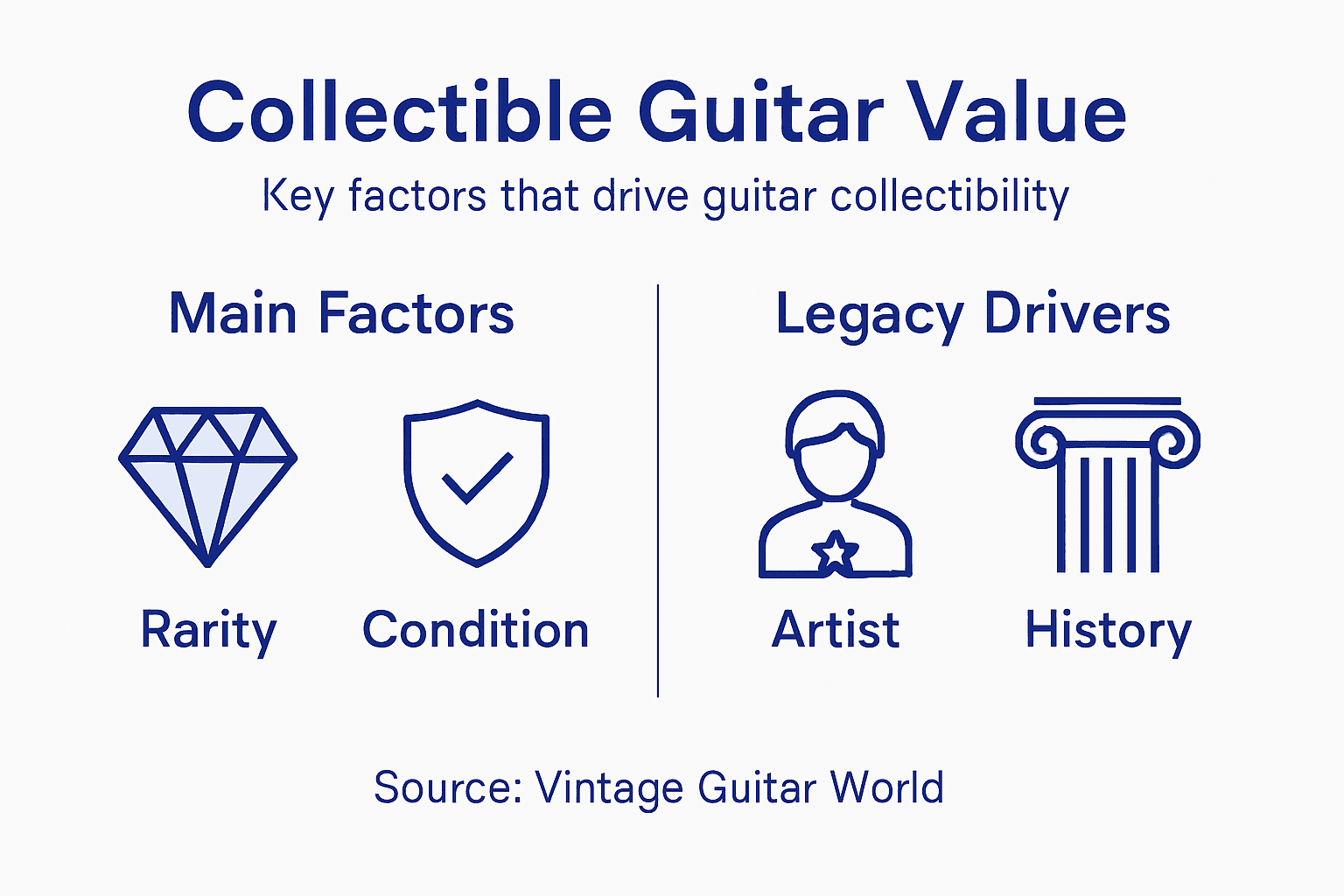
Three pillars support the value of any collectible guitar: rarity, condition, and craftsmanship. These three factors rarely operate in isolation. Instead, they create a dynamic relationship where strength in one area can partially compensate for weakness in another, but true collectible value emerges when all three align favorably. Understanding how each element contributes to a guitar’s desirability helps you make informed decisions about acquisition and valuation.
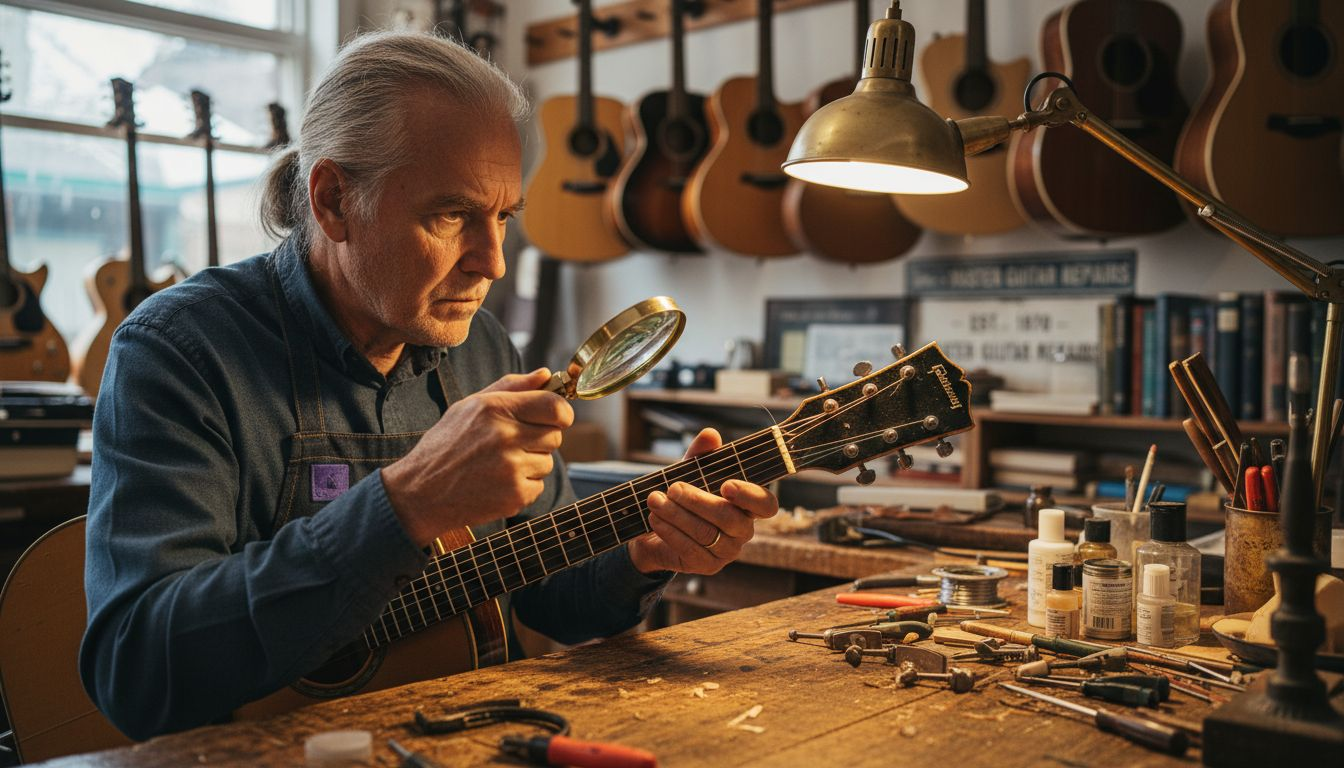
Rarity begins with production numbers. A guitar manufactured in limited quantities automatically possesses scarcity value. A 1952 Fender Telecaster exists in far smaller numbers than a 2015 model, which means fewer people can own an original from that year. Limited production runs, whether intentional or accidental due to market conditions, create supply constraints that drive collector interest. However, rarity without demand means nothing. A guitar that only five hundred people in the world want remains easier to find than one that fifty thousand collectors seek. Market demand and production scarcity must intersect. Vintage guitars with well-documented limited production runs command premiums because collectors recognize the genuine scarcity. Geographic rarity also matters. A classical guitar built by a relatively unknown Italian luthier in 1975 might be rare in North America but common in Europe, affecting its desirability depending on the market you are selling into.
Condition represents the second critical factor, though it operates differently than many collectors assume. Original condition beats pristine restored condition almost every time in the vintage guitar market. A 1960 Gibson Hummingbird with its original finish, original tuning machines, and original pickups commands significantly more than an identically-positioned Hummingbird that was refinished, retuned, or upgraded internally. The guitar’s playing condition matters less than collectors often believe. A vintage instrument with visible wear, fret wear, and a few cosmetic dings that plays perfectly retains tremendous value because it demonstrates authentic use history. What genuinely damages value is amateur repairs, mismatched components, or modifications that deface the original design. A headstock crack expertly repaired by a professional luthier concerns collectors less than an aftermarket pickup installed in a 1959 guitar because the pickup change alters the sonic characteristics and signal originality. Documentation of any repairs or modifications becomes essential. Professional restoration actually increases value if done correctly by a recognized specialist, because it preserves originality while improving playability.
Craftsmanship separates instruments that merely function from those that inspire musicians and collectors alike. Earlier eras emphasized hand construction methods, careful wood selection, and time intensive finishing processes that modern manufacturers largely abandoned for efficiency. A pre-war Martin acoustic guitar was built by craftspeople who shaped braces by hand, selected individual Sitka spruce boards for tonal characteristics, and applied finishes through multiple hand-rubbed applications. The result sounds fundamentally different from mass-produced instruments. You can hear it immediately. Tonal complexity, sustain, and responsiveness reflect the quality of craftsmanship invested in the instrument. Master luthiers continue this tradition today, creating guitars that represent extraordinary value investments because handwork and material choices directly influence tone quality. A handcrafted classical guitar from a Spanish master luthier produces sounds that electronic-enhanced mass-produced instruments cannot replicate. This tonal superiority, combined with limited production, creates lasting collector appeal.
When evaluating a guitar’s position within the collectible spectrum, examine how these three elements interact. A rare guitar in poor condition with mismatched components tells a different story than a less rare instrument in original condition with uncompromised craftsmanship. The common assumption that the rarest guitar always commands the highest price breaks down frequently. Collectors often choose guitars with superior original condition and documented craftsmanship over rare models with questionable histories or poor preservation. The combination of all three factors working together creates the most desirable collectibles. A moderately rare guitar in exceptional original condition that represents exceptional craftsmanship from a significant era often outperforms a rarer guitar that lost originality or was carelessly maintained.
Pro tip: When assessing condition, examine the back of the headstock, inside the body cavity, and beneath the bridge plate for evidence of repairs or modifications, as these hidden areas reveal authenticity that surface appearance alone cannot confirm, directly impacting both value and investment potential.
To better assess collectible guitar value, examine how rarity, condition, and craftsmanship interact:
| Factor | Impact on Value | Common Pitfalls | Collector Preference |
|---|---|---|---|
| Rarity | Drives exclusivity | Overlooking market demand | Genuine scarcity, not obscurity |
| Condition | Signals originality | Prioritizing cosmetic perfection | Original parts and wear preferred |
| Craftsmanship | Enhances playability | Ignoring hand-built features | Expertise and tonal quality |
Historical Significance and Artist Association Factors
A guitar’s value extends far beyond its physical construction. Historical significance and artist association inject cultural meaning into instruments, transforming them from functional tools into culturally significant artifacts. When a guitar carries the weight of musical history or direct connection to legendary musicians, its collectible value multiplies exponentially. This phenomenon operates on multiple levels, from guitars that literally shaped musical genres to instruments that appeared in iconic photographs or performances that changed popular culture.
Historical significance anchors guitars within broader musical narratives. Consider the electric guitar’s evolution itself. The instrument that revolutionized music in the 1950s now carries historical weight that transcends individual instruments. Specific models that became cultural icons through media portrayal and association with legendary musicians gained status that newer models cannot replicate. A 1954 Fender Stratocaster holds significance because that particular year marked the model’s introduction and the beginning of rock and roll’s sonic foundation. The guitar is not valuable simply because it is old. It is valuable because it represents a pivotal moment in music history. A 1958 Gibson Les Paul matters because that year the model was refined into the form that defined heavy rock music for decades. Musicians recognized this, used these instruments to create landmark albums, and collectors now pursue them knowing their historical importance.
Artist association operates as one of the most powerful value multipliers in the vintage guitar market. Celebrity ownership and connection to legendary musicians elevate guitars from functional instruments to luxury collectibles. A guitar played by Eric Clapton on stage during his Cream era commands prices that dwarf an identical model with unknown provenance. A Martin acoustic used by Bob Dylan during his 1965 electric controversy album recordings carries provenance worth hundreds of thousands of dollars. This premium reflects not just the historical moment but the direct human connection between the artist and the instrument. Collectors invest in guitars understanding that they own pieces of music history, instruments that literally created the sounds defining entire genres. The guitar becomes a portal to specific moments when music transformed culture.
Provenance documentation becomes absolutely critical when artist association drives value. Without verified ownership history, even a guitar with the correct specifications and year struggles to command artist association premiums. A photograph of a famous musician holding the instrument, documentation of its appearance on a recorded album, or auction house certification of previous ownership creates the narrative that justifies extraordinary prices. A guitar claimed to have belonged to a legendary player without documentation holds minimal premium over a similar instrument without that claim. Professional authentication through reputable auction houses, detailed ownership chains, and photographic evidence separate credible artist association from speculation. Tour documentation, technical specifications matching known stage equipment used during specific recording sessions, and expert evaluation by recognized authorities establish authenticity. The guitar market has learned harsh lessons about forged provenance, so collectors and dealers now demand rigorous documentation before accepting artist association claims.
Musical movements add another layer of historical significance. Guitars directly associated with musical revolutions command lasting premiums. A Fender Telecaster connected to the birth of country rock in the 1970s, a Gibson SG linked to progressive rock’s emergence, or a Fender Jazzmaster tied to surf rock’s golden era all carry historical weight beyond their physical attributes. These instruments represent cultural moments where guitars shaped society’s soundtrack. Collectors recognize that ownership extends beyond possession of an object. They steward pieces of cultural history, instruments that participated in the stories that matter to millions of people. This cultural gravitas explains why historically significant guitars often appreciate faster than purely rare instruments. Market demand from collectors understanding the historical narrative often exceeds supply of documented examples, creating sustained or accelerating value growth.
Pro tip: When researching artist provenance, cross reference multiple sources including auction house catalogs, professional authentication services, album liner notes, and period music publications rather than relying on seller claims alone, as documented verification dramatically increases both authenticity confidence and future resale value compared to unsubstantiated attributions.
Risks, Costs, and the Role of Authentication
Investing in collectible guitars carries real financial and practical risks that extend beyond the initial purchase price. The vintage guitar market attracts both legitimate collectors and opportunistic sellers, creating an environment where authentication failures can cost you thousands of dollars. Understanding these risks and the authentication process helps you protect your investment and make informed decisions before committing capital to high-value instruments.
Forged provenance represents the most dangerous risk in vintage guitar collecting. A guitar claimed to have belonged to a famous musician, but lacking documentation, could be completely fabricated. A seller might present a 1959 Gibson Les Paul with an elaborate story about its famous previous owner, complete with convincing but counterfeit photographs or letters. Without proper authentication, you cannot distinguish fact from fiction. Mismatched components present another serious risk. A guitar might have been assembled from parts from different eras, combining a 1954 body with 1962 pickups and 1970 hardware. To untrained eyes, it appears authentic, but experienced collectors recognize the problem immediately. Such instruments command significantly lower prices than genuinely original examples. Even professional restoration performed by well-meaning technicians can destroy value. A guitar refinished in the 1980s by a skilled luthier who believed he was preserving an important instrument effectively killed its collectible value by removing originality.
Authentication costs money, sometimes substantial amounts. Professional authentication of vintage guitars requires serial number verification, material analysis, and detailed inspection for repairs or modifications that can range from several hundred dollars to several thousand depending on the instrument’s value and complexity. A guitar worth twenty thousand dollars might require two thousand dollars in authentication costs to establish genuine provenance. This expense seems significant until you realize it protects you from purchasing a counterfeit or misrepresented instrument worth only five thousand dollars. Authentication through recognized experts, auction house evaluations, or professional authentication services provides documentation that protects your investment and supports future resale value. The cost becomes insurance against catastrophic financial mistakes. Reputable dealers and auction houses factor authentication costs into their pricing because legitimate sellers understand that buyers will demand verified authenticity before committing capital.
The authentication process itself requires specialized expertise that extends beyond casual guitar knowledge. Serial numbers tell stories if you understand the manufacturer’s systems, but these systems changed frequently and varied between factories. Wood species identification demands knowledge of tonal woods, their acoustic properties, geographic sourcing practices during specific eras, and how different manufacturers sourced materials. Pickup construction evolved constantly, and authentic examples from specific years feature particular winding techniques, magnet types, and component specifications. Hardware design, finish formulations, and construction methods all provide authentication clues when evaluated by experts. A qualified authenticator examines these elements systematically, comparing them against known examples, production documentation, and manufacturing practices specific to individual years and factories. This expertise develops through years of hands-on experience combined with access to manufacturing records and authenticated reference instruments.
Budget authentication costs when calculating total investment. A guitar purchased for fifteen thousand dollars might require authentication that costs one thousand dollars. The actual total investment becomes sixteen thousand dollars. Factor this into your decision making. If authentication would consume a significant percentage of the guitar’s value, that instrument may not represent a sound investment at current asking prices. Conversely, authentication that represents five percent of the guitar’s value protects against financial risks that could cost you forty, fifty, or sixty percent of your investment if the guitar proves misrepresented or contains hidden issues.
Market movement represents another risk often overlooked by new collectors. Guitars that appreciate steadily for decades occasionally plateau or decline when broader market preferences shift. A genre falls out of fashion, younger musicians gravitate toward different instruments, or economic conditions reduce collector purchasing power. These market movements affect different guitar types unevenly. Some categories remain resilient through market cycles while others experience sharper swings. Diversification across different guitar types, eras, and genres provides some protection against single category declines.
Pro tip: Before committing significant capital to any high-value guitar, invest in professional authentication upfront rather than attempting to save money by skipping this step, as the cost of authentication typically represents a tiny fraction of potential losses from purchasing a misrepresented or fraudulent instrument.
Mistakes to Avoid When Building a Collection
Building a meaningful guitar collection requires more than enthusiasm and capital. New collectors frequently make predictable errors that drain resources, derail long-term strategy, and generate regret about purchases made without proper forethought. Understanding these mistakes helps you navigate the collecting journey more effectively and build a collection that brings genuine satisfaction rather than financial frustration.
Lacking a clear collecting focus ranks as mistake number one. Collectors who chase every guitar that appears interesting at any price quickly accumulate instruments that lack coherence or investment logic. You might purchase a rare 1965 Fender Jazzmaster, then a 1970s classical guitar, then a vintage acoustic, then an artist signature model from the 1990s. Without intentional strategy, you end up with random instruments that appeal individually but lack the synergy that defines serious collections. Successful collectors establish priorities before purchasing. Are you building a collection around a specific era? A particular manufacturer? A guitar type like acoustics or electrics? A musical genre associated with certain instruments? Artist signatures? Limited editions? Your focus shapes every subsequent decision and helps you recognize genuine opportunities versus impulse purchases. Starting small and setting clear priorities prevents costly mistakes and builds a more rewarding guitar collection. A focused collection of five exceptional guitars with clear narrative cohesion holds more value and provides greater satisfaction than a scattered assortment of twenty instruments with no connecting thread.
Insufficient research before purchasing represents another critical error. Collectors who skip research often discover hidden issues only after purchase. You buy a guitar presented as having original components, only to learn later that the pickups were replaced in the 1980s. You acquire an instrument represented as from a specific production year, then research reveals it was manufactured a different year with significantly different specifications. You invest in a guitar claiming artist provenance, later discovering the documentation does not support the claim. Research prevents these disasters. Verify serial numbers against manufacturer databases. Cross-reference specifications across multiple sources. Study production variations for specific models and years. Review auction results for comparable instruments. Connect with collector communities who share knowledge freely. Contact the manufacturer directly when questions arise. This research investment costs nothing but time and prevents purchases that later reveal themselves as mistakes.
Underestimating total costs destroys many collecting dreams. New collectors budget only for the guitar purchase price, ignoring ongoing expenses. Professional setup and maintenance costs money. Climate control protections that preserve instruments require equipment investment. Insurance on high-value guitars becomes significant. Transportation for instruments requires proper cases and potentially professional shipping. Authentication and appraisal services charge fees. These accumulated costs multiply rapidly. A guitar purchased for ten thousand dollars might require an additional fifteen hundred dollars in setup, authentication, insurance, and climate control annually. Over five years, you have invested seventeen thousand five hundred dollars on top of the purchase price. Factor these costs into your collecting strategy from the beginning. Set aside budget for ongoing maintenance and protection, not just acquisition.
Ignoring market trends and collector community insights leads to poor acquisitions. Guitars that were considered collectible a decade ago sometimes plateau or decline as collecting interests shift. Conversely, emerging categories develop passionate collector bases that drive rapid appreciation. Joining collector communities, attending guitar shows, reading specialist publications, and engaging with other collectors provides market intelligence you cannot gather alone. These communities identify undervalued categories gaining traction, warn against overheated markets approaching corrections, and alert members to authentication concerns affecting specific models. This collective knowledge accelerates your learning and helps you make better-informed decisions.
One final mistake warrants specific attention: purchasing instruments beyond your financial capacity. Collectors sometimes stretch budgets beyond prudent levels to acquire high-value guitars. They finance purchases, borrow against other assets, or drain emergency funds. This creates financial stress that undermines collecting enjoyment. A guitar should enhance your life, not burden it. Purchase within your means. Build gradually. Allow your collection to appreciate over time. Patient collectors eventually acquire instruments they might not afford today, and they do so without financial anxiety.
Pro tip: Before making any significant purchase, spend at least two weeks researching the specific model, comparing market prices across multiple sources, verifying condition claims with hands-on inspection or expert evaluation, and confirming it aligns with your collection strategy rather than purchasing impulsively based on availability or emotional appeal.
Discover Truly Collectible Guitars with Vintage Guitar World
Understanding what makes a guitar collectible means looking beyond just rarity or age to craftsmanship, provenance, and historical significance. If you are seeking to build a meaningful collection or find an instrument that combines artistry with legacy, you need expert guidance and trusted access to carefully curated vintage and handcrafted guitars. At Vintage Guitar World, we specialize in rare guitars that carry the authentic stories, original components, and expert evaluations essential for confident collecting and playing.

Explore our exclusive selection of vintage electrics, boutique acoustics, and limited editions that meet the highest standards of originality and condition. Whether you prioritize artist associations, pre-war craftsmanship, or unique limited runs, our personalized service and detailed historical context empower you to make informed investments with lasting value. Visit Vintage Guitar World now and take your passion further by scheduling a guitar testing appointment or requesting expert certification. Your next legendary guitar awaits.
Frequently Asked Questions
What defines a collectible guitar?
A collectible guitar is one that retains or increases in value due to factors such as historical significance, scarcity, exceptional craftsmanship, provenance, and cultural impact, rather than simply its age or price.
Does the age of a guitar automatically increase its value?
No, age alone does not determine value. Guitars linked to notable owners or those with unique characteristics can command higher prices regardless of their age, while some vintage instruments may remain undervalued if they lack historical significance.
How does condition affect a guitar’s collectibility?
Originality often outweighs pristine condition in the collectible guitar market. A vintage guitar that shows authentic wear and retains its original components is generally more valued than a restored instrument with cosmetic perfection.
What factors contribute to a guitar’s rarity?
Rarity is influenced by production numbers, geographical factors, and demand. Limited production runs combined with high demand from collectors or musicians significantly enhance a guitar’s rarity and, consequently, its value.