












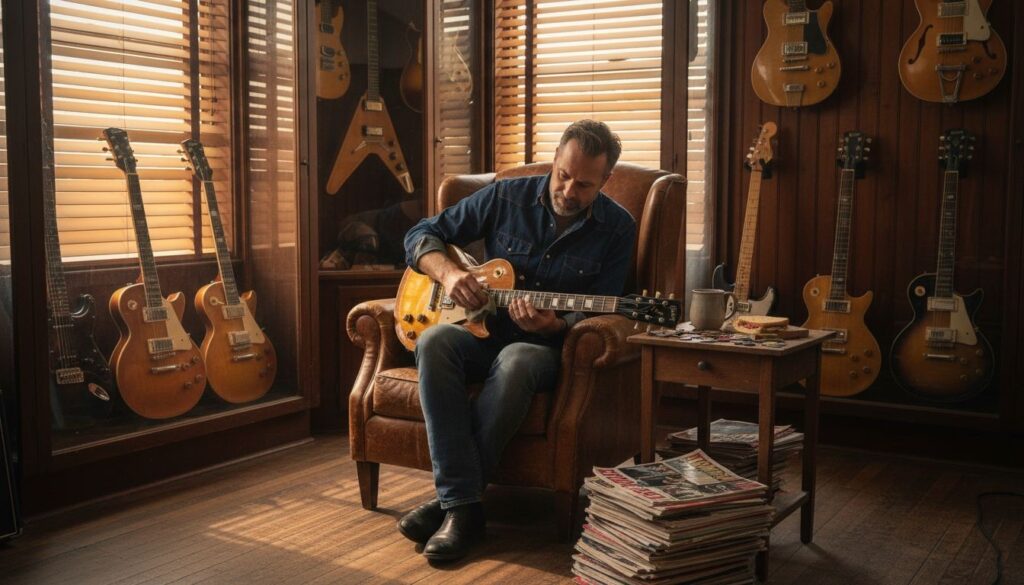
Stepping into the world of rare guitars is thrilling, but finding authentic gems can feel overwhelming. With vintage models selling for hundreds of thousands and fakes lurking in the market, the stakes for collectors and musicians are real. Fortunately, understanding what sets legendary guitars apart makes all the difference for your search and your investment.
This guide lays out practical insights drawn straight from the history and features of true classics, including pre-war Martin D-45s—of which only 91 were ever made—and the original Fender Broadcaster, with around 250 crafted before its name changed. You’ll discover proven tips and details that separate authentic instruments from clever imitations.
Get ready to explore the specific traits, stories, and value factors behind the world’s most sought-after guitars. These insider strategies will help you spot, assess, and appreciate iconic models every serious collector dreams of owning.
Table of Contents
- Uncovering The 1959 Gibson Les Paul Standard
- Exploring The 1930s Martin D-45 Acoustic
- Why The Fender Broadcaster Is So Coveted
- The Unique Story Of The 1958 Gretsch White Penguin
- Rarity Of The 1962 Fender Jazzmaster Custom Color
- Legendary Sounds Of The 1964 Epiphone Casino
- How To Identify Authentic Rare Guitars
Quick Summary
| Takeaway | Explanation |
|---|---|
| 1. Obtain Professional Certification | Before investing in rare guitars, seek certification from recognized experts to verify authenticity and provenance, which affects value. |
| 2. Examine Construction Details | Authentic guitars feature specific construction traits, like serial numbers and pickup characteristics that can confirm their age and legitimacy. |
| 3. Understand Market Value Fluctuations | Collectors should be aware that condition, rarity, and documented history significantly influence a guitar’s market value over time. |
| 4. Know the Importance of Provenance | Documentation of original ownership or performance history greatly enhances a guitar’s desirability and potential resale value. |
| 5. Be Aware of Counterfeit Risks | The rise in counterfeit instruments necessitates thorough inspection and knowledge of authenticating details to protect investments. |
1. Uncovering the 1959 Gibson Les Paul Standard
The 1959 Gibson Les Paul Standard represents one of the most coveted instruments in music history, commanding prices that often exceed $500,000 at auction. This guitar stands apart not simply because of its age, but because of a specific convergence of manufacturing decisions, materials, and craftsmanship that happened during a single production year.
Understanding why 1959 models matter requires examining the guitar’s technical DNA. Gibson manufactured these instruments using hand-selected mahogany bodies paired with maple tops, combined with thick poly urethane finishes that aged into rich, resonant finishes over decades. The pickups from this era featured Alnico magnets and hand-wound coils that produced a particular harmonic warmth impossible to replicate with modern manufacturing techniques. The history of electric guitar development shows how this year marked a transition point between earlier designs and later mass-production methods.
What makes authentication crucial for collectors is understanding the specific identifying marks. A genuine 1959 Les Paul Standard features a two-piece maple top, a solid mahogany back, and serial numbers typically falling within the 9-0001 to 9-8000 range. The headstock shape, weight, finish characteristics, and hardware all tell the story of that particular manufacturing moment. Collectors should know that Gibson’s documentation from this era remains incomplete, making visual inspection and professional certification absolutely essential.
The market for these guitars reflects their dual nature as both performance instruments and investment pieces. Professional musicians seek them for studio recordings and iconic performances, knowing that the tonal characteristics of a 1959 remain unmatched in contemporary instruments. Simultaneously, serious collectors view these guitars as tangible assets that typically appreciate over time, particularly examples with documented performance history or compelling provenance.
Beyond the numbers and specifications lies the guitar’s cultural impact. Legendary players including Eric Clapton, Jimmy Page, and Jeff Beck built their signature sounds around 1959 Les Paul Standards. Each scratch, dent, and wear mark on these instruments tells stories of their musical journeys, which paradoxically increases their value rather than diminishes it.
For collectors evaluating a 1959 Les Paul Standard, examining the original case, paperwork, and any service history provides invaluable context. A well-maintained example with clean electronics, original finish, and minimal fret wear represents a different investment profile than a heavily played instrument requiring restoration. Understanding these distinctions helps collectors align purchases with both their musical goals and financial expectations.
Pro tip: Request professional certification from recognized guitar authentication services before making any significant investment in a 1959 Les Paul Standard, as documented provenance and technical verification significantly impact both resale value and your confidence in the instrument’s authenticity.
2. Exploring the 1930s Martin D-45 Acoustic
The 1930s Martin D-45 acoustic guitar represents a pinnacle of American lutherie craftsmanship that few instruments can match. Between 1933 and 1942, Martin constructed only 91 pre-war D-45 models, making scarcity one of the defining characteristics that drives collector demand today. These years produced instruments during a golden era when Martin’s craftsmen operated without the production pressures and cost cutting measures that would emerge in later decades.
What separates a 1930s D-45 from other vintage acoustics lies in the materials and construction philosophy. Each guitar featured a solid spruce top paired with Brazilian rosewood back and sides, a combination that produces tonal depth and sustain that modern instruments rarely achieve. The elaborate pearl inlays adorning the top, back, and sides represent hours of hand labor by skilled artisans. Martin guitars and acoustic guitar design developed through decades of experimentation, with the D-45 representing the culmination of that knowledge.
The tonal characteristics of these instruments stem from both materials and the specific bracing patterns used during this period. Solid Brazilian rosewood contains naturally occurring oils and density that produce warm, complex overtones impossible to replicate with alternatives like Indian rosewood or modern synthetic materials. The spruce tops, selected from premium tone wood sources, continued aging and tightening over the decades, actually improving the guitar’s resonance rather than diminishing it. Combined with hand-carved bracing patterns unique to each instrument, the result was an acoustic guitar capable of projection and clarity that defined professional recording standards throughout the 20th century.
For collectors evaluating pre-war D-45s, understanding pricing reflects both rarity and condition. Pre-war D-45 values typically range between $350,000 and $500,000 depending on originality, playability, and documented history. An instrument with original finish, unmodified electronics, and complete original hardware commands premium prices. Conversely, guitars requiring restoration or showing significant wear fall toward the lower end of this range, though even heavily played examples retain substantial value due to the extreme scarcity of only 91 instruments produced.
Authentication becomes critical when evaluating these guitars because demand has spawned sophisticated counterfeits and misattributed instruments. Genuine 1930s D-45s feature specific serial number ranges, distinctive bracing patterns visible through the soundhole, and particular hardware configurations that changed year to year. The binding, inlay work, and overall construction details tell stories of individual craftsmen whose names often remain unknown but whose skill remains evident in every aspect of the instrument.
Beyond investment potential, these guitars represent tangible connections to music history. Notable musicians including Joni Mitchell and contemporary fingerstyle virtuosos have performed on 1930s D-45 models, with some instruments having documented playing history that adds tremendous prestige and value. The sustain, projection, and tonal balance of a well-maintained pre-war D-45 makes it equally compelling as a working instrument for serious acoustic performers.
Pro tip: Have any potential 1930s Martin D-45 authenticated by a recognized expert before making a purchase, as documentation of originality and condition directly impacts resale value and your confidence in the instrument’s authenticity.
3. Why the Fender Broadcaster is so Coveted
The Fender Broadcaster stands as a watershed moment in electric guitar history. Introduced in 1950, it became the world’s first dual-pickup solid-body electric Spanish guitar, fundamentally reshaping how musicians approached tone, amplification, and instrument design. This single guitar sparked an evolution that continues influencing luthiers and manufacturers more than seven decades later.
Understanding why collectors pursue original Broadcasters requires grasping what made it revolutionary. Before 1950, electric guitars either used hollow bodies prone to feedback or single pickup configurations that limited tonal flexibility. Fender’s engineers approached the problem differently by creating a lightweight solid body that eliminated feedback while two independently wired pickups allowed players to blend between neck and bridge positions. This design philosophy proved so effective that it became the template for countless electric guitars that followed. The Fender Broadcaster’s historic design demonstrated that solid body construction paired with multiple pickups could deliver clarity, sustain, and tonal variety previously impossible to achieve.
The scarcity of original Broadcasters amplifies their appeal to serious collectors. Only around 250 original Broadcasters were manufactured before trademark issues forced Fender to rename the instrument the Telecaster in 1951. This narrow production window means genuine 1950 Broadcasters represent a vanishingly small slice of Fender’s total output. Finding an unmolested example with original finish, hardware, and electronics has become increasingly rare as decades pass and instruments get modified, refinished, or damaged.
What separates a Broadcaster from early Telecasters goes beyond nomenclature. The 1950 Broadcaster features specific hardware configurations, distinctive logo placements, and particular construction details that changed as Fender ramped up production in 1951. Collectors learn to identify these markers because they directly impact value and historical significance. An authentic 1950 Broadcaster commands premium prices from buyers who recognize it as the true first generation, before Fender’s rapid expansion and subsequent design modifications.
The tonal character of an original Broadcaster reflects both its era and construction methods. Hand-wound pickups, vintage Alnico magnets, and solid wood construction from that period produced a brightness and clarity that defined early rock and roll recordings. Players and engineers quickly recognized that Broadcasters sounded fundamentally different from competing designs. This sonic signature, combined with the instrument’s legendary durability and playability, made it the choice of working musicians who needed reliability and tone in equal measure.
For collectors evaluating potential Broadcasters, provenance becomes critical. Documentation showing original ownership, performance history, or recording studio use adds tremendous value and credibility. An instrument that appears in photographs from early 1950s recording sessions or comes with paperwork tracing its lineage through notable musicians commands prices reflecting that documented history. Conversely, an undocumented Broadcaster with good originality still carries substantial value simply because of its rarity and status as the blueprint for modern electric guitars.
The investment potential of 1950 Broadcasters reflects both collector demand and the reality that no additional examples are being manufactured. Unlike reissues or modern reproductions that dilute rarity, an original Broadcaster becomes more historically significant with each passing year. Musicians and collectors alike recognize that owning an instrument that literally changed the trajectory of electric guitar design carries both practical and emotional value.
Pro tip: Request detailed examination of serial numbers, hardware wear patterns, and finish consistency when evaluating a 1950 Broadcaster, as these details reveal whether an instrument has been authentically preserved or undergone modifications that affect both its historical integrity and collector value.
4. The Unique Story of the 1958 Gretsch White Penguin
The 1958 Gretsch White Penguin represents one of the most visually striking and sonically distinctive guitars ever manufactured. This instrument emerged during a golden period when Gretsch was pushing creative boundaries with bold designs and innovative features that set them apart from competitors. The White Penguin stands out not merely for its appearance, but for what it represents about American guitar craftsmanship at a pivotal moment in rock and roll history.
Gretsch’s design philosophy during the late 1950s embraced ornamental elegance combined with functional engineering. The White Penguin featured a white lacquer finish paired with gold hardware, creating a visual presence that commanded attention on stage. Beyond aesthetics, Gretsch equipped the White Penguin with dual Filter’Tron pickups, a semi hollow body construction, and distinctive appointments including bound edges and premium hardware. These technical specifications made the White Penguin not just beautiful to look at, but genuinely capable of producing the warm, articulate tones that defined Gretsch’s reputation among professional musicians.
What makes the 1958 White Penguin particularly significant is its limited production run. Gretsch manufactured only a handful of White Penguins during 1958, making surviving examples exceptionally rare. The combination of extreme scarcity, pristine condition requirements that challenge even well preserved guitars, and the instrument’s iconic status within rock history creates tremendous collector demand. Finding an original 1958 White Penguin with unmolested finish and authentic hardware represents a genuine feat of instrument hunting.
The tonal characteristics of a 1958 White Penguin emerge from both its construction and the specific components Gretsch employed during this year. Semi hollow body design delivers the brightness and projection that defined Gretsch’s sound while maintaining enough acoustic resonance to support fingerstyle playing and jazz applications. The Filter’Tron pickups, hand wound during this era, produced clarity and definition that modern pickups rarely replicate. Combined with premium hardware and careful setup, a White Penguin delivers tonal flexibility ranging from warm jazz tones to cutting rock sounds.
Authentication becomes critical when evaluating a potential 1958 White Penguin because the combination of rarity and desirability has spawned refinished examples misrepresented as original. Genuine 1958 models feature specific serial number ranges, particular hardware configurations that changed throughout the late 1950s, and specific finish characteristics that aged in distinctive ways. The binding, inlay work, and construction details visible through the f-holes reveal whether an instrument has been authentically preserved or undergone modifications. Gretsch guitar history and development provides context for understanding how the White Penguin fits within the broader landscape of American guitar manufacturing.
For musicians seeking a performance instrument rather than purely an investment, a 1958 White Penguin offers genuine playing advantages. The semi hollow body provides natural feedback control while maintaining acoustic warmth. The Filter’Tron pickups deliver note definition that cuts through band mixes without sounding thin or brittle. Players discover that the White Penguin bridges the gap between electric clarity and acoustic resonance, making it equally at home in studio recordings or live performances.
The investment appeal of a 1958 White Penguin stems from its intersection of visual distinctiveness, sonic capability, and extreme rarity. Unlike guitars where examples surface regularly, each authenticated White Penguin represents a significant find. Documentation showing original ownership, recording studio history, or performance provenance dramatically enhances value and desirability. Collectors recognize that owning a White Penguin means possessing a piece of guitar manufacturing history that literally cannot be reproduced despite modern reissue attempts.
Pro tip: Request detailed photographs of serial numbers, hardware wear patterns, finish characteristics, and internal components before evaluating a potential 1958 White Penguin, as visual inspection from multiple angles reveals whether an instrument has been authentically preserved or undergone refinishing that significantly impacts both value and historical integrity.
5. Rarity of the 1962 Fender Jazzmaster Custom Color
The 1962 Fender Jazzmaster in custom colors represents a convergence of design innovation, limited production, and early adopter pricing that creates exceptional collector appeal today. Fender introduced the Jazzmaster in 1958 as an instrument specifically designed for jazz musicians, featuring offset body styling and unique electronics that distinguished it from Stratocasters and Telecasters. By 1962, the Jazzmaster had begun attracting attention from surf and rock musicians who appreciated its distinctive tonal character and visual presence. Custom color Jazzmasters from this era command premium prices because so few were ordered during original production.
Understanding why 1962 custom color Jazzmasters matter requires grasping the economics of guitar purchasing in the early 1960s. Fender’s standard finishes included sunburst and blonde options included in the base price. Custom colors cost significantly more, requiring special ordering and longer wait times. Most musicians purchasing Jazzmasters in 1962 opted for standard finishes to save money. This purchasing pattern means that surviving custom color examples represent a tiny fraction of total Jazzmaster production from that year. Collectors searching for specific colors like Sonic Blue, Fiesta Red, or Sherwood Green discover that examples genuinely appear once every several years at auction or dealer inventory.
The 1962 Jazzmaster’s technical specifications combined with custom color rarity create a compelling proposition for serious collectors. These instruments featured single layer pickguards, vintage Jazzmaster pickups hand wound with Alnico magnets, and offset body construction that delivered distinctive tonal characteristics. The combination of unique electronics including separate rhythm and lead channels, vibrato systems, and unconventional circuitry compared to other Fender guitars attracted players seeking something genuinely different. A well maintained 1962 Jazzmaster in an original custom color represents a working instrument that sounds genuinely unique while also serving as a tangible investment.
Authentication of 1962 Jazzmaster custom colors requires detailed knowledge of Fender’s finishing processes and production records. Genuine custom color finishes from this era display specific characteristics including lacquer aging patterns, checking in the finish, and hardware patina that refinished instruments simply cannot replicate convincingly. Serial numbers fall within specific ranges, and the construction details visible inside the instrument reveal manufacturing methods unique to 1962 production. Many Jazzmasters have been refinished over the decades, making original finish examples increasingly rare and valuable.
The market for 1962 Jazzmaster custom colors divides between musicians seeking performance instruments and collectors pursuing investment grade examples. A playable 1962 Jazzmaster in original finish and good condition commands prices reflecting both its rarity and its sonic capabilities. The offset body proves surprisingly comfortable for many players, and the distinctive tonal character appeals to musicians wanting something beyond standard Stratocaster or Telecaster sounds. Simultaneously, collectors recognize that authenticated examples with documented provenance appreciate consistently as surviving instruments become scarcer.
Color variations dramatically influence value and desirability among 1962 Jazzmaster collectors. Sonic Blue, Fiesta Red, and Sherwood Green examples command the highest premiums because these colors appeal to multiple collector demographics and photograph exceptionally well. Rare colors like Daphne Blue or Foam Green appear so seldom that pricing becomes somewhat speculative based on comparable sales. Even common custom colors like Surf Green carry substantial premiums over standard sunburst or blonde finishes simply because they represent documented original specifications rather than later modifications.
For collectors evaluating potential 1962 Jazzmaster purchases, understanding the difference between original finish and refinished instruments becomes absolutely critical. Fender’s custom color history demonstrates how these early finishes became iconic among musicians and collectors. Original lacquer finishes display subtle checking and aging that authentic instruments develop over six decades. Refinished instruments, regardless of quality, lack this aging character and typically show too perfect a finish for instruments from this era. Requesting professional evaluation including examination of wood grain visibility, checking patterns, and hardware wear helps confirm authenticity before making a significant investment.
The investment trajectory of 1962 Jazzmaster custom colors reflects steady appreciation as original examples become increasingly scarce. Unlike mass produced models that surface regularly in the used guitar market, authenticated examples in desirable colors appear perhaps once or twice yearly at major auctions or specialist retailers. Documentation showing original owner history, recording studio use, or performance provenance dramatically enhances value and desirability among collectors seeking instruments with compelling narratives.
Pro tip: Request detailed ultraviolet light examination and close photographs of lacquer checking patterns, hardware patina, and internal construction details before committing to a 1962 Jazzmaster purchase, as these elements reveal whether an instrument retains original finish or has been refinished, which directly impacts both value and your confidence in authenticity.
6. Legendary Sounds of the 1964 Epiphone Casino
The 1964 Epiphone Casino stands as one of the most iconic guitars in rock history, transcending its modest price point to become an instrument that shaped the sound of an entire era. Introduced in 1961 and refined by 1964, the Casino achieved legendary status through its association with The Beatles, particularly John Lennon and Paul McCartney, who recognized something special in its tonal character and playability. What began as an affordable alternative to Gibson guitars evolved into a collector’s item and performer’s choice that remains sought after by serious musicians and collectors more than five decades later.
The Casino’s construction reveals why it produces such a distinctive sound compared to semi-hollow or solid body guitars. Unlike instruments featuring a center block that reduces acoustic resonance, the Casino incorporates a completely hollow body with laminated maple top and mahogany neck. This full hollow design allows the entire instrument to resonate acoustically, producing a bright, articulate tone that cuts through band mixes while maintaining surprising warmth. The guitar features two P-90 pickups, hand-wound components that deliver the character and responsiveness that modern pickups struggle to replicate. The combination of hollow body construction and vintage P-90 pickups creates tonal characteristics that defined classic rock and roll recordings throughout the 1960s and beyond.
What distinguishes a 1964 Epiphone Casino from earlier and later models lies in specific manufacturing details and component choices. The 1964 model retains premium craftsmanship including careful wood selection, precise binding work, and hardware quality that reflected Epiphone’s commitment to value. The laminated maple top provides consistency in tonal characteristics while the mahogany neck offers excellent playability and stability. Collectors understand that 1964 represents a sweet spot in Casino production when manufacturing standards remained high before cost reduction measures affected later models.
The tonal versatility of a 1964 Casino appeals to musicians across multiple genres. Jazz players appreciate the warm resonance and note definition that hollow body construction provides. Rock musicians discovered that the Casino’s feedback characteristics, different from solid body guitars, could be creatively incorporated into performances rather than viewed as a limitation. Blues players found that the P-90 pickups delivered clarity and punch that complemented their playing styles. The Beatles’ association with the Epiphone Casino demonstrated that an affordable guitar could deliver professional results in world class recording sessions.
For collectors evaluating 1964 Epiphone Casinos, understanding condition and originality becomes paramount. Original finish examples command premium prices reflecting both scarcity and the superior tone that aging contributes to these instruments. The original lacquer finish, checked and aged over decades, has developed tonal characteristics that refinished instruments cannot replicate. Original hardware, unmodified electronics, and documentation showing provenance all significantly impact value and desirability. A well maintained 1964 Casino with original components represents not just an investment but a genuinely playable instrument capable of professional performance.
The market for 1964 Casinos divides between performers and collectors, with some instruments serving both purposes. Professional musicians value Casinos for their reliability, tonal character, and the resonance they contribute to both studio recordings and live performances. Simultaneously, serious collectors recognize that authenticated 1964 examples represent tangible pieces of rock history. The intersection of these demands creates steady appreciation for well maintained originals, particularly examples with documented performance history or recording studio provenance.
Authentication of 1964 Epiphone Casinos requires attention to specific manufacturing details. Serial numbers from 1964 fall within particular ranges, and the construction methods, hardware configurations, and finish characteristics reflect production standards from that specific year. The binding quality, pickup construction visible through the f-holes, and wood grain characteristics all provide clues about authenticity. Professional evaluation helps confirm whether an instrument represents an original 1964 example or a later production model misattributed to the desirable year.
The investment appreciation of quality 1964 Epiphone Casinos reflects both their historical significance and their genuine desirability among working musicians. Unlike guitars where production numbers remain high, authenticated 1964 examples surface relatively rarely in the used instrument market. Documentation showing original ownership, studio use, or performance history dramatically enhances both value and the compelling narrative that attracts serious collectors.
Pro tip: Request detailed examination of serial numbers, original finish characteristics, pickup construction, and hardware patina when evaluating a 1964 Epiphone Casino, as these elements reveal authenticity and condition that directly impact both playability and collector value.
7. How to Identify Authentic Rare Guitars
Authentication separates the knowledgeable collector from the one making costly mistakes. As rare guitars command increasingly higher prices, sophisticated counterfeits and misattributed instruments become more prevalent in the marketplace. Learning to identify authentic rare guitars protects your investment while building confidence in your purchasing decisions. The skills involved combine detective work, technical knowledge, and access to professional expertise that serious collectors develop over time.
Serial numbers provide the first line of authentication for most rare guitars. Every manufacturer maintained specific numbering systems that changed annually or during production runs. A Gibson Les Paul from 1959 features serial numbers within a particular range that differs dramatically from 1960 models. Understanding these ranges allows you to cross reference claimed production years against actual manufacturing records. However, serial numbers alone prove insufficient because they can be altered or misread. Combining serial number verification with other identifying characteristics creates a more comprehensive authentication profile.
Construction details reveal volumes about a guitar’s authenticity and age. Hand wound pickups from the 1950s display visual characteristics that modern machine wound pickups simply cannot replicate. The winding patterns, solder joints, and wire gauge all tell stories about when the pickup was constructed. Bracing patterns inside acoustic guitars show individual craftsman variations and period specific techniques. The binding work, inlay materials, and overall construction methods reflect manufacturing capabilities and cost structures from specific eras. Examining these details requires getting inside the instrument and understanding what genuine construction from particular years actually looks like.
Finish characteristics provide crucial authentication information that counterfeiters struggle to replicate convincingly. Original lacquer finishes from the 1950s and 1960s display specific aging patterns including checking, crazing, and color variations that develop over decades. The wood grain visibility through the finish, hardware patina, and overall surface characteristics reveal whether an instrument has been refinished or preserved in original condition. Ultraviolet light examination exposes refinish work that might appear acceptable under normal lighting. A refinished guitar may still hold value, but pricing and desirability change dramatically when original finish has been compromised.
Hardware and component examination reveals authenticity details that require close inspection. Original Fender hardware from 1959 differs from 1962 components in specific ways that reflected manufacturing changes and cost optimization. Gibson pickups from different years display distinctive construction characteristics visible when examining the pole pieces and winding. Tuning machines, bridge components, and even control pots feature manufacturing marks and construction methods specific to particular eras. Photographing hardware under magnification and comparing against documented examples helps establish whether components are period correct.
Documentation and provenance provide context that enhances authentication and significantly impacts value. Photographs showing an instrument in use during particular eras, recording studio documentation, or original purchase receipts all add credibility and desirability. Instruments with established playing history, particularly those associated with notable musicians or legendary recordings, command premium valuations. However, provenance documentation requires scrutiny because false or fabricated history circulates among less ethical dealers. Verifying documentation through independent sources becomes essential when significant money is at stake.
Professional authentication services exist specifically to help collectors navigate this complex landscape. Services combining technical expertise, access to historical records, and professional reputation assessment provide value that justifies their fees. Finding a qualified authenticator with experience in the specific guitar model and era you are investigating protects your interests far better than relying on dealer claims or online research alone.
When beginning your authentication journey, start by understanding the specific manufacturing characteristics of guitars you collect. Study production records, examine multiple examples in person when possible, and connect with experienced collectors who share knowledge freely. Join collector communities where members challenge each other to verify attributions and share authentication techniques. Building relationships with reputable dealers who stake their reputation on authenticity helps you develop networks of trusted advisors. Finding your dream guitar requires understanding authentic versus questionable examples in the marketplace.
The authentication process never ends because guitar manufacturing evolved constantly and counterfeiters continuously improve their techniques. Staying current with new research, connecting with other collectors, and remaining skeptical of deals that seem too good to be true all contribute to successful collecting. Authentication protects not just your financial investment but also ensures that the instruments you acquire represent genuine pieces of musical history rather than clever reproductions.
Pro tip: Request hands-on examination of serial numbers, internal construction details, finish characteristics, and hardware components before committing to any rare guitar purchase, and consider professional authentication services when significant money is involved or when you lack personal experience with specific models.
| Instrument | Unique Features | Significance |
|---|---|---|
| Gibson Les Paul Standard 1959 | Hand-selected materials; unique tonal qualities from pickups and aging | Iconic among musicians and collectors for its unmatched sound and rarity |
| Martin D-45 Acoustic 1930s | Brazilian rosewood and spruce construction; elaborate inlays | Highly sought after for its scarcity and exceptional tonal properties |
| Fender Broadcaster 1950 | First dual-pickup solid-body electric guitar | Revolutionized electric guitar design and defined early rock sounds |
| Gretsch White Penguin 1958 | White lacquer and gold hardware; Filter’Tron pickups | Rare visual design with superior tonal clarity |
| Fender Jazzmaster Custom Color 1962 | Offset body; unique circuit configurations | Valuable for its tonal versatility and rare finishes |
| Epiphone Casino 1964 | Fully hollow body; P-90 pickups | Beloved for tonal richness and association with legendary musicians |
Discover and Own Authentic Vintage Guitars With Confidence
Collecting rare guitars like the 1959 Gibson Les Paul Standard or the 1930s Martin D-45 can be thrilling yet daunting. The article highlights challenges such as authentication complexities, understanding serial numbers, and evaluating original finishes — all essential to safeguarding your investment and connecting deeply with musical heritage. Whether you seek iconic instruments with rich provenance or performing guitars exhibiting legendary tonal qualities, the journey requires expert guidance and trusted sources.
At Vintage Guitar World, we understand these exact challenges. Our carefully curated selection of rare and vintage guitars undergoes expert evaluation and certification to ensure authenticity and superior condition. With personalized services including guitar testing appointments and detailed historical context, we empower collectors and musicians to make educated decisions. Explore our comprehensive resource library to deepen your knowledge or consult our authentication advice for critical insights before committing to your next addition.

Elevate your collection now by browsing premium, authenticated vintage guitars designed for collectors who value craftsmanship and heritage. Visit Vintage Guitar World to find your dream instrument and secure your place in guitar history today.
Frequently Asked Questions
What makes the 1959 Gibson Les Paul Standard so valuable to collectors?
The 1959 Gibson Les Paul Standard is valued for its unique combination of materials, craftsmanship, and historical significance. To assess its value, examine its original features, including the two-piece maple top and specific serial number range, to ensure authenticity.
How can I determine the authenticity of a 1930s Martin D-45 acoustic guitar?
To assess the authenticity of a 1930s Martin D-45, look for specific serial number ranges, bracing patterns, and original hardware configurations. Consider consulting a professional authenticator to verify the details, ensuring you make a sound investment.
What should I consider when evaluating a Fender Broadcaster?
When evaluating a Fender Broadcaster, check the serial numbers, hardware configurations, and finish details that distinguish it from later models. Request a professional evaluation to confirm its originality, as these factors are crucial for determining its collector value.
What are the key characteristics of the 1958 Gretsch White Penguin?
The 1958 Gretsch White Penguin is unique for its striking visual design and distinctive tonal characteristics, resulting from its semi-hollow body and Filter’Tron pickups. To assess its potential value, verify the serial number and inspect the finish and hardware details for authenticity.
How can I identify a rare 1962 Fender Jazzmaster custom color?
Identify a rare 1962 Fender Jazzmaster custom color by checking for original finishes, lacquer checking patterns, and appropriate serial number ranges. Inspect these elements closely, as they determine the guitar’s authenticity and enhance its desirability.
Why is the 1964 Epiphone Casino a sought-after model?
The 1964 Epiphone Casino is sought after due to its historical significance and unique sound quality, which appeals to both collectors and musicians. Ensure you verify the original finish and hardware to ascertain its authenticity and maintain its value.