














Many collectors assume that the oldest or most famous guitars are automatically the rarest, but the truth is much more complex. In the high-stakes world of vintage guitar collecting, true value emerges through a blend of historical significance and unique production circumstances rather than just age or brand recognition. Discerning collectors and professional musicians benefit from understanding how limited production runs, distinctive features, and documented provenance set exceptional instruments apart in a crowded market.
Table of Contents
- Defining Rare Guitars And Common Misconceptions
- Categories Of Rarity In Vintage Guitars
- Distinctive Features And Provenance Factors
- How Rarity Affects Value And Demand
- Risks, Pitfalls, And Authenticity Challenges
Key Takeaways
| Point | Details |
|---|---|
| Understanding Rarity | True rarity in guitars involves historical significance, unique modifications, and provenance, beyond just age or brand. |
| Categories of Rarity | Vintage guitars fall into distinct categories based on production volume and historical context, strongly impacting their value. |
| Distinctive Features | Specific features like wood type and provenance documentation significantly enhance a guitar’s collectible appeal. |
| Authenticity Importance | Verifying authenticity through expert sources is crucial to avoid counterfeit risks and legal complications in collecting rare guitars. |
Defining Rare Guitars and Common Misconceptions
Collectors often misunderstand what truly defines a rare guitar, mistaking age or popularity for genuine rarity. Electric guitar collectibility involves complex factors beyond simple numeric scarcity, including historical significance, production circumstances, and unique manufacturing attributes.
True rarity emerges from specific production conditions rather than blanket assumptions about age or brand. For instance, vintage guitars from legendary manufacturers like Gibson or Fender become exceptionally valuable when they represent limited production runs, feature unique modifications, or connect to significant musical moments. A guitar might be rare not just because few were made, but because of its specific provenance – perhaps belonging to a famous musician or representing a transitional manufacturing period.
Common misconceptions about rare guitars include believing that older automatically means more valuable. Vintage guitar definitions actually require nuanced evaluation considering condition, maker’s reputation, and distinctive characteristics. Collectors should understand that rarity involves intricate combinations of production volume, historical context, and instrument preservation.
Pro tip: When evaluating a guitar’s potential rarity, research its complete manufacturing history and verify its authenticity through multiple expert sources before making significant investment decisions.
Here’s a comparison of factors that commonly mislead collectors versus those that truly influence a guitar’s rarity:
| Misconception Factor | True Rarity Influencer | Example |
|---|---|---|
| Age alone | Historical significance | Pre-WWII guitar with unique wartime features |
| Brand popularity | Limited production run | 1958 Gibson Flying V, only 98 produced |
| Celebrity endorsement | Provenance with documentation | Instrument with traced ownership by a famous artist |
| Overall production year | Unique manufacturing techniques | Hand-carved bracing or rare wood selection used |
Categories of Rarity in Vintage Guitars
Vintage guitar collectors recognize multiple distinct categories of rarity that extend far beyond simple production numbers. Vintage guitar classifications typically encompass historical periods, manufacturing techniques, and unique contextual factors that dramatically influence an instrument’s collectible value.
The first critical category involves production volume, where guitars manufactured in extremely limited quantities become prized collectibles. Electric guitar rarity often hinges on specific models like the Gibson Flying V, which saw only 98 initial units produced, or the 1951 Fender NoCaster with approximately 475 units made. These extraordinarily scarce instruments represent the pinnacle of collector interest, where numerical scarcity directly correlates with potential market value.
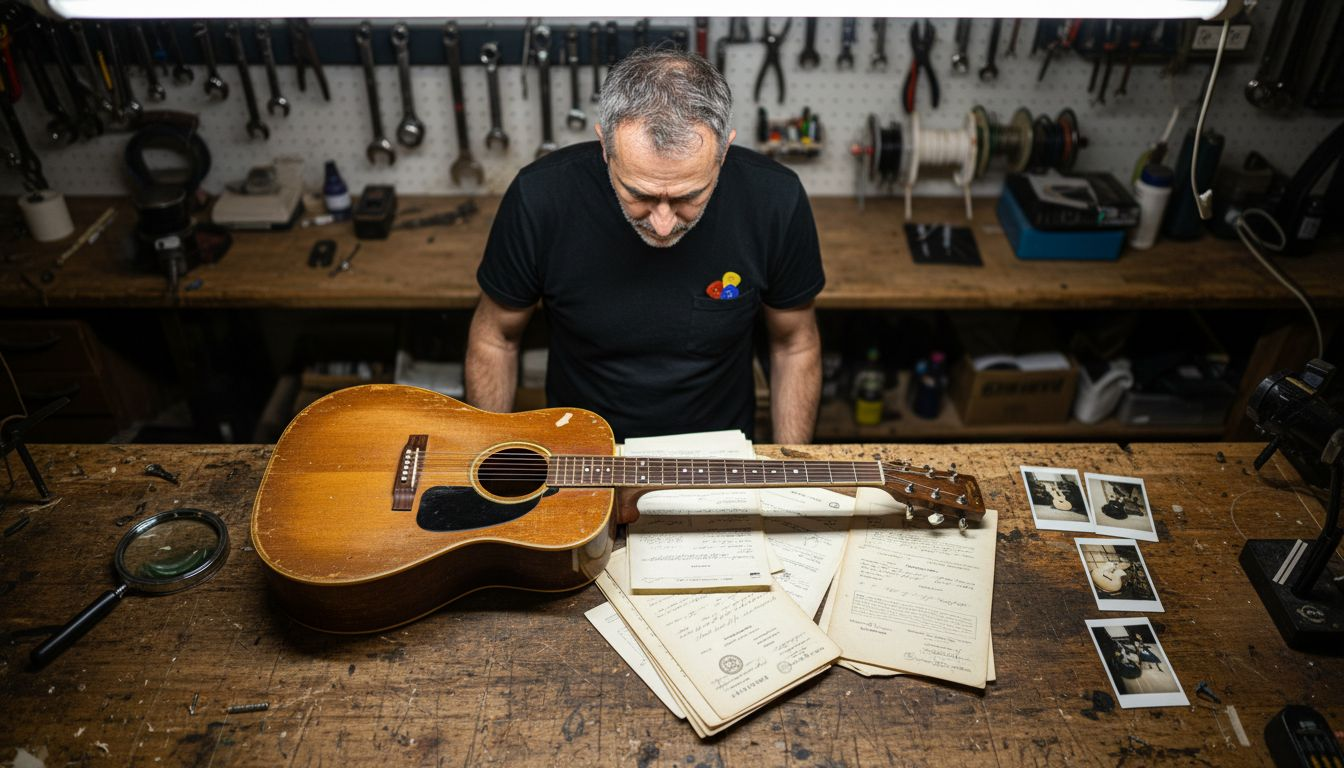
Another significant rarity category centers on historical context and provenance. Guitars produced during specific historical periods – such as pre-World War II instruments impacted by metal shortages – hold particular significance. For example, guitars manufactured before 1941 are considered exceptionally rare due to wartime manufacturing constraints, with post-1965 production runs typically viewed as less collectible. Factors like original condition, authenticity of components, and connection to notable musicians further elevate an instrument’s desirability among serious collectors.
Pro tip: Always verify an instrument’s authenticity through multiple expert sources and comprehensive documentation before making significant vintage guitar investments.
Distinctive Features and Provenance Factors
Rare guitars are distinguished by intricate distinctive features that extend far beyond basic visual appeal. Classical guitar construction reveals how specific elements like wood selection, bracing design, and precise manufacturing techniques contribute to an instrument’s unique character and collector value.
The acoustic properties of a guitar emerge from its fundamental construction characteristics. Wood selection plays a critical role, with certain rare woods like Brazilian rosewood or ancient spruce creating tonal qualities that cannot be replicated. Specific manufacturing techniques such as hand-carved bracing, unique inlay designs, and meticulously shaped fretboards transform an ordinary instrument into a collector’s treasure. Each subtle variation in construction represents a potential marker of exceptional rarity.
Provenance represents another crucial dimension of a guitar’s collectible status. Ownership documentation serves as the instrument’s historical passport, establishing authenticity and tracing its journey through time. A well-documented guitar with a verifiable history connecting it to notable musicians, specific historical periods, or significant musical movements can dramatically increase its market value. Collectors meticulously research an instrument’s background, seeking compelling narratives that elevate its significance beyond mere physical attributes.
Pro tip: Photograph and document every detail of a potential rare guitar purchase, preserving its unique characteristics and establishing your own contribution to its ongoing provenance.
The following table highlights how specific features and provenance factors enhance a vintage guitar’s value:
| Distinctive Feature | Impact on Value | Notable Example |
|---|---|---|
| Rare wood type | Elevates tonal uniqueness | Brazilian rosewood back and sides |
| Unique inlay/design | Increases desirability | Custom mother-of-pearl fret markers |
| Meticulous documentation | Boosts buyer confidence | Original sales receipt and photos |
| Connection to major artist | Drives premium pricing | Guitar used on iconic album recording |
How Rarity Affects Value and Demand
Rarity transforms an ordinary musical instrument into an extraordinary collector’s prize, creating complex market dynamics that extend far beyond simple supply and demand. Electric guitar collectibility demonstrates how limited production runs can exponentially increase an instrument’s monetary and historical value, with some rare models commanding prices in the hundreds of thousands of dollars.
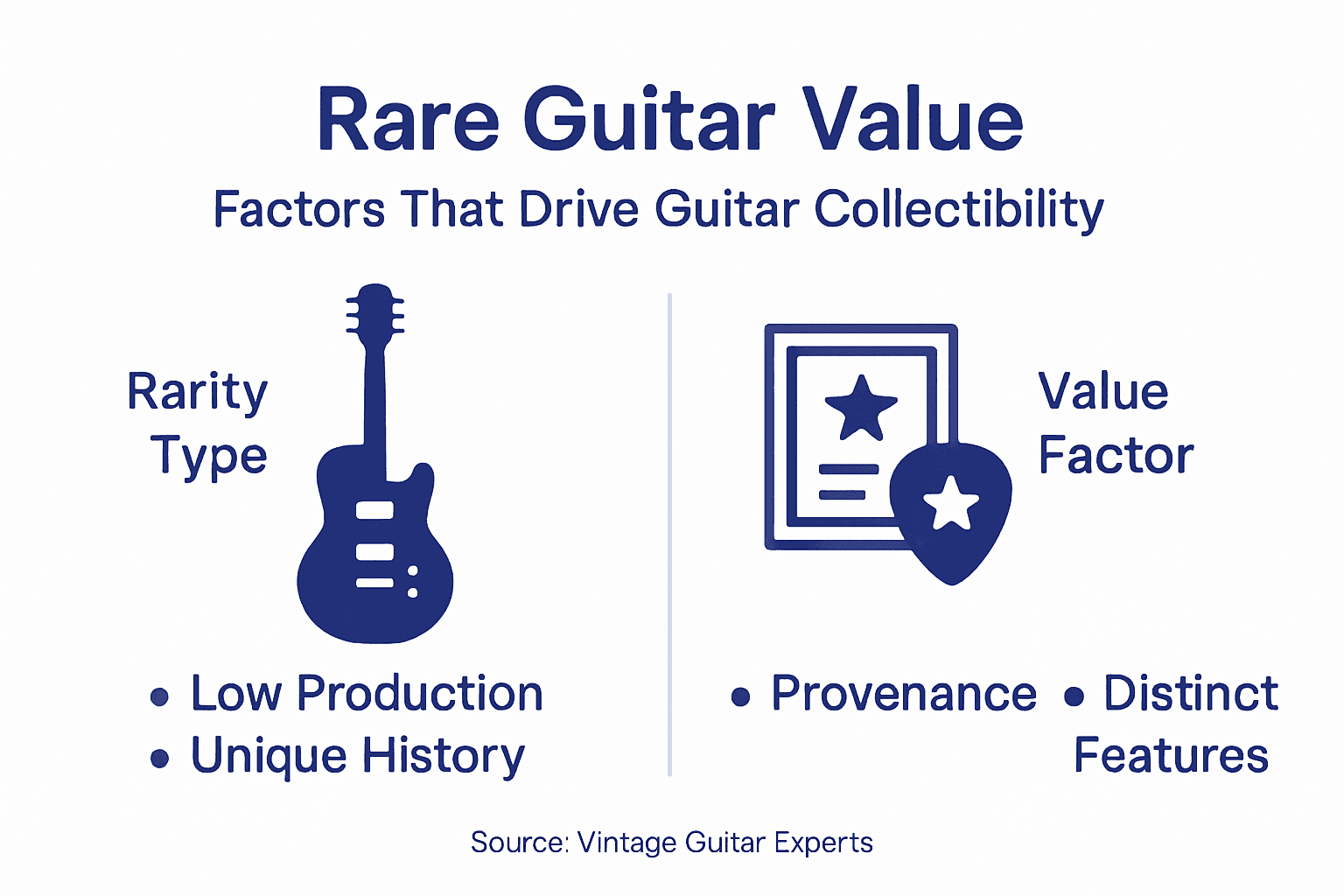
The scarcity mechanism operates through a fascinating economic principle where limited availability drives collector interest. Scarcity value dynamics reveal that rare guitars experience a unique market phenomenon where increased desirability creates a self-reinforcing price escalation. Guitars owned by legendary musicians, produced during specific historical periods, or manufactured with unique characteristics become exponentially more valuable as their stories and rarity become more widely recognized among collectors.
Collectors and investors understand that true rarity involves more than simple numerical scarcity. Factors like an instrument’s condition, provenance, historical significance, and connection to specific musical movements all contribute to its ultimate market value. A guitar that represents a pivotal moment in musical history or was played by an iconic musician can command prices that far exceed typical market expectations, transforming from a mere instrument into a historical artifact.
Pro tip: Research extensively and document meticulously, as the most valuable rare guitars are those with compelling stories that extend beyond their physical characteristics.
Risks, Pitfalls, and Authenticity Challenges
The world of rare guitar collecting is fraught with complex authenticity challenges that can trap even experienced collectors. Music collecting authenticity reveals a landscape where misrepresentation and fabrication are persistent risks, demanding meticulous verification and expert knowledge.
Potential collectors must navigate a minefield of potential fraudulent representations. Provenance documentation becomes critical, as ownership verification can protect buyers from acquiring illegally obtained or falsified instruments. Sophisticated forgers have developed techniques that can make counterfeit guitars appear remarkably genuine, requiring collectors to employ advanced forensic techniques such as wood dating, hardware authentication, and detailed historical research to confirm an instrument’s true origins.
The most significant risks extend beyond financial investment, touching on legal and ethical dimensions of guitar collecting. Some collectors unknowingly purchase guitars with complicated ownership histories, potentially involving stolen or illegally exported instruments. These complications can result in legal challenges that may ultimately require the guitar to be returned to its original owner, regardless of the current collector’s good faith purchase. Professional authentication services, detailed documentation, and comprehensive research become not just recommended but essential strategies for mitigating these substantial risks.
Pro tip: Always engage multiple independent experts to verify a rare guitar’s authenticity before making a significant investment, and maintain comprehensive documentation of every aspect of the transaction.
Discover Authentic Rare Guitars Backed by Expertise and Provenance
Understanding what truly defines a rare guitar involves navigating complex factors like historical significance, limited production, and verified provenance. If you are looking to invest in an instrument that embodies these qualities, avoid the pitfalls of counterfeit or misrepresented guitars by choosing from expertly evaluated, well-documented vintage guitars. At Vintage Guitar World, we specialize in offering a handpicked collection of rare, restored, and premium-grade guitars that meet the highest standards of authenticity and craftsmanship.

Explore our curated selection where each guitar tells a compelling story supported by detailed descriptions and expert valuation. Whether you are seeking vintage electric, classical, or acoustic guitars with unique manufacturing characteristics or provenance linking them to important musical eras, start your journey with confident purchases at Vintage Guitar World. Don’t wait to secure your piece of musical history—visit us today and experience personalized service designed for serious collectors and passionate musicians alike.
Frequently Asked Questions
What factors define a rare guitar?
True rarity in guitars is defined by specific production conditions, historical significance, unique manufacturing attributes, and provenance rather than just age or popularity.
How does provenance affect a guitar’s value?
Provenance, or the documented history of ownership, can significantly elevate a guitar’s value, particularly if it connects to famous musicians or important historical periods.
Why is the manufacturing history important when evaluating a rare guitar?
The manufacturing history provides insight into the authenticity, uniqueness, and significant characteristics of a guitar, which are vital for assessing its rarity and market value.
What common misconceptions do collectors have about rare guitars?
Many collectors mistakenly believe that age alone makes a guitar more valuable, while true rarity involves a mix of production volume, historical context, and specific features.