
Robert Johnson, born on May 8, 1911, in Hazlehurst, Mississippi, is one of the most influential figures in the history of blues music. Despite his brief life, which ended at the young age of 27 on August 16, 1938, Johnson’s music has left an indelible mark on the genre and continues to inspire musicians worldwide.
Early Life and Musical Beginnings
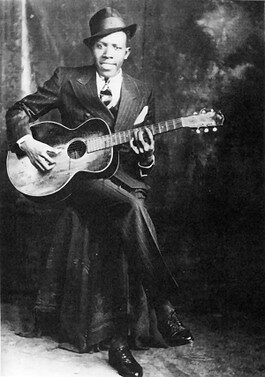
Robert Johnson’s early years were marked by instability and transition. Raised in a challenging environment, he moved between various locations in Mississippi and Arkansas. He was exposed to the rich musical traditions of the Delta region, where he developed a passion for the blues. Initially, Johnson struggled to find his footing as a musician, and he was known to be an average guitarist. However, after a mysterious absence from the music scene, he reemerged with a remarkable mastery of the guitar that baffled his contemporaries.
The legend surrounding Johnson suggests that he made a pact with the devil at a crossroads, trading his soul for musical prowess. This folklore, though likely embellished over time, reflects the deep cultural roots of the blues and the mystical aura that surrounded Johnson’s talent. His ability to play the guitar with a unique blend of raw emotion and technical skill set him apart from his peers.
On the picture you see him with his Gibson L-1 guitar
Influential Recordings
Robert Johnson’s recording career was brief but impactful. He recorded 29 songs during two sessions in 1936 and 1937, producing classics that would become staples in the blues repertoire. Tracks like “Cross Road Blues,” “Hellhound on My Trail,” and “Sweet Home Chicago” showcased his lyrical depth and innovative guitar techniques. His music often explored themes of love, loss, and the struggles of life, resonating with audiences far beyond his time.
Despite limited commercial success during his lifetime, Johnson’s recordings began to gain recognition in the late 1930s and 1940s. Musicologist Alan Lomax and producer John Hammond were instrumental in bringing Johnson’s work to a wider audience, but it wasn’t until the release of the album “King of the Delta Blues Singers” in 1961 that his genius was fully appreciated. This album played a crucial role in the blues revival of the 1960s and influenced countless musicians, including Eric Clapton, Bob Dylan, and Keith Richards.
Legacy and Influence
Robert Johnson’s influence on music extends far beyond the blues genre. His innovative guitar techniques, including the use of slide guitar and complex fingerpicking patterns, have shaped the sound of rock and roll, country, and folk music. Many artists cite Johnson as a primary influence on their work, and his songs have been covered and adapted by numerous musicians over the decades.
The mystique surrounding Johnson’s life and untimely death has only added to his legendary status. Various accounts of his demise suggest he may have been poisoned, possibly due to complications arising from his relationships with women, further fueling the tragic narrative of the tortured artist. The uncertainty surrounding his life and death has only deepened the intrigue, leading to a wealth of scholarly research and biographical studies, including the acclaimed 2019 biography “Up Jumped the Devil” by Bruce Conforth and Gayle Dean Wardlow.
Conclusion
Robert Johnson’s legacy as a blues icon remains unparalleled. His music captures the essence of human emotion and experience, transcending time and genre. As a master of the Delta blues, his innovative style and powerful storytelling continue to resonate with listeners and musicians alike. Johnson’s life, filled with mystery and artistry, serves as a testament to the enduring power of music to express the complexities of the human experience. The crossroads where Johnson allegedly made his fateful deal with the devil may remain a myth, but his influence on music is very real, ensuring that his spirit lives on through the generations of artists he has inspired.
Among his favorite guitars were Gibson and Kalamazoo guitars … you can find those here: