
Paco de Lucía, a name that resonates with music aficionados worldwide, is not just a legendary flamenco guitarist but a transformative figure who brought flamenco to the global stage. His music transcends cultural and musical boundaries, influencing genres and inspiring musicians across the world. Understanding his journey and the instruments he played offers deeper insights into his genius.
The Musical Genius of Paco de Lucía
Born Francisco Gustavo Sánchez Gomez in 1947 in Algeciras, Spain, Paco de Lucía grew up in a musical family, which laid the foundation for his extraordinary career. From a young age, Paco was immersed in the world of flamenco. His father, Antonio Sánchez, and his older brother, Ramón de Algeciras, were both guitarists, ensuring that music was an integral part of his upbringing.
Paco’s dedication to the guitar was evident from the start. He practiced extensively, often for 12 hours a day, developing a technique that would later redefine the possibilities of flamenco guitar. His early exposure to traditional flamenco set the stage for his innovative approach, blending it with other musical styles, including jazz and classical music.
Fascinating Facts About Paco de Lucía
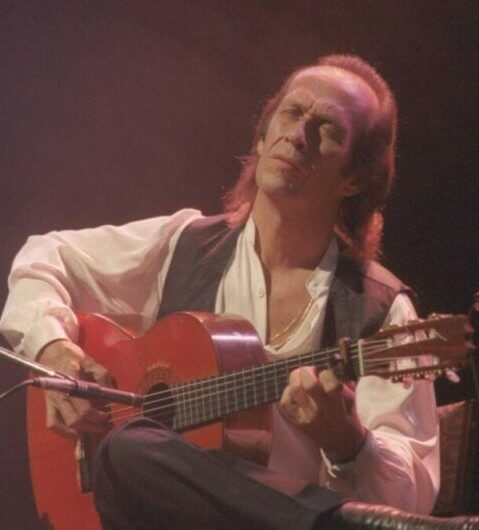 One of the most fascinating aspects of Paco de Lucía’s career is his ability to innovate while respecting tradition. His 1973 hit “Entre dos aguas” from the album “Fuente y Caudal” was a pivotal moment in flamenco music. The track’s success brought flamenco to a wider audience and showcased Paco’s ability to infuse traditional flamenco with modern influences.
Paco’s collaborations with other musicians highlight his versatility and openness to different musical influences. His partnership with flamenco singer Camarón de la Isla resulted in timeless records like “Como el Agua,” which remain essential listening for flamenco enthusiasts. Paco’s collaboration with guitarists John McLaughlin and Al Di Meola on “Passion, Grace and Fire” further exemplifies his innovative spirit, blending flamenco with jazz and creating a new genre of fusion music.
Apart from his collaborations, Paco de Lucía’s solo works demonstrate his profound understanding of music. His 1991 live album “Concierto de Aranjuez” is a testament to his adaptation of classical compositions into flamenco guitar, providing a fresh perspective on Joaquin Rodrigo’s orchestral masterpiece.
The Guitars of Paco de Lucía
The instruments Paco de Lucía played were as much a part of his music as his technical skill and creativity. Throughout his career, he played several guitars, each contributing to his unique sound. His most favored instruments were made by Conde Hermanos, those guitars are renowned for their exceptional sound quality and craftsmanship. During his stage performaces you see Paco de Lucia mostly playing his legendary Flamenca Negra made by Faustino Conde.
The combination of his high-quality guitars with Paco’s skill resulted in a rich, resonant tone that became a hallmark of his music. These guitars were not just tools but extensions of Paco’s artistic expression, allowing him to explore the depths of flamenco and beyond.
Explore our collection of Conde Hermanos guitars at Vintage Guitars World and find similar guitars to Paco’s for your own musical inspiration:
See all our Conde Hermanos Guitars
Legacy and Influence
Paco de Lucía’s influence extends far beyond the realm of flamenco. His ability to seamlessly blend different musical styles opened new doors for future generations of musicians. Many contemporary guitarists, both within and outside the flamenco tradition, cite Paco as a major influence on their work. His innovations continue to inspire guitarists to push the boundaries of what is possible with the instrument.
Paco’s legacy is also evident in the recognition he received throughout his career. His 2004 album “Cositas Buenas” won the Latin Grammy for Album of the Year, further solidifying his status as a musical icon. Even after his passing in 2014, his music remains a vital part of the global music landscape. His final album, “Canción Andaluza,” released posthumously, continues to captivate audiences and add to his enduring legacy.
Here a nice Video of Paco de Lucia:

Mit dem Laden des Videos akzeptieren Sie die Datenschutzerklärung von YouTube.
Mehr erfahren
Conclusion
Paco de Lucía was much more than a flamenco guitarist; he was a visionary who transformed the way the world perceives and appreciates flamenco music. His dedication to his craft, combined with his innovative spirit, has left an indelible mark on the music world. By exploring the fascinating facts of his life and the guitars he played, we gain a deeper appreciation for his artistry and the profound impact he had on music. His legacy lives on, inspiring musicians and listeners alike, ensuring that the magic of Paco de Lucía will resonate for generations to come.